
By | Goodluck E. Adubazi, Abuja
Nigeria has called for stronger regional and international cooperation to address food insecurity, conflict-related disruptions and climate change challenges affecting agricultural production across Africa, particularly in the Lake Chad Basin.
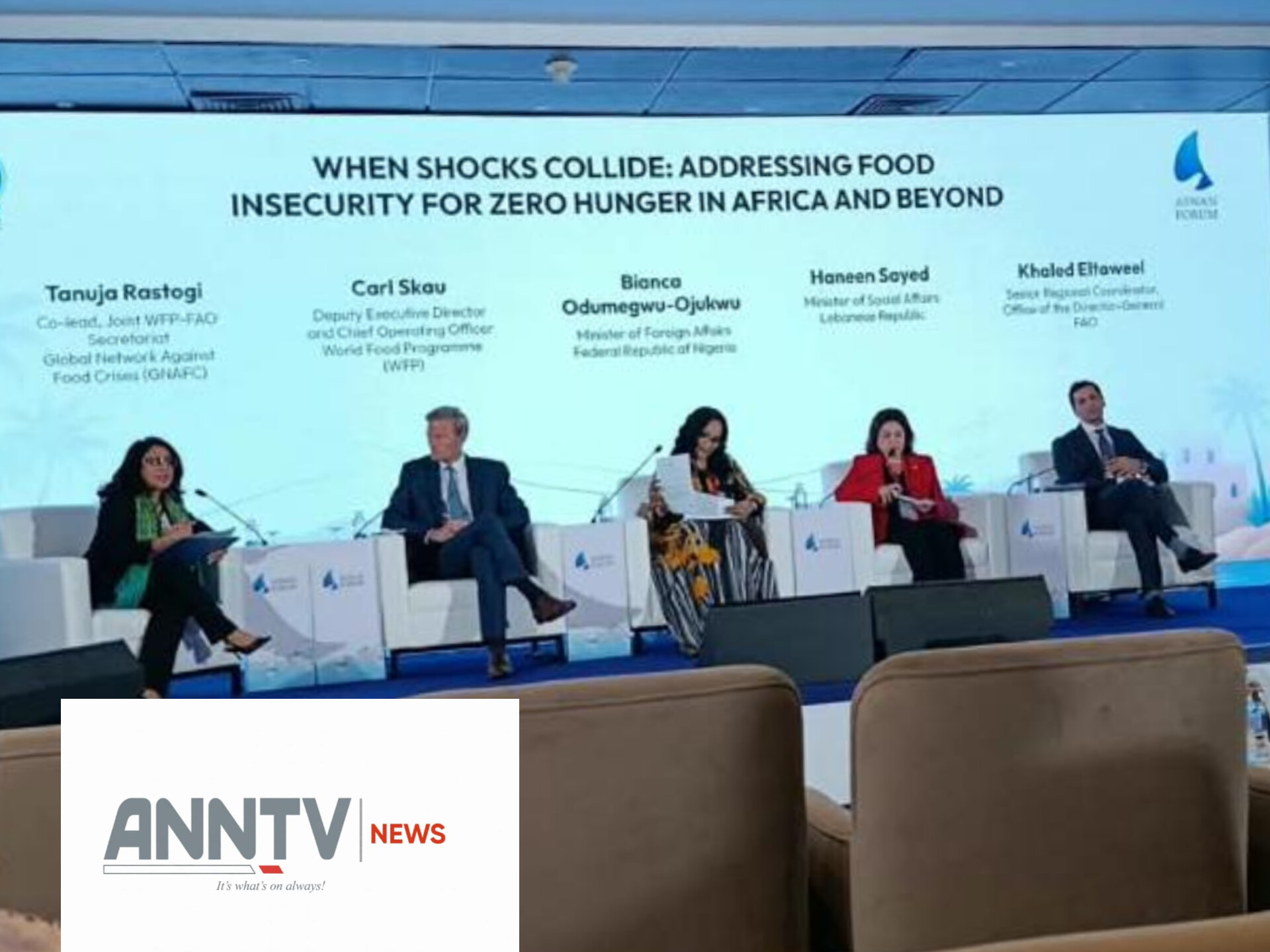
The Minister of Foreign Affairs, Ambassador Bianca Odumegwu-Ojukwu, made the call on Saturday, November 21, 2026, while leading Nigeria’s delegation to the Sixth Aswan Forum for Sustainable Peace and Development in Aswan, Egypt.
The minister participated in a plenary session themed “When Shocks Collide: Addressing Food Insecurity for Zero Hunger in Africa and Beyond,” which examined the growing effects of conflicts, climate change, geopolitical tensions and global supply chain disruptions on food security across Africa and the Arab region.
Discussions at the session focused on strengthening national food systems, improving early-warning and response mechanisms, protecting agricultural livelihoods and promoting regional cooperation to achieve the United Nations Sustainable Development Goal 2 (Zero Hunger) by 2030.
Speaking during the deliberations, Odumegwu-Ojukwu highlighted the worsening food insecurity situation in the Lake Chad Basin, noting that conflict, displacement and climate-related pressures continue to undermine agricultural activities and livelihoods in affected communities.
She outlined measures being pursued by the Nigerian government to strengthen early-warning systems, address farmer-herder conflicts, support internally displaced persons (IDPs) and improve the capacity of farming communities to boost agricultural productivity.
The minister stressed the importance of policies and interventions that would strengthen the resilience of vulnerable communities, improve food production and address the underlying causes of food insecurity.
The Aswan Forum provided Nigeria with an opportunity to engage regional and international partners on practical solutions to food insecurity, agricultural development and the need to build sustainable and resilient food systems across the continent.
The forum’s deliberations also underscored the importance of collective action in addressing the interconnected challenges of insecurity, climate change and economic disruptions threatening food availability and access across Africa.
The Nigerian delegation’s participation reaffirmed the country’s commitment to regional cooperation, sustainable development and efforts to achieve a food-secure Africa by 2030.