By| Goodluck E.Adubazi | Abuja
A new assessment of Nigeria’s artificial intelligence (AI) governance framework has revealed significant gaps in regulation, raising concerns over data privacy, national security, and ethical standards as AI adoption accelerates across key sectors.
The report, presented at the Federal Ministry of Finance in Abuja on Thursday, identified critical issues including weak regulatory oversight, lack of transparency, accountability gaps, and risks of algorithmic bias. Stakeholders also highlighted the absence of a comprehensive legal framework guiding AI deployment in the country.
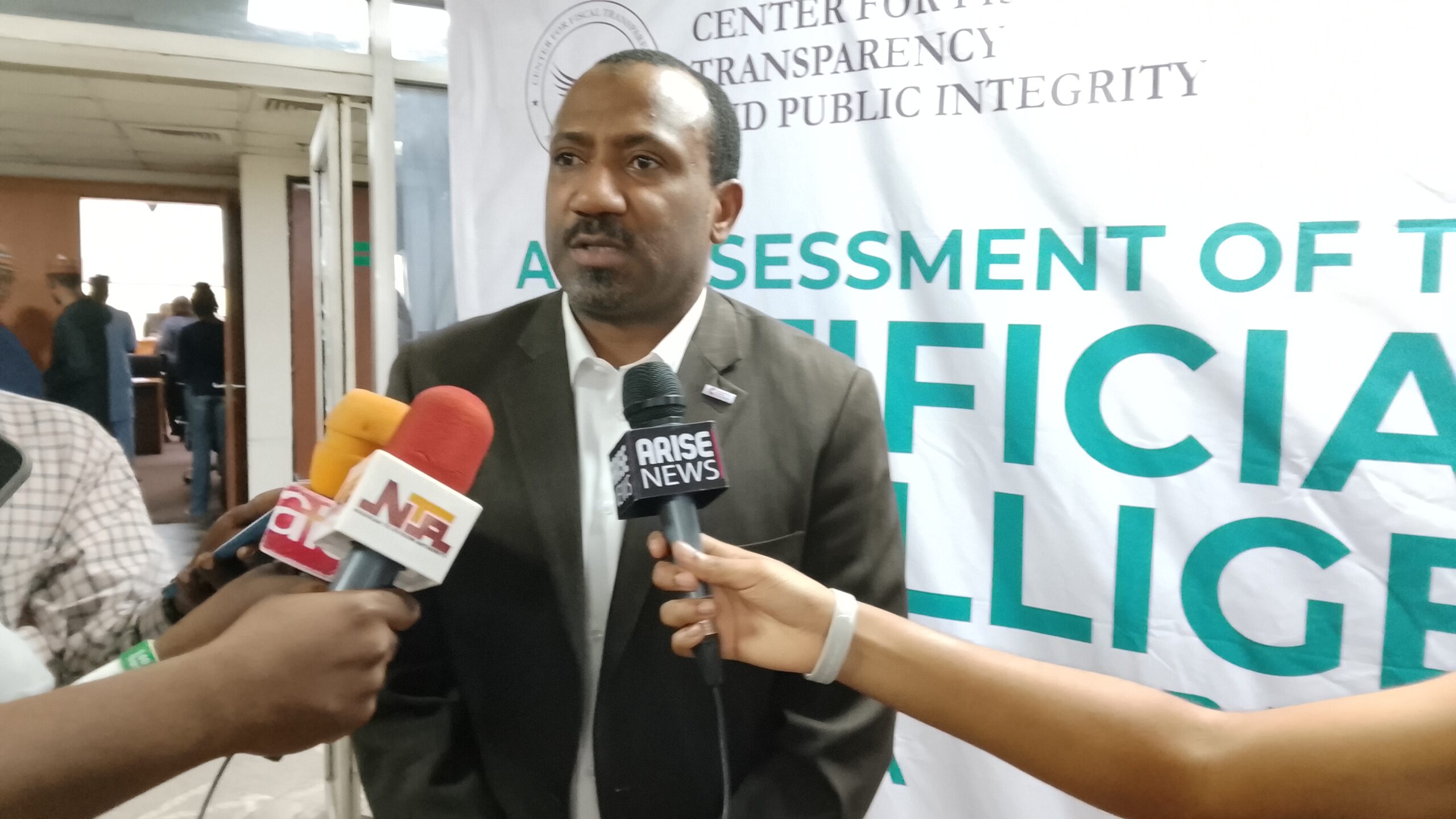
Speaking to journalists after the presentation, Dr. Umar Yakubu, Executive Director of the Centre for Fiscal Transparency and Public Integrity, said the rapid growth of AI use in sectors such as banking, agriculture, housing, and healthcare has outpaced governance structures.
“We are seeing widespread adoption of AI and significant financial investments, but there are serious national security risks and governance concerns,” Yakubu said.
“The key question is whether there are clear rules, laws, and policies guiding the use of AI, or if adoption is happening without adequate regulation.”
He noted that despite increasing reliance on AI technologies, Nigeria still lacks a specific law governing AI, following unsuccessful legislative attempts in 2021 and 2023. The assessment further pointed to regulatory fragmentation, labour and skills gaps, and weaknesses in the existing National Artificial Intelligence Strategy.
Yakubu emphasized that the absence of a robust governance framework exposes the country to risks, particularly in sensitive sectors like healthcare where data is heavily utilized. He called for urgent government action to align Nigeria’s AI policies with international standards.
The Centre recommended the enactment of a dedicated AI Act, the establishment of a National AI Regulatory Authority, and mandatory transparency measures for AI use in the public sector.
In his opening remarks, the Director-General of the Bureau of Public Service Reforms, Mr. Dasuki Ibrahim Arabi, represented at the event, acknowledged the transformative impact of AI on governance and public service delivery worldwide.
“Artificial intelligence is no longer a futuristic concept but a present-day reality shaping economies and governance systems,” he said. “While its potential is immense, its deployment comes with challenges such as data privacy, ethical concerns, accountability, and the risk of discrimination.”
He warned that without a well-defined governance framework, AI adoption in public institutions could lead to unintended consequences, including exclusion and erosion of public trust.
Arabi stressed that AI governance must go beyond technical considerations, describing it as a policy, legal, and ethical issue requiring a holistic approach supported by strong institutional frameworks.
The event featured panel discussions with experts from government and academia, including representatives from the Nigerian Army College and the Federal Ministry of Communications, Innovation and Digital Economy.
During the interactive session, stakeholders noted that Nigeria would require approximately $76.5 million to develop AI infrastructure comparable to Rwanda’s, underscoring the scale of investment needed to compete globally.

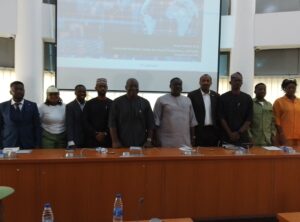
Panelists reiterated the need for coordinated reforms to strengthen governance systems, ensure responsible AI use in both public and private sectors, and safeguard national interests as the country advances its digital transformation agenda.