
By| Goodluck E.Adubazi, Abuja
“A national emergency line built to save lives now stands as both a symbol of hope and a reminder of Nigeria’s broken response system”, Goodluck.
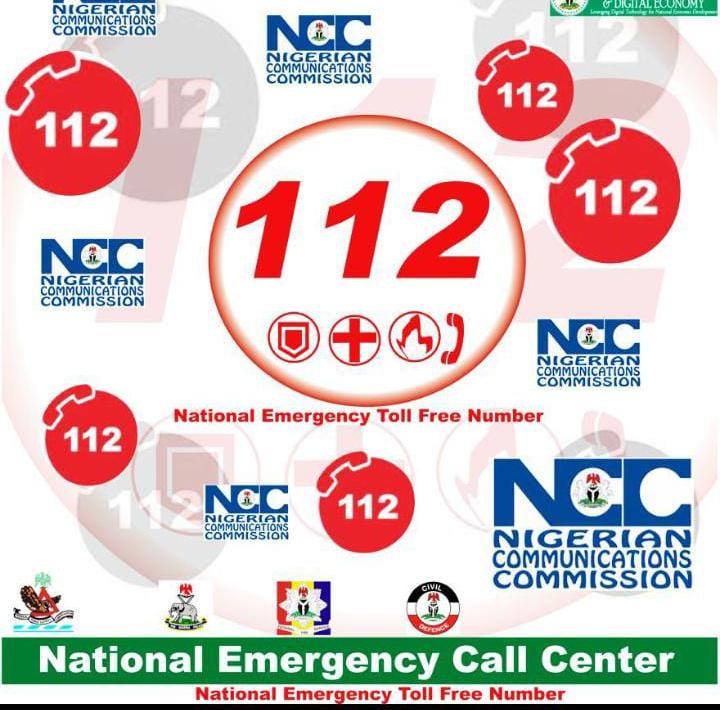
In many countries, three numbers can mean the difference between life and death. In the United States, it is 911. In the United Kingdom, 999. In Nigeria, it is 112 — the National Emergency Number established to provide citizens with rapid access to police, fire, and medical emergency services.
On paper, the system represents one of the most ambitious communication-security interventions ever introduced by the Nigerian government. In reality, however, many Nigerians describe it as a lifeline that rarely answers when life is on the line.
The irony of Nigeria’s emergency response architecture is that the 112 system is both useful and useless at the same time — useful because of the enormous potential it holds, and useless because of the weak implementation, poor coordination, and institutional failures that continue to undermine it.
The National Emergency Number 112 was formally launched by the Nigerian Communications Commission (NCC) under the supervision of then Minister of Communications and Digital Economy, Ali Isa Ibrahim Pantami. Although the framework for the project dates back to 2005, the emergency system gained national prominence after its unveiling and commissioning in Abuja on March 19, 2020, by former President Muhammadu Buhari.
The objective was clear: establish a single toll-free emergency number that every Nigerian could dial during distress situations. Whether facing armed robbery, kidnapping, fire outbreaks, accidents, terrorism, or medical emergencies, citizens were expected to receive immediate help through coordinated emergency communication centres established across the country.
Yet, six years later, many Nigerians still recount stories of unanswered calls, delayed responses, and emergency agencies crippled by poor logistics and inadequate coordination.
In conflict-ridden parts of Northwestern, Northeastern, and North Central Nigeria, where kidnapping and banditry have become recurring nightmares, citizens often find themselves abandoned during emergencies. For families under attack, every second matters. Unfortunately, for many victims, help either arrives too late or never arrives at all.
According to Nigeria-US based analyst, Williams Kaura Abba, the 112 platform possesses the capacity to become a “magic wand” in Nigeria’s fight against insecurity — if properly utilized.
Abba argues that the NCC has already laid the technological foundation needed to support an effective emergency response system through Emergency Communications Centres (ECCs) across the federation. However, he insists that infrastructure alone cannot solve insecurity without political will and institutional accountability.
“The difference between tragedy and rescue frequently comes down to one phone call,” he observed during discussions on the state of emergency response in Nigeria.
Experts note that modern emergency systems around the world function through sophisticated technologies that Nigeria can also deploy effectively.
Such systems include caller identification, geolocation tracking, and Computer-Aided Dispatch (CAD), which can instantly route emergency calls to the appropriate agencies.
Security analysts believe that if fully operationalized, Nigeria’s 112 system could become a major weapon against terrorism, kidnapping, and violent crime.
Terrorists and kidnappers frequently rely on communication during ransom negotiations.
With effective geolocation systems and coordinated dispatch structures, authorities could potentially trace calls, identify criminal locations, and launch timely rescue operations.
But the challenge, observers say, lies beyond technology.
The greatest weakness of the system remains the “last mile” — the actual arrival of security personnel, firefighters, or paramedics after distress calls are made.
Across the country, citizens continue to complain about excuses ranging from lack of fuel and broken vehicles to poor communication equipment and insufficient manpower.
In many cases, emergency response agencies are themselves trapped within the same institutional dysfunction affecting other sectors of governance.
Despite these shortcomings, the Federal Government appears determined to strengthen the initiative.
In May 2026, the National Economic Council (NEC) reaffirmed and officially adopted 112 as Nigeria’s unified toll-free national emergency number in a renewed effort to reduce bureaucratic delays and improve coordination among response agencies.
The move has been welcomed by policy experts, who believe that centralizing emergency communication under one number could significantly improve efficiency if backed by sincere implementation.
However, analysts insist that several urgent steps must follow.
First, there must be strict inter-agency accountability, with security and emergency agencies evaluated based on response times and effectiveness. Second, emergency responders must be properly equipped with operational vehicles, communication tools, fuel, and adequate welfare support.
Third, transparent monitoring mechanisms must be established to expose negligence and punish non-compliance within the response chain.
Above all, observers argue that Nigeria requires serious and sincere leadership committed not just to launching projects, but to make them functional.
For millions of Nigerians living under the constant fear of insecurity, accidents, and emergencies, the promise of 112 remains unfinished. The infrastructure exists. The technology exists. The framework exists. What remains uncertain is whether the political will exists.
Until then, Nigeria’s 112 may continue to stand as a painful contradiction — a system full of promise, yet struggling to fulfill its purpose.
And for citizens caught between danger and delayed rescue, the question remains painfully simple: when the emergency comes, will anybody answer?