
By| Goodluck E.Adubazi, Abuja
The 25th edition of NOG Energy Week 2026 concluded on Thursday in Abuja with renewed optimism over Nigeria’s energy future, as government officials, industry leaders and investors reaffirmed the country’s position as a leading destination for oil, gas and energy investments in Africa.
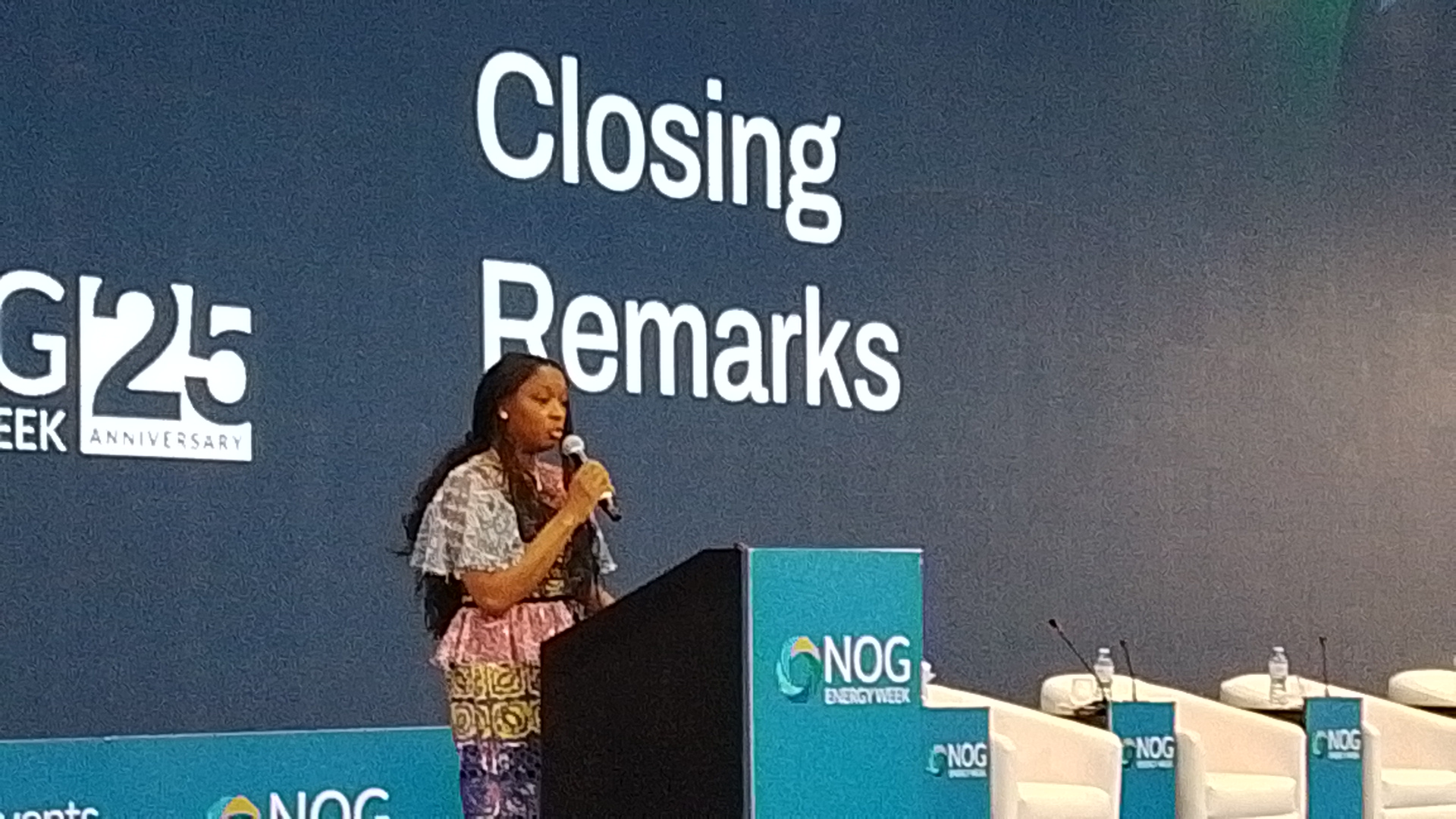
Delivering her closing remarks, Portfolio and Country Director of DMG Events, Wemimo Oyelana, said Nigeria’s gas sector has become increasingly attractive to global investors, describing Africa as a strategic partner in achieving global energy security.
“The world is looking for where to invest, and they are choosing Nigeria’s gas industry as a destination for investment,” Oyelana said, adding that collaboration between the government and the private sector remains critical to sustaining growth in the energy sector.
She expressed appreciation to sponsors, exhibitors, speakers, delegates, the media, the Nigerian National Petroleum Company (NNPC) Limited, the Ministry of Petroleum Resources and other stakeholders for their continued support over the past 25 years.
Reflecting on her 15-year journey with the event, Oyelana noted that despite challenges, Nigeria’s resilience has driven significant reforms, including the implementation of the Petroleum Industry Act (PIA), the Nigerian Oil and Gas Industry Content Development Act and recent presidential executive directives, all of which have boosted investor confidence.
She also highlighted the unprecedented number of commercial agreements signed during the conference, saying they demonstrate growing international confidence in Nigeria’s energy sector.
“Our work is far from finished. We will continue to collaborate with the government and the private sector to move the industry forward,” she said, while inviting stakeholders to the 2027 edition of NOG Energy Week.
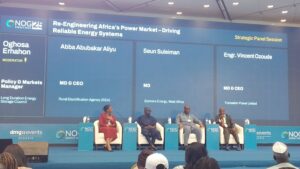
Earlier, during the closing panel session themed “Gas to Power: Re-engineering Africa’s Power Market – Driving Reliable Energy Systems,” Managing Director and Chief Executive Officer of the Rural Electrification Agency (REA), Abba Abubakar Aliyu, disclosed that more than 80 per cent of Nigeria’s electricity generation depends on gas-fired power plants, underscoring the importance of sustained investment in the country’s gas value chain.
Aliyu stressed that while renewable energy continues to expand, gas remains the backbone of Nigeria’s power sector and is essential for maintaining grid stability.
The Siemens Energy MD announced that the agency is aggressively deploying 1,000 interconnected mini-grids nationwide to improve electricity supply in underserved communities.
According to him, the first 48 interconnected mini-grids, expected to be completed by the second half of 2027, will inject 288 megawatts of additional electricity into the national grid.
He disclosed that:Abuja will receive an additional 20MW.Rivers State will benefit from about 60MW.Delta State will receive 20MW.
Adamawa and Anambra States are already witnessing groundbreaking projects to boost electricity access.
Aliyu explained that the projects are designed to complement the national grid while improving reliability for communities already connected but suffering from poor power supply.
Managing Director, Siemens Energy West Africa, Seun Suleiman, announced plans to train over 5,000 Nigerians in technical skills required for the country’s energy transition.
He said the programme has been structured to meet international standards while ensuring Nigerians acquire the expertise needed to execute major power infrastructure projects.
Suleiman revealed that project locations were carefully selected based on their economic impact and ability to improve electricity transmission and industrial development.
Aliyu also disclosed that the REA is implementing a $750 million renewable energy access programme, expected to leverage over $1.1 billion in private sector investment.
According to him, the agency has secured major financing partnerships, including agreements with the International Finance Corporation (IFC), FCMB, Lotus Bank, Standard Bank and Stanbic IBTC to support renewable energy deployment across Nigeria.
He added that recent regulatory reforms now permit developers to build isolated mini-grids of up to 5MW and interconnected mini-grids of 10MW, making the sector more attractive to investors.
Panelists agreed that while renewable energy is expanding rapidly, gas-fired power plants will continue to play a vital role in Nigeria’s electricity supply due to the country’s vast gas reserves and growing energy demand.
They urged the government to sustain reforms across the electricity value chain, improve gas infrastructure, expand transmission capacity and strengthen commercial frameworks to attract additional investment.
The experts also called for greater accountability, faster project delivery and increased local manufacturing of renewable energy equipment to ensure Nigeria meets its energy transition goals while providing reliable electricity to millions of citizens.
As the curtain fell on the silver jubilee edition of NOG Energy Week, stakeholders expressed confidence that continued collaboration between government and the private sector will position Nigeria as Africa’s leading energy investment hub and accelerate the country’s journey toward sustainable energy security.