
By | Goodluck E. Adubazi, Abuja
The Transmission Company of Nigeria (TCN) has intensified efforts to integrate environmental sustainability, climate resilience and circular economy principles into its operations, with a renewed focus on translating corporate commitments into practical policies, measurable implementation frameworks and institutional accountability.
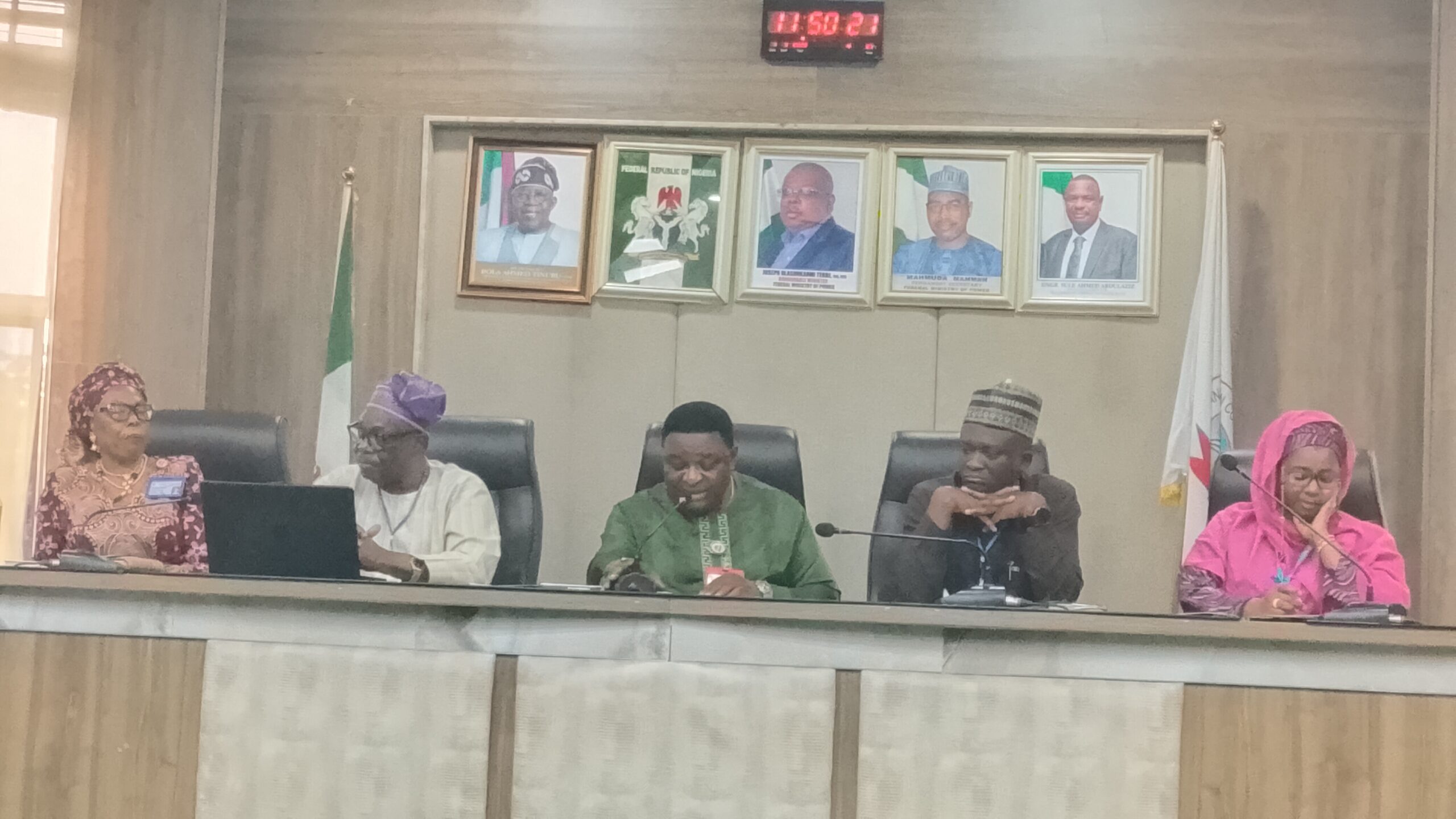
The focus formed the centrepiece of the third day of the TCN Environmental Sustainability Week held on Wednesday, September 9, 2026, at the company’s conference room in Abuja.
Declaring the Day Three activities open, the Executive Director, Finance and Accounts, Mr. Chukwuka Ochije, said the stage had been reached for the company to move beyond commitments and technical engagements towards developing policies, controls and implementation frameworks that would guide TCN’s operations.
Ochije said environmental sustainability and safety were no longer issues that could be treated as separate from the company’s core business, stressing that failures in identifying, measuring, managing and accounting for environmental and safety risks would eventually translate into financial costs.
“What we do not properly identify and measure, manage and account for will eventually become a cost,” he said.
According to him, poorly managed right-of-way challenges could delay transmission projects for years, while inadequate environmental safeguards could result in remedial costs, regulatory exposure and disputes with host communities.
He added that weak safety practices could lead to both human and financial losses, while poor waste management could create liabilities for the organisation.
Ochije further warned that infrastructure not designed with climate resilience in mind could require significant additional expenditure for repairs and replacement in the future.
“Conversely, when sustainability is properly integrated into planning and decision-making, it strengthens value for money, asset protection, project delivery, operational resilience and institutional credibility,” he said.
The Executive Director said the policy dialogue would examine TCN’s environmental policy, Environmental Health and Safety (EHS) framework, right-of-way guidelines, environmental governance procedures, waste management framework, climate adaptation and resilience framework, as well as the integration of circular economy principles into the company’s operations.
He described the issues under consideration as practical rather than abstract, noting that the adoption of a circular economy approach would require TCN to rethink how it procures and uses materials and manages equipment at the end of their useful lives.
According to him, the company must ask critical questions about reducing waste, recovering and reusing materials, improving waste management and considering the full life-cycle costs of investments rather than focusing only on initial costs.
“Climate resilience must also make us consider whether the transmission infrastructure we are investing in today will remain reliable under the environmental conditions of tomorrow,” Ochije said.
“These are financial questions as much as they are environmental questions.”
He said the participation of regulators, environmental professionals, academics, experienced practitioners and TCN officials provided an opportunity for the company to draw from collective expertise in developing workable policies and frameworks.
However, Ochije cautioned against producing policies that looked impressive on paper but were difficult to implement.
He said every policy framework developed by the company must provide answers to four fundamental questions: what exactly TCN was committing to do, who was responsible for implementation, how implementation would be measured and who would be accountable for the outcome.
“Every policy we review should ultimately translate into clear responsibility, measurable indicators, realistic implementation mechanisms and proper monitoring arrangements,” he said.
He urged participants to openly challenge existing practices, identify operational gaps and contribute practical experiences from projects, sub-regions and regions.
“Our objective should not simply be to leave this room with reviewed documents. We should leave with a framework that is practicable, measurable, financially responsible and capable of being implemented across TCN,” Ochije added.
Meanwhile, the Assistant General Manager, Environment, Mrs. Comfort Sako, presented the proposed Environmental Health and Safety Framework, explaining that the framework was designed to strengthen TCN’s approach to environmental protection, operational health and safety, social responsibility, community risk management, climate resilience and legal and regulatory compliance.
Sako said the Environmental Health and Safety Framework would serve as an institutional system establishing environmental, health and safety principles and commitments across the company.
According to her, the framework would also provide governance structures and responsibilities, risk management requirements, environmental and social safeguards, health and safety standards, monitoring mechanisms, performance requirements, reporting procedures and accountability systems.
She explained that the proposed framework would cover the entire project life cycle, from planning and design through construction, operations and maintenance to eventual decommissioning.
Sako identified eight core pillars of the proposed TCN Environmental Health and Safety Framework.
They include EHS leadership and governance; environmental management and safeguards; occupational health and safety; social safeguards and stakeholder engagement; climate change and resilience; emergency preparedness and incident management; compliance monitoring and performance; as well as capacity building and contractor management.
She explained that the environmental management and safeguards component would cover environmental and social impact assessments, environmental and social management plans, pollution prevention and control, waste management and circular economy practices, biodiversity and ecosystem protection, as well as environmental monitoring and compliance.
On occupational health and safety, she said the framework would address hazard identification and risk assessment, safe systems of work, electrical and construction safety, personal protective equipment, occupational health and emergency preparedness.
The social safeguards and stakeholder engagement pillar, she said, would focus on community engagement, grievance management, land and right-of-way issues, livelihood and social impacts, stakeholder communication, as well as incident reporting and investigation.
Sako added that the climate change and resilience pillar would promote climate risk management, adaptation and resilience, climate-smart infrastructure, resource efficiency and green and sustainable practices.
She said emergency preparedness and incident management would include emergency response plans, incident notification and reporting, investigation and root cause analysis, corrective and preventive actions, as well as emergency drills and preparedness.
The framework, she further explained, would strengthen legal and regulatory compliance, EHS inspections and audits, performance indicators, environmental and safety reporting, corrective action tracking and continuous improvement.
She stressed that environmental, health and safety considerations must be integrated into projects from conception rather than being treated as an afterthought.
“Environmental Health and Safety should not be an afterthought. It should be integrated from project conception,” she said.
The proposed implementation structure, according to Sako, would involve corporate management and executive leadership, relevant corporate departments, environmental and social management units, regional offices, project management units and contractors.
She said the system would be supported by environmental procedures and standard operating procedures, training and competency development, inspections and audits, as well as digital monitoring and reporting.

Sako disclosed that TCN was planning to develop a database for audits, monitoring activities and management reviews as part of efforts to strengthen institutional learning and continuous improvement.
The Day Three session also featured discussions on the integration of circular economy principles in the power sector, with experts expected to examine practical approaches to sustainable resource use and waste reduction within electricity infrastructure development.
The Environmental Sustainability Week policy dialogue is expected to help TCN develop practical and measurable frameworks capable of reshaping how the company plans, invests, operates and accounts for the environmental impact of its activities.
For the transmission company, the message from the Day Three deliberations was clear: environmental sustainability must move beyond an annual event and become an integral part of how Nigeria’s national transmission infrastructure is planned, built and managed.