
By|| Goodluck E.Adubazi || Abuja
The Nigeria Customs Service (NCS) has strengthened its global push for innovation-led trade facilitation as it took centre stage at the 2026 World Customs Organisation (WCO) Technology Conference and Exhibition in Abu Dhabi, United Arab Emirates.
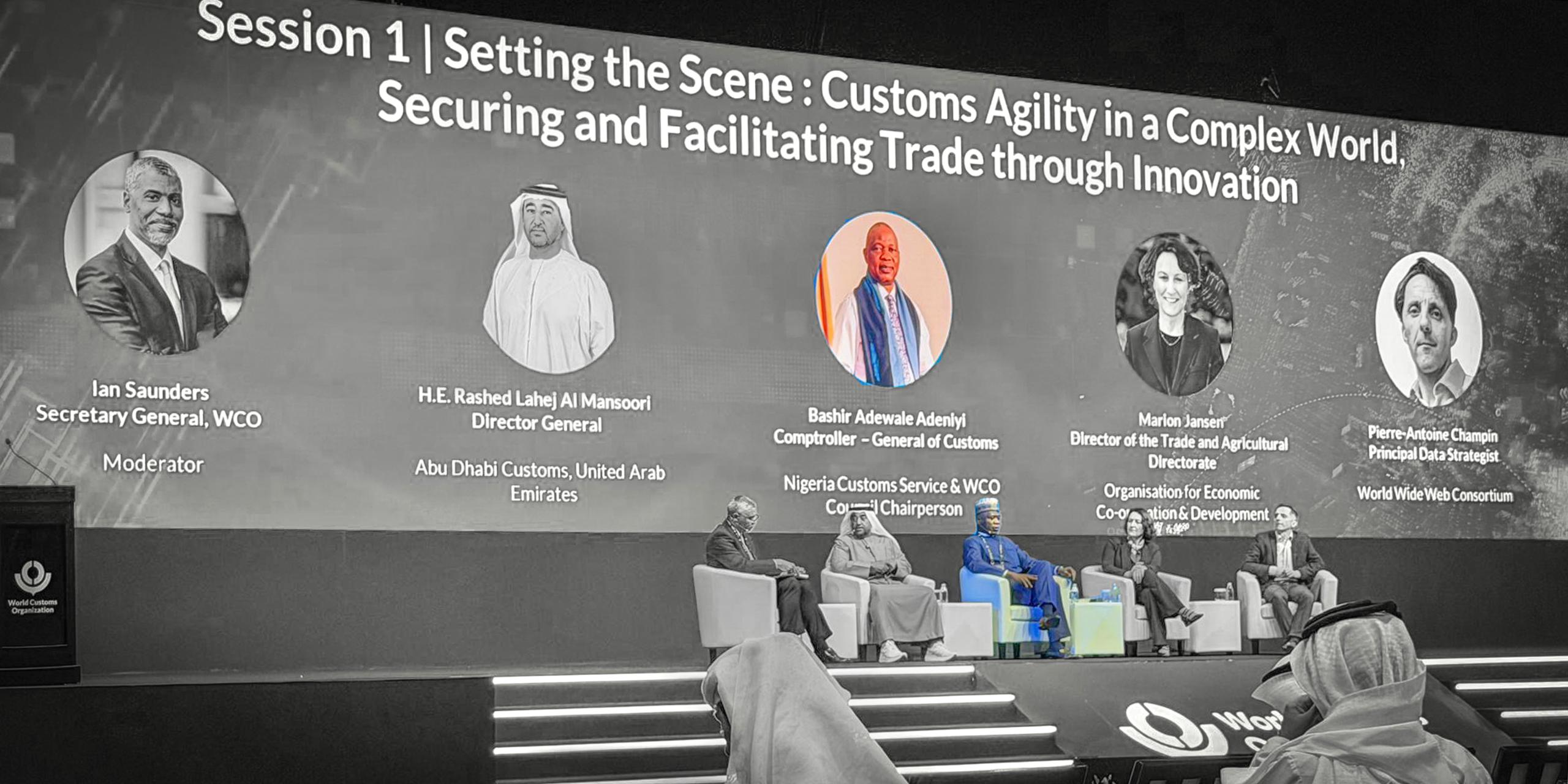
The three-day conference, which opened on Wednesday, 28 January 2026, at the Abu Dhabi National Exhibition Centre (ADNEC), is themed “Customs Agility in a Complex World: Securing and Facilitating Trade through Innovation.” It convenes Customs administrations, policymakers, technology providers and industry leaders from around the world to explore how technology can enhance border security while supporting legitimate trade.
Nigeria’s participation highlights the Service’s accelerating trade modernisation agenda and its alignment with global best practices, particularly in digitalisation, data exchange and intelligence-driven enforcement.
Speaking during a high-level panel session, the Comptroller-General of Customs (CGC), Adewale Adeniyi—who also serves as Chairperson of the WCO Council—underscored the importance of structured international cooperation in tackling emerging cross-border threats.
“Our experience has shown that strong engagement with international organisations such as INTERPOL, the World Intellectual Property Organisation (WIPO) and the Universal Postal Union creates opportunities for deeper collaboration, especially in tracking criminal networks, protecting intellectual property and managing emerging trade risks,” Adeniyi said.
He noted that challenges such as cargo diversion along transit corridors are global in nature and require coordinated Customs-to-Customs responses.
“Diversion of goods in transit is not unique to Nigeria. Through WCO instruments and mutual administrative assistance frameworks, Customs administrations can investigate offences more effectively and ensure goods reach their intended destinations,” he added.
The CGC also commended innovative solutions showcased at the conference, including a digital humanitarian corridor solution developed by the UAE, describing it as a game-changer for the movement of relief consignments.
“If scaled across the global Customs community, this solution can significantly enhance the efficient movement of humanitarian goods within a fully digitalised environment,” he said.
Adeniyi further stressed that Customs agility goes beyond deploying technology, emphasising the need for institutions to absorb change, adapt to evolving risks and continuously refine operational approaches. He praised UAE Customs for demonstrating what is achievable when innovation is fully embraced.
However, he cautioned that sustainable modernisation must be anchored on deliberate investment in human capital, noting that many Customs administrations are navigating generational transitions as experienced officers exit the system.
“Building the capacity of the next generation of officers is critical to maximising the benefits of technology and sustaining long-term institutional effectiveness,” he said.
Also representing Nigeria at the conference was the Trade Modernisation Project (TMP) team. The General Manager, TMP, Ahmed Ogunsola, participated in a panel session titled “Above the Clouds: Enhancing Customs Security through Cloud Computing and Data Analytics,” where experts discussed the use of cloud infrastructure and advanced analytics to strengthen risk management and compliance.
In a tech-focused session, TMP’s software development lead, Nabil Mustapha, delivered a presentation on the evolution of national trade systems, highlighting secure architectures, seamless user experience and measurable outcomes.
At the exhibition, TMP showcased Nigeria’s Customs modernisation efforts, including the indigenous, custom-built B’odogwu application and other digital solutions designed to integrate all players in the trade ecosystem and simplify processes for officers and stakeholders.
The conference opening ceremony featured remarks by senior UAE officials, including Ali Mohammed Al Shamsi, Chairman of the Federal Authority for Identity, Citizenship, Customs and Port Security, who highlighted the role of artificial intelligence, data analytics and smart monitoring systems in achieving secure and seamless trade. The Director-General of Customs and Port Security, Ahmed Abdullah bin Lahaj Al Falasi, outlined future pillars of Customs development centred on technology, human capacity and inter-agency integration.
In his address, WCO Secretary-General Ian Saunders reaffirmed the central role of Customs administrations in global economic and social prosperity, stressing that innovation is essential for managing evolving border threats and securing supply chains.
Beyond panel sessions and exhibitions, the NCS and TMP teams actively participated in the conference Hackathon, collaborating with global Customs and technology experts to develop practical, innovation-driven solutions to emerging trade and border challenges—demonstrating Nigeria’s growing capacity to contribute to global Customs technology, not just adopt it.

Overall, Nigeria Customs’ active engagement at the conference reinforces its commitment to modernising operations, deepening international partnerships and deploying innovation to deliver efficient, secure and globally aligned trade facilitation.