
••• Stakeholders commend Service’s skills acquisition, reformatory and reintegration programmes
By| Goodluck E.Adubazi, Abuja
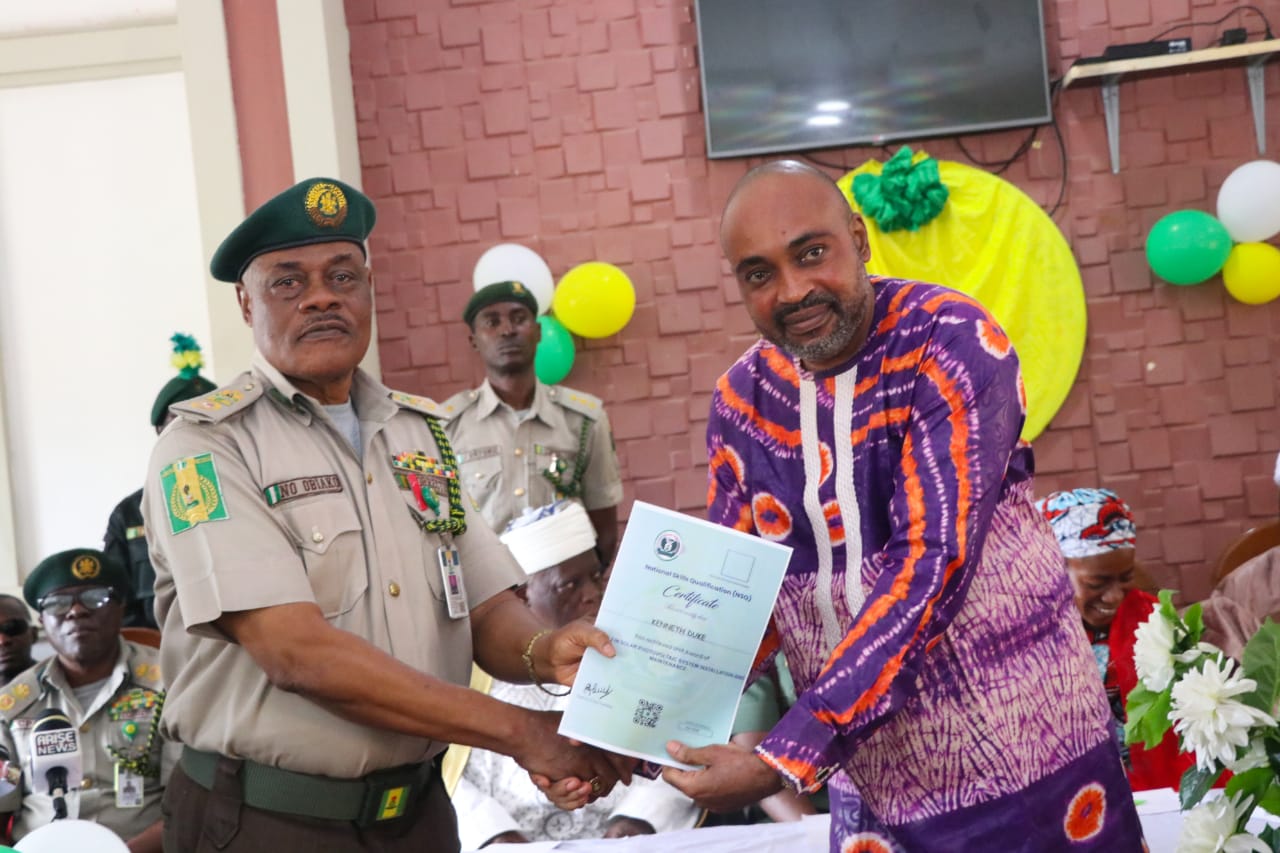
No fewer than 243 inmates at the Medium Security Custodial Centre, Kuje, Abuja, have received Trade Test Certificates following their successful training and assessment in 11 vocational skills under the Nigerian Correctional Service (NCoS), FCT Command.

The certification formed part of the Service’s continuing efforts to equip inmates with practical skills that would enhance their rehabilitation, self-reliance and eventual reintegration into society.
The beneficiaries were trained and assessed in Carpentry and Joinery, Tailoring and Dress Making, Laundry and Dry Cleaning, Poultry, Leather Work, Fisheries, Soap, Cream and Candle Making, Weaving and Textile, Hair Dressing and Body Care, Bricklaying and Masonry, as well as Solar Installation.
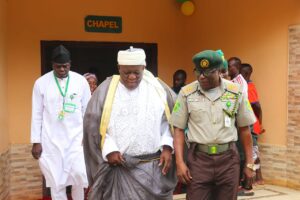
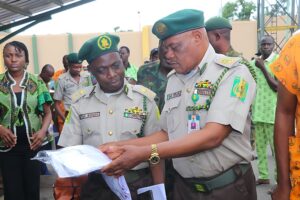
The ceremony also featured a skills and products exhibition showcasing items produced by inmates from the three custodial centres under the FCT Command, demonstrating the practical knowledge acquired through the various training programmes.
In his welcome address, the Controller of Corrections, FCT Command, Christopher Peter Jen, congratulated the beneficiaries and highlighted the range of reformatory programmes being implemented across custodial facilities in the Federal Capital Territory.
Jen said the programmes were designed to provide inmates with education, vocational skills and other interventions required for rehabilitation and successful reintegration into society.
Delivering the keynote address on behalf of the Controller-General of Corrections, Sylvester Ndidi Nwakuche, MFR, mni, the Deputy Controller-General of Corrections overseeing the Directorate of Inmates’ Training and Productivity, Nicolas Obiako, described the event as a celebration of transformation, hope, dignity, rehabilitation and second chances.
Obiako said vocational training would equip inmates with practical skills capable of supporting legitimate employment, entrepreneurship and self-reliance after their release.
He, however, stressed that effective rehabilitation must go beyond vocational training to include education, counselling and psychosocial support.
The Director, Skills Development and Certification, Federal Ministry of Labour and Employment, Engr. Tiza Chila Shaakaa, explained that the Trade Test Certificate of Competence is an internationally recognised credential that provides a structured assessment of competence in technical and vocational trades.
Shaakaa disclosed that 65 trades had been approved for trade testing certification in Nigeria, with the majority involving hands-on skills.
Representing the Director-General of the National Directorate of Employment (NDE), Mr. Chris Bamsida, urged the beneficiaries to remain committed to self-development, assuring them that “there is life after incarceration.”
He pledged the NDE’s continued partnership with the NCoS in creating opportunities for inmates to translate their acquired skills into sustainable livelihoods.
Also speaking, Mr. Johnbull Amayaevbo, mni, commended the FCT Command for the initiative and called on Nigerians, development partners and non-governmental organisations to support the NCoS in expanding skills acquisition and rehabilitation programmes for inmates.
Representing the traditional institution, the Gomo of Kuje, HRH Dr. Haruna Tanko Jibrin, also commended the Service’s reformatory efforts and urged traditional rulers to strengthen their support for rehabilitation and reintegration initiatives.
A major highlight of the ceremony was the presentation of Awards of Appreciation and Recommendation to the Controller-General of Corrections, Sylvester Ndidi Nwakuche; the Controller of Corrections, FCT Command, Christopher Peter Jen; and the National Open University of Nigeria (NOUN) Desk Officer, DSC Adikwu Owoicho.
The awards were presented by Chinedu Eze, an ex-inmate and the first graduate of the National Open University of Nigeria from Kuje Medium Security Custodial Centre, in recognition of their contributions to the educational and rehabilitation efforts of inmates.
Speaking on behalf of the graduands, the inmates expressed appreciation to the NCoS and other stakeholders, saying the skills acquisition programmes had enhanced their productive capacities and provided them with a positive pathway towards life after incarceration.
The Controller-General of Corrections further stressed the need for certification to serve as a bridge to economic reintegration, calling for sustained support for beneficiaries through access to tools, employment, mentorship and entrepreneurship opportunities.
He commended the management of the FCT Command, officers in charge of custodial centres in the FCT, instructors, assessors and partner organisations, particularly the Federal Ministry of Labour and Employment, for their contributions to the training, assessment and certification process.
The Controller-General urged the beneficiaries to embrace their second-chance opportunity with discipline and determination and remain committed to becoming productive and responsible members of society upon discharge.