
Ebola: One Confirmed Case, 44 Contacts Under Watch as Nigeria Battles Misinformation – By Milliscent Nnwoka
… Says NCDC report raises concerns over public trust, fake remedies, healthcare preparedness
Nigeria’s response to a newly confirmed imported Ebola case in the Federal Capital Territory (FCT) is facing a critical test of public trust, as health authorities battle misinformation, public anxiety and concerns over the country’s preparedness to contain the disease.
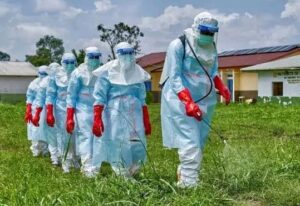
The Federal Government confirmed the case on October 20, 2026, identifying 44 contacts for monitoring as part of measures to prevent further transmission.
However, a social-listening report attributed to the Infodemic Management Unit of the Nigeria Centre for Disease Control and Prevention (NCDC), covering September 21 to October 21, has highlighted growing public concerns about healthcare workers’ safety, government accountability, contact tracing and access to reliable information.
The report also identified the circulation of unverified claims that salt water, bitter kola and other traditional remedies could prevent or cure Ebola, warning of the risks associated with misinformation during a public health emergency.
Health authorities have stressed the importance of distinguishing between confirmed infections and people identified as contacts who are being monitored because of possible exposure.
The 44 contacts are not additional confirmed Ebola cases.
HOW THE CASE WAS DETECTED
According to the World Health Organisation (WHO), the patient is a woman who travelled from Uganda to Nigeria and developed symptoms on October 7, four days after arriving in the country.
She reportedly sought medical attention at a private health facility in Abuja on October 11, before laboratory testing confirmed infection with the Bundibugyo virus on October 20.
The patient was subsequently isolated and placed under medical care, while investigations continued into the likely source of infection and her travel and exposure history.
The Federal Ministry of Health and Social Welfare said the 44 contacts identified included healthcare workers, patients, caregivers and travel contacts.
Authorities have also supported the facility where the patient initially received treatment to strengthen infection prevention and control measures.
The NCDC activated its incident management system, while WHO and other partners supported case investigation, contact tracing, infection prevention and the provision of protective equipment.
The Federal Government has directed healthcare facilities nationwide to promptly identify and isolate suspected cases, adhere to infection prevention procedures and notify public health authorities.
PUBLIC ANXIETY, TRUST UNDER PRESSURE
The NCDC-linked social-listening report identified public trust as a major factor shaping conversations about the Ebola response.
Concerns centred on government preparedness, the safety of healthcare workers, the management of public health resources and the transparency of information released by authorities.
The report also highlighted gaps in public understanding of Ebola symptoms, transmission routes, preventive measures and where to seek appropriate medical attention.
Of the 133 online mentions classified by sentiment, 78, representing 58.6 per cent, were neutral; 35, or 26.3 per cent, were positive; while 20, representing 15 per cent, were negative.
The figures reflect only the monitored online conversations and should not be interpreted as representing the opinions of the entire Nigerian population.
Neutral discussions were largely driven by factual news reports, official NCDC announcements, travel screening advisories and clinical information.
Positive conversations included commendations of the reported isolation of the imported case and airport health screening, while negative discussions focused on international travel risks, pressure on the healthcare system and concerns about the thoroughness of contact tracing.
The report recorded a peak of 43 mentions on October 20, following the official confirmation of the case.
Although the figures provide insight into public discussions, they do not establish the prevalence of infection or independently determine the effectiveness of the response.
SALT WATER, BITTER KOLA CLAIMS RESURFACE
A major concern highlighted in the report is the circulation of claims that drinking or bathing with salt water, consuming bitter kola or using traditional herbal preparations can prevent or cure Ebola.
The report also identified misleading claims suggesting that Nigeria had recorded 44 Ebola cases in the FCT, apparently confusing identified contacts with confirmed infections.
Health authorities have repeatedly warned against relying on unproven remedies, stressing that such claims can discourage people from seeking appropriate medical attention.
The Federal Government has explained that Ebola spreads through direct contact with the blood or body fluids of an infected person who is showing symptoms, or someone who has died from the disease, as well as contact with contaminated materials.
According to the official guidance, an infected person does not transmit Ebola before symptoms begin.
Anyone who believes they may have been exposed is advised to report the exposure promptly, even if they feel well.
People who develop symptoms after possible exposure should avoid close contact with others and contact public health authorities for guidance before visiting a healthcare facility.
The Ministry of Health listed NCDC’s toll-free number as 6232 for public enquiries and guidance.
2014 EXPERIENCE OFFERS LESSONS
Nigeria’s successful containment of the 2014 Ebola outbreak provides an important reference point for the current response, although health experts warn against complacency.
The 2014 outbreak recorded 20 cases and eight deaths before transmission was contained. Nigeria was declared Ebola-free on October 20, 2014.
Twelve years later, the confirmation of another imported case has renewed questions about the country’s capacity to repeat that achievement.
The current response is drawing on established public health structures, but authorities face the challenge of ensuring rapid identification of suspected cases, effective contact monitoring, strict infection prevention and accurate public communication.
The timeline of the present case, from the onset of symptoms on October 7 to laboratory confirmation on October 20, has also generated questions about early detection.
However, the dates alone do not establish negligence or a failure of the health system.
Authorities are expected to explain the findings of ongoing investigations and any lessons that could improve the early recognition of future cases while protecting the patient’s confidentiality.
VACCINE, CONTACT TRACING QUESTIONS
The social-listening report also identified discussions about the availability of the Ervebo vaccine and questions concerning the protection it offers against the virus involved in the current case.
Health communication must distinguish between vaccines developed for particular Ebola virus species and their suitability for the Bundibugyo virus.
The availability of a vaccine against one Ebola virus species does not automatically mean it protects against every other species.
Consequently, authorities need to provide accurate information about the virus confirmed in the present case and the specific medical countermeasures applicable to it.
WHO has continued to emphasise rapid case identification, contact follow-up, infection prevention and control, and community engagement as essential components of the response.
NCDC REPORT CALLS FOR STRONGER COMMUNICATION
The social-listening report recommends coordinated public messaging, continued monitoring of online conversations, engagement with faith-based organisations and schools, and effective communication at Nigeria’s points of entry.
It also documents previous communication activities, including myth-busting materials, radio jingles and media appearances.
The challenge now is to ensure that public information consistently answers critical questions about what has been confirmed, what remains under investigation, how exposed persons should respond and what measures are being taken to protect healthcare workers.
For health authorities, transparent communication is essential to ensuring that people cooperate with contact tracing, report symptoms promptly and avoid spreading unverified claims.
The report’s findings underscore the importance of treating public communication as a central part of outbreak management rather than an activity separate from clinical intervention.
With one confirmed imported case and 44 identified contacts under monitoring, Nigeria’s immediate priority remains preventing further transmission while keeping the public accurately informed.
Ultimately, the success of the response will depend not only on the speed of medical intervention but also on the ability of health authorities to earn public confidence, counter misinformation and ensure that Nigerians know what to do when confronted with a possible risk of infection.
About the Author:
Dr. Milliscent Nnwoka is a journalist, communications specialist and information integrity advocate whose work focuses on media literacy, civic engagement and countering disinformation.