
By | Goodluck E. Adubazi, Abuja
The presidential candidate of the Nigeria Democratic Congress (NDC), Peter Obi, has pledged a tax holiday for small and medium-sized enterprises (SMEs) and declared his intention to make agriculture a national emergency if elected president in the 2027 general election.
Obi also promised an aggressive fight against corruption, improved security, measurable improvements in education and healthcare, and urgent reforms in electricity transmission and distribution, declaring that his administration would focus on solving Nigeria’s problems rather than blaming previous governments.
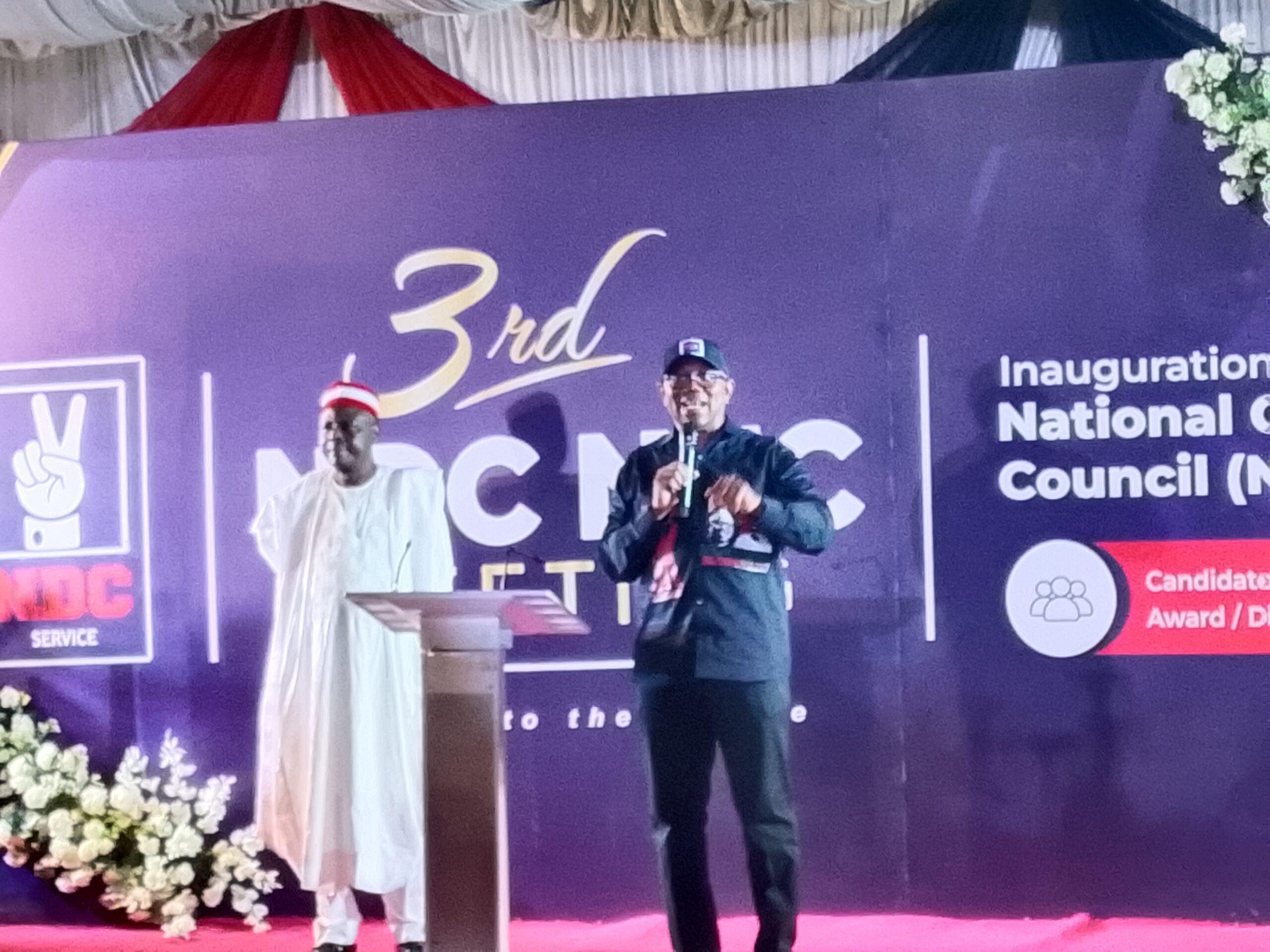
The former Anambra State governor made the commitments on Monday, October 26, 2026, in Abuja, while addressing party leaders, candidates and supporters at the inauguration of the NDC Presidential Campaign Committee (PCC) and National Campaign Council (NCC), held at the JD-Event Centre.
The event also featured the presentation of certificates of return to party candidates ahead of the 2027 elections.
Obi criticised President Bola Tinubu’s administration over the state of the economy, rising poverty, insecurity, hunger and the challenges facing businesses, arguing that Nigerians were demanding a new direction and more accountable leadership.
“We will not be a government of blame. The purpose of governance is to solve problems, not to blame people,” Obi said.
He pledged that his administration would begin delivering measurable results from its first day in office, insisting that Nigerians should judge a government by its performance rather than promises or excuses.
The NDC candidate identified corruption as one of the major obstacles to Nigeria’s development, promising to confront the problem directly and ensure that public resources were deployed for the benefit of citizens.
He questioned the management of government revenues and borrowing under the Tinubu administration, demanding accountability for funds generated and borrowed over the past three years.
According to Obi, the country’s worsening economic conditions reflect a failure to translate available resources into tangible improvements in the lives of ordinary Nigerians.
He also criticised the low implementation of capital expenditure in successive federal budgets, saying the situation had contributed to difficulties for contractors, suppliers and businesses.
“We must stop people from stealing public money. We must use public money for public good,” he declared, promising that anyone found engaging in corruption under his administration would be held accountable.
Obi said his proposed anti-corruption drive would form part of a broader national transformation agenda aimed at restoring public confidence in government and rebuilding the economy.
The presidential hopeful promised to declare a state of emergency in agriculture, arguing that improving security, particularly in northern Nigeria, would enable farmers to return to their farms and increase food production.
He said Nigeria must strengthen domestic agricultural production to meet the country’s food requirements and provide raw materials for local industries.
“We are going to declare an emergency on agriculture. When we secure the North, our farmers must go back and produce what we eat and what we use in our industries,” he said.
Obi also promised to make security a priority, arguing that leaders must demonstrate the willingness to confront threats affecting communities rather than remain distant from the suffering of citizens.
He pledged to tackle insecurity alongside corruption and agricultural challenges, presenting the three areas as critical to restoring economic stability and improving living standards.
On the economy, Obi promised to introduce a tax holiday for small businesses and reduce the burden of multiple taxes, levies and fees that he said were making it difficult for entrepreneurs to survive.
He also pledged to expand access to credit for small and medium-sized enterprises, proposing that more than 20 per cent of available bank credit should go to small businesses.
According to him, supporting SMEs would encourage entrepreneurship, revive struggling businesses, create employment and strengthen domestic production.
He argued that Nigeria could not achieve sustainable economic growth without creating an environment in which businesses could grow, invest and employ more people.
The NDC candidate further promised to pursue policies aimed at reviving industries and increasing productivity, stressing that economic recovery must be reflected in improved household incomes and better opportunities for citizens.
Obi also criticised the state of electricity supply, pledging emergency measures to address challenges in power transmission and distribution.
He argued that reliable electricity was essential for industrial expansion, economic growth and the survival of small businesses.
“No country can grow its GDP without growing in power,” he said, promising that improvements in electricity supply would be measurable.
On education, Obi pledged to reduce the number of out-of-school children and improve the quality of basic education. He also promised to prioritise healthcare and other essential social services.
He insisted that his administration would not merely construct schools or announce policies but would focus on ensuring that children had access to functional educational facilities and quality learning.
According to him, citizens should be able to see tangible improvements in essential services rather than repeatedly hear explanations about the problems confronting the country.
Obi accused the Tinubu administration of failing to deliver on its promises to improve security, fight corruption and revive the economy.
He questioned the administration’s handling of public resources, asking Nigerians to demand explanations about the funds generated during its tenure and the projects executed with the money.
The NDC candidate also argued that worsening hunger, poverty and insecurity had reinforced the need for a change in leadership.
He urged the ruling All Progressives Congress (APC) to account for its performance and present evidence of its achievements to Nigerians.
Obi maintained that the NDC would take its proposals to voters across the country, promising an administration focused on responsibility, accountability and measurable outcomes.
Earlier, the NDC National Leader, Senator Seriake Dickson, said the party was established to provide Nigerians with an alternative political platform and prevent the country from drifting towards a one-party system.
Dickson thanked party members, candidates and supporters for their contributions to building the NDC, describing the party as a collective project driven by a shared vision of a better Nigeria.
He also acknowledged aspirants who did not emerge as candidates, saying their contributions remained important to the party’s broader political objectives.
The former Bayelsa State governor criticised the APC administration over insecurity, corruption and economic management, arguing that the government had failed to meet key expectations it raised before taking office.
He urged party members to campaign peacefully and present their ideas to Nigerians rather than engage in political violence.
“We come for a battle of ideas, not violence,” Dickson said, calling on security agencies and other public institutions to discharge their constitutional responsibilities impartially.
He also urged Nigerians to participate actively in the 2027 elections, vote according to their conscience and protect their votes.
Dickson insisted that the Independent National Electoral Commission (INEC) and other relevant institutions must ensure free, fair and credible elections, warning that the party would not accept anything short of a credible electoral process.
In his remarks, the NDC National Chairman, Senator Moses Cleopas Zuwoghe, said the event was convened to inaugurate the party’s Presidential Campaign Committee and National Campaign Council and formally present certificates of return to its candidates.
He warned that the certificates contained security features and cautioned against unauthorised possession or use of the documents.
Zuwoghe described the party’s political mission as a rescue effort, urging candidates and members to remain committed to the party’s objectives and convince Nigerians of its capacity to lead.
He expressed confidence in Obi’s leadership, saying the party believed Nigerians would entrust the country’s management to its presidential candidate.
The inauguration marks a further step in the NDC’s preparations for the 2027 general election, as the party seeks to position itself as an alternative to the ruling APC and other political parties.
With promises of tax relief for small businesses, an agricultural emergency, stronger anti-corruption measures and improvements in security, education and electricity, Obi presented the NDC’s campaign as a pledge to move Nigeria away from economic hardship towards accountable governance and inclusive development.