
By| Goodluck E.Adubazi, Abuja
The Honourable Minister of State for Health and Social Welfare, Dr. Iziag Adekunle Salako, on Monday, June 8, 2026, disclosed that unsafe food is responsible for an estimated 866 million cases of illness and 1.5 million deaths globally every year, describing the burden as far greater than previously understood.

Speaking in Abuja during the commemoration of World Food Safety Day 2026, themed “From Burden to Solutions: Safe Food Everywhere,” the minister said new global modelling has revealed the devastating health and economic consequences of food-borne diseases, particularly in Africa.
According to him, Africa continues to bear the highest per-capita burden of food-borne illnesses, with children under five years accounting for a disproportionate share of the impact.
Dr. Salako revealed that Nigeria records nearly 50 million food-borne illnesses annually, while unsafe food contributes to more than 53,000 deaths every year.
He said the illnesses and deaths translate into a staggering 4.26 million years of healthy life lost through sickness, disability, or premature death.
“More than 80 per cent of the food-borne disease burden in Nigeria falls on children under five years,” the minister said, noting that the true cost of unsafe food extends beyond illness and mortality to the loss of children’s cognitive, physical and developmental potential.
The minister identified diarrhoea-causing pathogens as the leading drivers of the country’s food-borne disease burden. He disclosed that more than 40 million diarrhoeal cases in Nigeria are linked to food-borne pathogens such as Salmonella, E. coli, Campylobacter, Shigella and Rotavirus.
“These infections remain major causes of hospitalization, malnutrition and death among our youngest citizens,” he said.
Dr. Salako also warned about the growing threat posed by chemical contaminants, particularly lead exposure through contaminated grains, spices and water sources, which he said accounts for tens of thousands of healthy life years lost annually.
Nigeria Making Progress on Food Safety
Despite the challenges, the minister highlighted significant progress made by Nigeria in strengthening food safety systems.
He said Nigeria’s 2023 Joint External Evaluation showed measurable improvements across food safety indicators, while the country’s 2025 State Party Annual Report achieved a Level 3 score, placing Nigeria ahead of the food safety targets set by the World Health Organization for low- and middle-income countries and Sub-Saharan Africa.
According to him, Nigeria is now among the leading countries in the region with functional systems for detecting, reporting and responding to food-borne disease outbreaks.
He further noted that the National Food Safety Management Committee has strengthened inter-agency collaboration, while the 2023 National Integrated Guidelines for Food-Borne Disease Surveillance and Response have established a unified framework for disease surveillance, laboratory confirmation, outbreak investigations, food recalls and risk communication.
Dr. Salako, however, warned against complacency, saying the latest global estimates should serve as a wake-up call for stronger interventions.
He called for increased surveillance of heavy metals and chemical contaminants, improved food safety practices in traditional markets, better hygiene and sanitation infrastructure, enhanced laboratory capacity, and stricter compliance with national food safety standards.
The minister also linked food safety to the rising burden of non-communicable diseases, including hypertension, stroke, heart disease, diabetes and obesity.
He announced that Nigeria has developed a National Guideline for Sodium Reduction aligned with WHO standards, while the National Agency for Food and Drug Administration and Control has finalized draft sodium reduction regulations for processed foods.
He added that Nigeria is implementing trans-fat elimination regulations and strengthening the sugar-sweetened beverage tax as part of efforts to promote healthier diets.
“We are also developing front-of-pack labelling to help consumers make informed food choices,” he said.
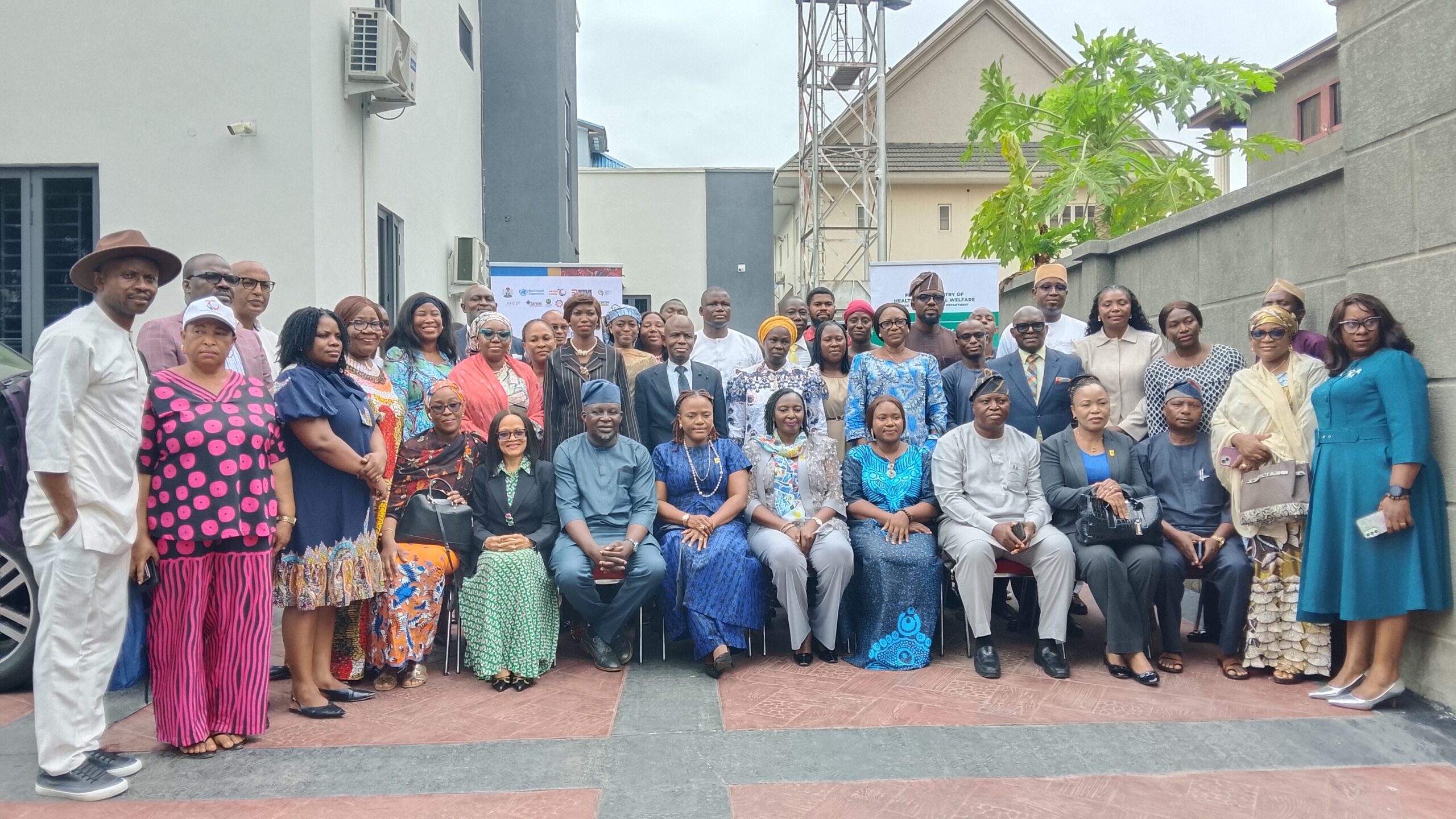
Representatives of the World Health Organization, Standards Organisation of Nigeria, National Agency for Food and Drug Administration and Control, and other stakeholders, all emphasizing the event’s central message: “From Burden to Solutions: Safe Food Everywhere.”
Speakers stressed that food safety is everyone’s responsibility and called for stronger collaboration among government agencies, industry players, researchers, development partners and consumers to ensure safer food systems across Nigeria.
Expert Panels Examine Food Safety Challenges
The event featured two panel discussions focusing on key food safety concerns.
The first session examined Nigeria’s evolving food-borne disease burden and strategies for reducing illness and mortality linked to unsafe food.
The second session addressed unhealthy diets, sodium consumption and non-communicable diseases, exploring ways to make food not only safe but also healthier for Nigerians.
Concluding his address, Dr. Salako called on the media to intensify public awareness campaigns on food safety, healthy diets and safe food-handling practices.
“The media plays a critical role in shaping public behaviour, exposing unsafe practices and promoting accountability,” he said.
He urged all stakeholders to work together toward building a Nigeria where every household, market and community can confidently access safe and healthy food.
“Food safety is not optional. It is a national health security priority,” the minister declared.