By| Goodluck E.Adubazi, Abuja
President Bola Ahmed Tinubu has acknowledged that his administration’s economic reforms have imposed hardship on Nigerians but insisted that the measures are laying the foundation for a more bankable, investment-driven and reliable energy sector capable of delivering long-term prosperity.
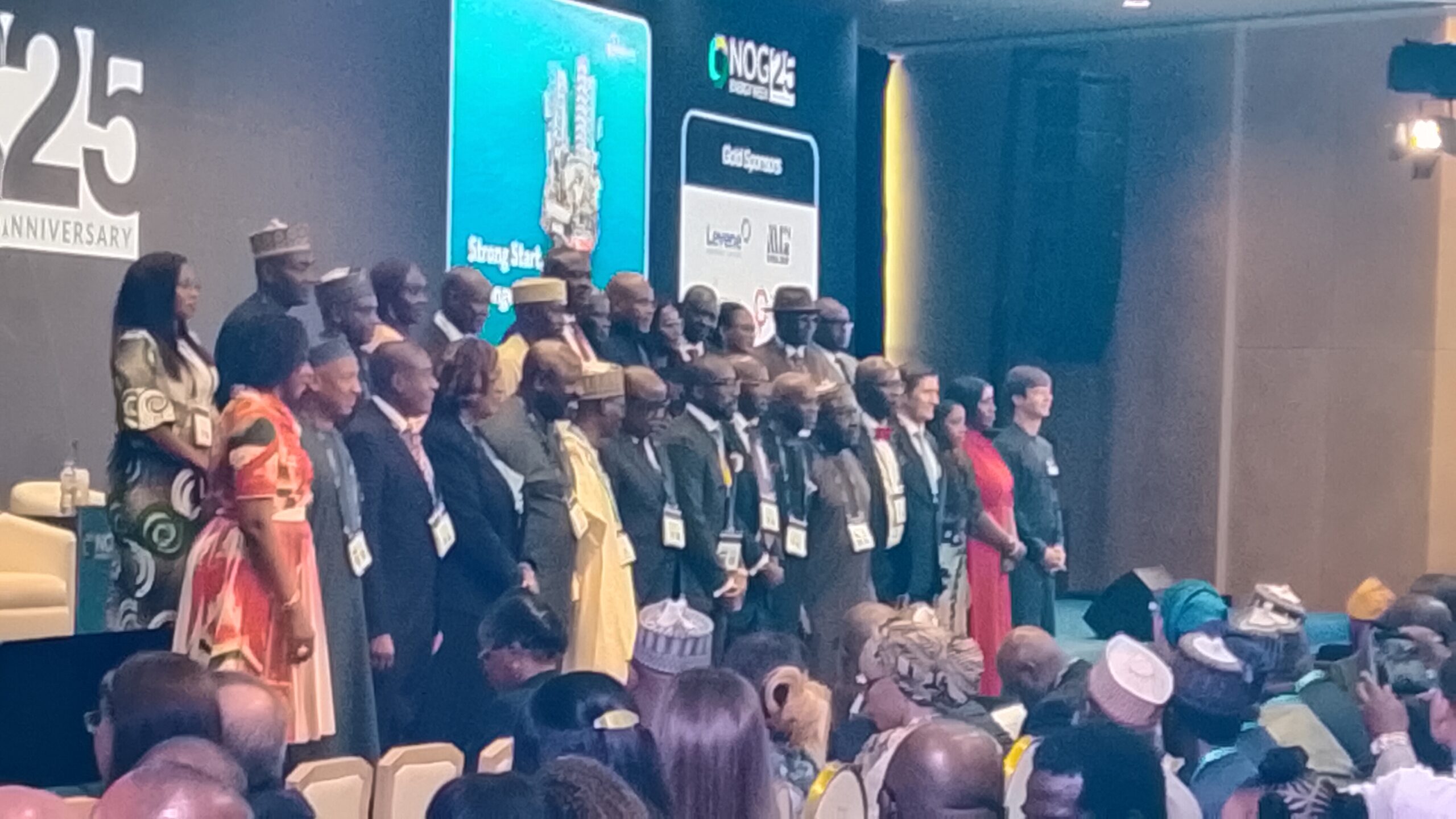
Represented by his Special Adviser on Energy, Olu Verheijen, at the opening of the NOG Energy Week 2026 in Abuja on Tuesday, the President said the government’s reforms were restoring investor confidence and repositioning Nigeria as a preferred destination for energy investments.
According to him, Nigeria is targeting crude oil production of three million barrels per day and 10 billion cubic feet of gas by the end of the decade, while attracting more than $50 billion in investments across the energy value chain.
“We are no longer asking the world to trust Nigeria; we are working to make Nigeria bankable,” Tinubu declared.
He disclosed that the country had secured over $10 billion in Final Investment Decisions (FIDs) within the last three years, while crude oil and condensate production had increased by more than 400,000 barrels per day, with onshore production reaching its highest level in nearly two decades.
The President said the administration’s Presidential Power Sector Financial Reforms Programme was designed to restore confidence in the electricity value chain by resolving legacy debts, improving financial discipline and rebuilding market credibility.
He admitted that recent increases in the price of cooking gas had placed additional pressure on households but assured Nigerians that the government was implementing measures to boost domestic Liquefied Petroleum Gas (LPG) supply, improve affordability and strengthen market transparency.
Tinubu highlighted tax incentives, including the zero-rating of VAT on LPG and related equipment as well as import duty waivers worth about $93 million for LPG infrastructure projects, describing gas as the backbone of Nigeria’s industrialisation agenda.
He said reforms would continue despite resistance, stressing that the objective was to create jobs, strengthen institutions, improve electricity supply and transform Nigeria’s vast natural resources into sustainable prosperity.
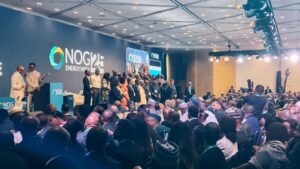
Earlier, President of DMG Events, organisers of the NOG Energy Week, Christopher Hudson, painted a sobering picture of global energy challenges, revealing that over 750 million people worldwide still lack access to electricity while more than 2.1 billion have no access to clean cooking fuels.
Hudson noted that global electricity demand would continue to rise sharply through 2040, driven largely by rapid urbanisation, population growth, expansion of artificial intelligence and data centres, and increasing demand for cooling systems.
He said the world would require more than six million kilometres of new electricity transmission lines by 2050 and investments exceeding $7 trillion to meet the growing energy requirements of data centres.
According to him, renewable energy and natural gas would both remain critical in meeting future global demand, arguing that the world was experiencing “energy addition” rather than simply an energy transition.
He described NOG Energy Week as a strategic platform for governments, investors and industry leaders to forge partnerships capable of delivering affordable, secure and accessible energy while protecting economies against future geopolitical shocks.
Also speaking, the Minister of State for Petroleum Resources (Oil), Senator Heineken Lokpobiri, said Nigeria was witnessing renewed investor confidence following reforms introduced by the Tinubu administration.
He disclosed that active oil drilling rigs had increased from about 14 in 2023 to over 60, describing the development as evidence of sustained investment and future production growth.
Lokpobiri attributed the turnaround to policy reforms, the implementation of the Petroleum Industry Act (PIA), improved regulatory certainty and the approval of major asset divestments involving international oil companies.
According to him, indigenous operators now account for more than 60 per cent of Nigeria’s daily crude oil production, following acquisitions of assets previously owned by international oil companies.
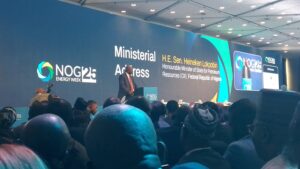
The minister maintained that no international oil company had exited Nigeria, explaining that companies such as Shell, ExxonMobil and ENI had simply shifted their focus to deepwater operations while indigenous firms expanded activities onshore.
He also announced that government had commissioned a comprehensive review of the more than 270 taxes, levies and fees imposed on operators in the oil and gas sector to improve Nigeria’s global competitiveness.
Lokpobiri argued that the global conversation had shifted from energy transition to energy mix, insisting that Africa must continue to exploit its hydrocarbon resources to finance industrialisation and economic development.
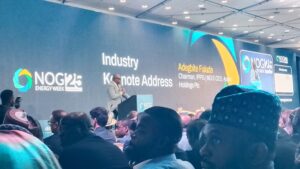
Chairman of the Independent Petroleum Producers Group (IPPG), Adegbite Falade, urged stakeholders to deepen collaboration, warning that Nigeria must strengthen infrastructure and production capacity to take advantage of future geopolitical disruptions in global energy markets.
Falade called for harmonisation of the numerous taxes and regulatory charges imposed on operators, increased investment in human capital development and stronger integration between the upstream, midstream and downstream sectors to maximise value addition.
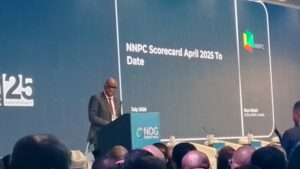
In his remarks, the Group Chief Executive Officer of NNPC Limited, Engr. Bashir Bayo Ojulari, said Africa’s greatest challenge was not a lack of natural resources but inadequate collaboration among governments, investors, regulators, academia and industry players.
He stressed that Nigeria’s future energy competitiveness would depend on stronger partnerships, improved governance, increased investment in infrastructure and a deliberate shift from exporting raw resources to building integrated industrial value chains.
Ojulari added that NNPC Limited was repositioning itself as an ecosystem builder connecting technology, capital, policy, talent and markets to drive sustainable energy development across Nigeria and Africa.
The 2026 NOG Energy Week brought together policymakers, regulators, investors and industry leaders from across the Africa to deliberate on strategies for strengthening Africa’s energy security, accelerating investment and driving economic growth through collaboration.