
••• 80.3% Support Women for House of Reps, 75.4% for Senate, 80% for State Assembly
By| Goodluck E.Adubazi, Abuja
As Nigeria prepares for the 2027 general elections, a new nationwide voter preference survey has revealed strong willingness among Nigerians to participate in the polls, with a significant majority expressing readiness to support women candidates for elective positions.
The survey conducted by Invictus Africa showed that 79.7 per cent of eligible voters said they would definitely vote in the 2027 general elections, while 64.4 per cent said they would vote for a woman candidate.
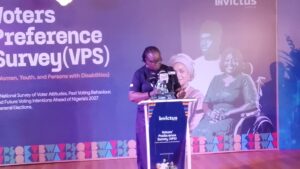
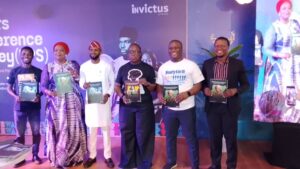
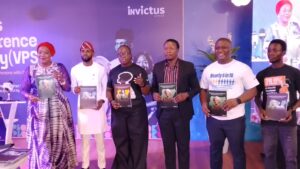
The findings were contained in the organisation’s Voters Preference Survey (VPS) unveiled on Tuesday in Abuja.
According to the survey, support for women candidates varies depending on the elective position.
It revealed that 80.3 per cent of voters said they would vote for a woman candidate for the House of Representatives, while 80 per cent said they would support a woman seeking election into the State House of Assembly.
Similarly, 75.4 per cent said they would vote for a woman candidate for the Senate.
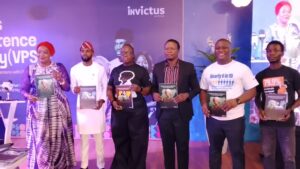
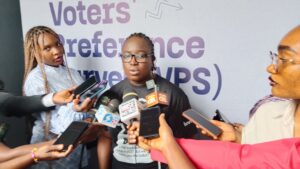
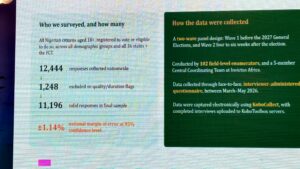
The survey, which was conducted among 11,196 eligible voters across Nigeria’s 36 states and the Federal Capital Territory, also challenged the long-held assumption that Nigerian voters are generally unwilling to elect women.
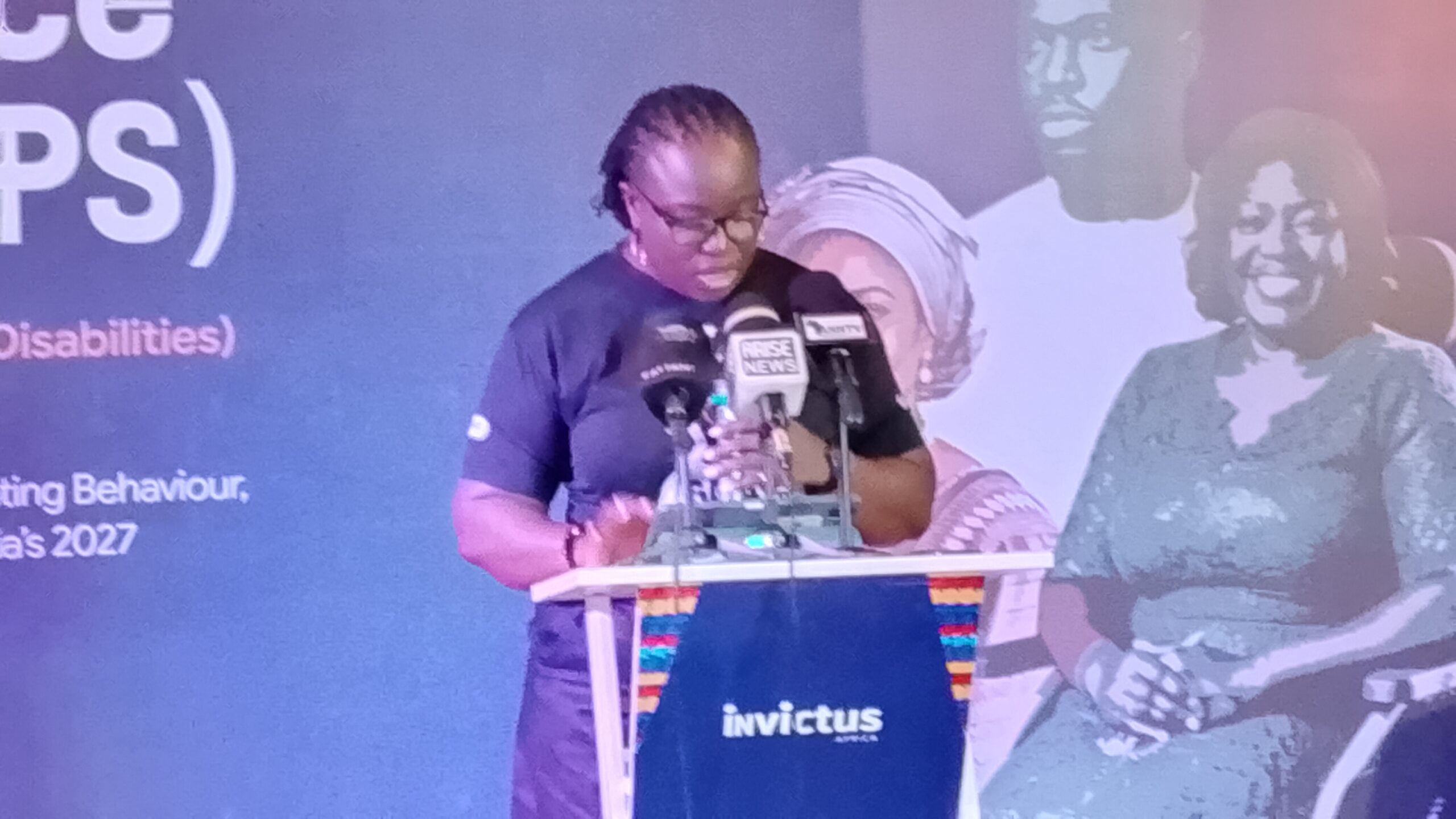
Presenting the findings, Executive Director of Invictus Africa, Bukky Shonibare, said 69.1 per cent of respondents disclosed that they had never voted for a woman candidate since 1999.
She, however, said the major reason was not necessarily rejection of women candidates, but the absence of women on the ballot.
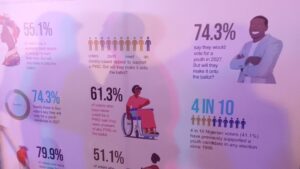
According to Shonibare, 51.1 per cent of those who had never voted for a woman said they had not seen a woman candidate on the ballot.
She said the findings indicated that many voters who had previously not supported women were increasingly open to women in political leadership.
“64.4 per cent said they would vote for a woman in 2027, while 55.1 per cent said a woman’s track record would be enough to earn their votes,” she said.
Shonibare said the findings demonstrated the need to move the national conversation beyond questioning why Nigerians were not voting for women, young people and persons with disabilities.
She argued that attention should also be focused on whether such candidates were being given a fair opportunity to emerge, contest and become visible to voters.“Political representation is shaped long before voters arrive at the voting venue.
It is shaped by who is encouraged to seek office, who can afford nomination forms, who survives internal party processes, who receives meaningful support, and who becomes known to voters as a credible candidate,” she said.
She urged political parties to review their candidate recruitment, nomination and support structures to create greater opportunities for women and other underrepresented groups.
The Executive Director also called on policymakers, electoral institutions, civil society organisations and the media to strengthen inclusive political participation, voter education and candidate visibility.
She stressed that voters’ stated intentions should not be mistaken for actual voting behaviour.
Shonibare disclosed that Invictus Africa would return to some respondents after the 2027 elections to determine whether they were aware of women, young people and persons with disabilities on the ballot, whether they voted for them and what influenced their decisions.
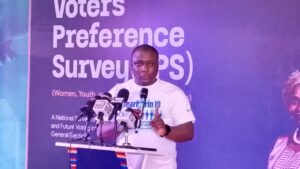
Also speaking after the presentation, Head of Data and Research at Invictus Africa, Gabriel Chuks, said media visibility would be critical to the electoral success of women candidates in 2027.
Chuks advised politicians seeking to win elections to pay greater attention to both traditional and digital media platforms.
He said the survey showed that female politicians require about 19.8 per cent media visibility to win elections, compared with 16.4 per cent for male politicians.
He added that party leadership also plays a significant role in determining the political fortunes of candidates, accounting for an estimated 17 per cent influence for women and 22.5 per cent for male politicians.
Chuks stressed the importance of party channels and community networks in mobilising voters, noting that religious leaders could have greater influence on voters than community leaders in some circumstances.
He therefore urged women seeking elective offices to strengthen their presence across newspapers, radio, television, digital platforms and community networks if they intend to make significant electoral gains in 2027.
The survey also examined voters’ attitudes towards young people and persons with disabilities.
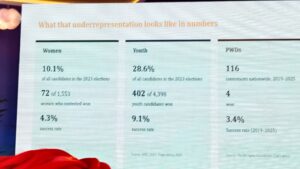
It found that 74.3 per cent of respondents said they would vote for a young candidate in 2027, while 38.7 per cent expressed willingness to support a candidate with a disability.
Invictus Africa said the findings point to a broader opportunity for increased political representation of women, young people and persons with disabilities, but warned that willingness among voters must be matched by greater access to party structures, campaign resources, media visibility and opportunities to contest.
The organisation said the 2027 elections should therefore mark a shift from assumptions about voter preferences to evidence-based strategies capable of translating voters’ stated intentions into actual votes and more inclusive political representation.