By| Goodluck E.Adubazi, Abuja
The Authority Chief Executive of the Nigerian Midstream and Downstream Petroleum Regulatory Authority (NMDPRA), Mallam Rabiu Abdullahi Umar, has called for stronger regulatory compliance, predictable policies and sustained dialogue among government, investors, operators and labour unions to drive stability and growth in Nigeria’s oil and gas industry.
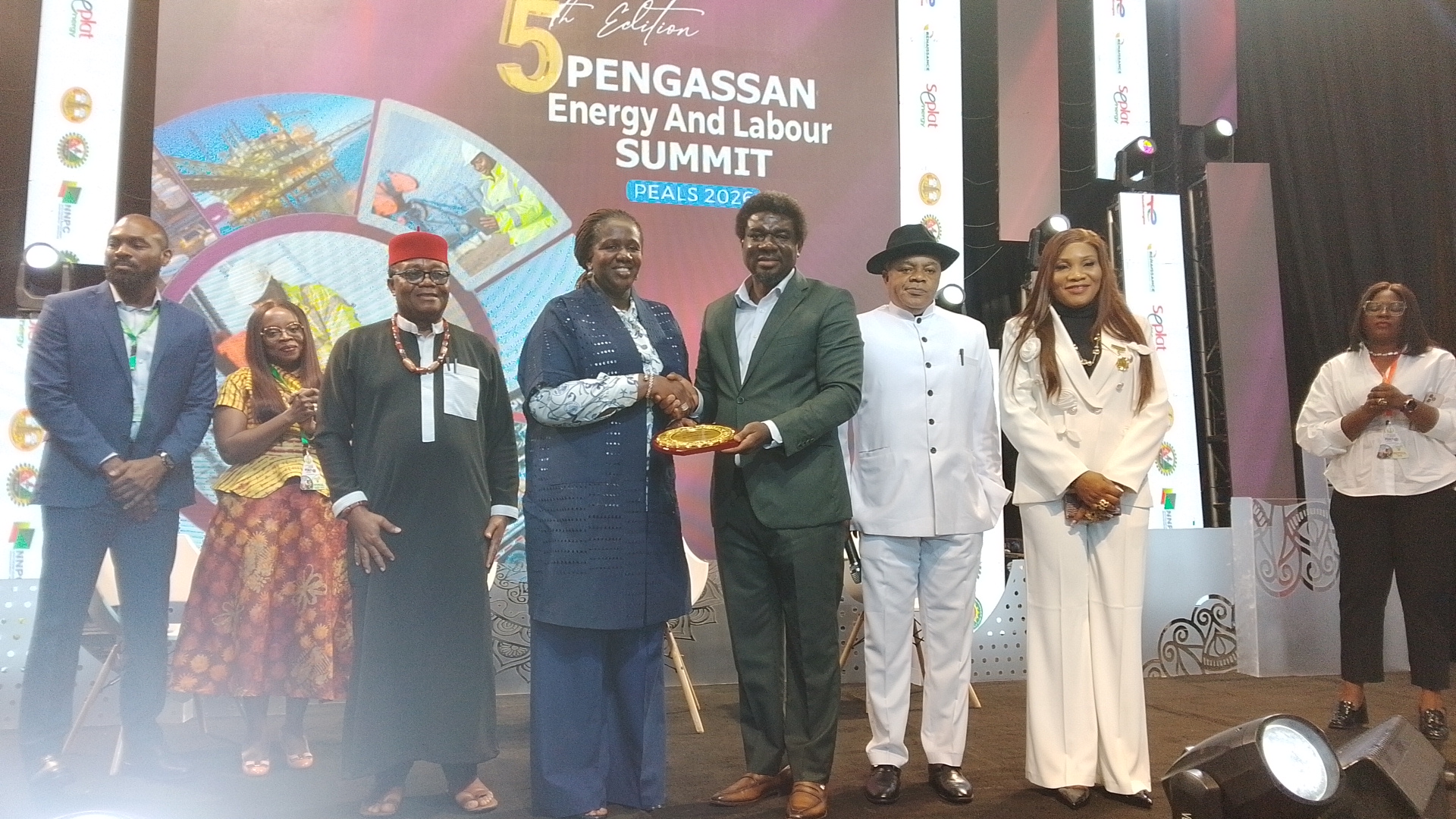
Umar made the call on Thursday in Abuja while speaking on the second day of the fifth edition of the PENGASSAN Energy and Labour Summit (PEALS) 2026, themed “Energy Security and Human Capital: Building the Workforce Nigeria Needs for Sustainable Energy Development.”
Speaking further on this year’s theme, “Strengthening Regulatory Frameworks as a Catalyst for Stability and Growth in Nigeria’s Oil and Gas Industry,” the NMDPRA boss said regulatory certainty must be matched with compliance, while investment must be driven by opportunity and dialogue guided by the long-term interest of the industry.
He said the performance of Nigeria’s petroleum industry would depend not only on the country’s hydrocarbon resources but also on the institutions, regulations and relationships governing the development, processing, transportation, trading and delivery of petroleum products to consumers.
According to him, the Petroleum Industry Act (PIA) 2021 created a new foundation for the governance of the petroleum sector, particularly by providing clearer institutional responsibilities and a framework aimed at promoting commercial orientation, market development, competition and transparency in the midstream and downstream sectors.
Umar, however, stressed that legislation alone could not create an efficient market, noting that the real test of reform was effective implementation.
“The NMDPRA, in effective implementation, must be clear, predictable and responsive. Investors must understand the conditions under which they commit capital, while operators must have confidence in a level playing field,” he said.
He explained that NMDPRA’s regulatory philosophy was anchored on three principles: firmness in regulation, fairness in conduct and speed in execution.
“Firm in regulation means holding the line, enforcing standards, protecting safety and preserving the integrity of the market.
“Fair in conduct means we apply the rules consistently, listen to stakeholders’ feedback and ensure that regulatory decisions are transparent, objective and free from arbitrary changes.
“And we are fast in execution by recognising that unnecessary delays in regulatory decisions create uncertainty, increase the cost of doing business and constrain future investment and growth in our sector,” he said.
The NMDPRA chief executive clarified that being fast did not mean being reckless, while fairness should not be interpreted as weakness.
He said the regulator’s responsibility was not merely to enforce compliance but to ensure that regulation enabled measurable progress in the industry.
“Our responsibility is therefore easy to enforce compliance. Regulation must enable progress.
We have to see progress. That is one of the metrics of us succeeding as a regulator,” Umar said.
He noted that Nigeria’s oil and gas industry required billions of dollars in long-term investment in refineries, gas processing plants, pipelines, depots, storage facilities, petrochemical plants and other critical infrastructure.
According to him, expanding refining capacity, gas processing, petrochemicals, storage, transportation and distribution infrastructure would strengthen Nigeria’s energy security, create jobs and support wider industrial development.
He explained that increased investment in gas infrastructure would also stimulate the emergence of other industries, including fertiliser plants and gas-powered electricity generation facilities.
Umar further stressed the importance of a stable labour market to the sustainable growth of the petroleum industry, describing the oil and gas workforce as one of the critical pillars of both the sector and the Nigerian economy.
He commended the technical knowledge, operational experience and institutional memory of workers in the industry, noting that such expertise could only be acquired through years of practical experience.
The NMDPRA boss therefore called for increased investment in training and continuous professional development, particularly as technology, energy markets and investment models continue to evolve.
“Training is not spending money; it is investment. We consider training as investing in our people because they are our most important assets,” he said.
He identified digital systems, data analytics, automation, safety, gas development and emerging energy technologies as areas where Nigerian workers would require new skills to remain competitive.
Umar said government, regulators, operators and organised labour must work together to ensure that Nigerian professionals were adequately equipped to participate in the changing energy landscape.
He also reminded stakeholders that the oil and gas industry was international in character and that Nigeria’s workforce must therefore be equipped to compete globally.
According to him, a stronger workforce would translate into stronger institutions, better jobs and a deeper pool of national expertise capable of competing internationally.
The NMDPRA boss said regulatory reform and labour interests should not be regarded as competing objectives, stressing that a stable and productive workforce supports stable operations, which in turn strengthens investor confidence and attracts sustainable investment.
He emphasised the importance of dialogue among stakeholders, citing the recently concluded collective bargaining agreement (CBA) process as an example of what constructive engagement could achieve.
Umar commended PENGASSAN’s leadership for its participation and guidance during the process, saying the engagement helped stakeholders reach an agreement within a short period.
He urged operators and investors to make compliance a culture rather than an obligation activated only when regulators intervene.
“Companies shouldn’t wait until regulators ask them to do the right thing. It should be a culture for operators to do the right thing without the regulator’s prompting,” he said.
He noted that voluntary compliance could eventually encourage a form of self-regulation, adding that companies in developed markets often establish internal standards that exceed minimum regulatory requirements.
Umar also urged PENGASSAN and other labour organisations to continue championing workers’ welfare while remaining partners in productivity, operational excellence and industrial harmony.
He appealed to government and policymakers to pursue coherent, transparent and predictable policies capable of giving investors confidence to commit long-term capital to Nigeria.
“Predictability is very important in an industry where you want people to invest long-term capital. If somebody doesn’t have certainty of what happens tomorrow, nobody will invest in our country,” he said.
The NMDPRA chief executive declared: “Regulatory certainty must be marked by compliance. Investment must be marked by opportunity, and dialogue must be marked by a willingness to match the long-term interest of the industry.”
He added that Nigeria could not demand investment without certainty, growth without productivity, or stability without meaningful dialogue among stakeholders.
He said the future of the petroleum industry could not be secured by government, regulators, investors or labour acting independently, stressing that all stakeholders had a collective responsibility to move the sector from “conversation to implementation, from policy to performance, and from potential to measurable value for the Nigerian people.”
Umar further assured that NMDPRA would continue to improve its regulatory processes, deepen the use of technology, strengthen market surveillance and engage stakeholders in a transparent, solution-oriented and respectful manner.
He said the ultimate measure of the Authority’s success would be the quality, resilience and competitiveness of the midstream and downstream petroleum industry, as well as the value it delivers to Nigerians.
He also reiterated the importance of safety in the petroleum industry, stressing that workers must return home safely to their families.
“Safety is non-negotiable. At the end of the day, our brothers and colleagues working in the industry must go back to their families safe and not only safe, but with something in their pockets,” he said.
Umar congratulated PENGASSAN for sustaining the Energy and Labour Summit to its fifth edition, expressing hope that the initiative would continue to grow and remain a platform for constructive engagement among stakeholders in Nigeria’s energy industry.