
By| Goodluck E.Adubazi, Abuja
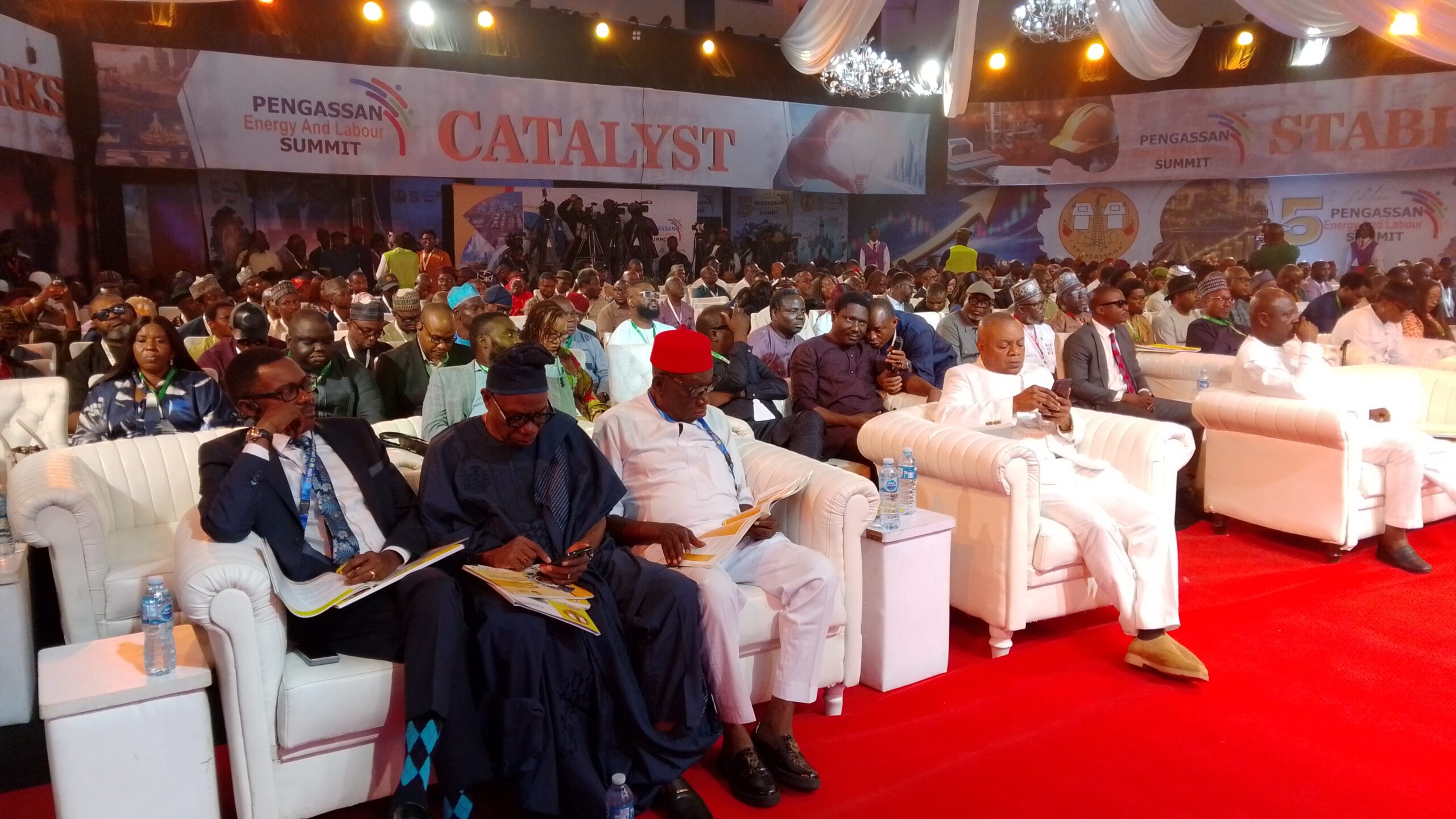
Stakeholders in Nigeria’s oil and gas industry have called for predictable regulatory frameworks, faster approval processes, stronger institutional coordination and improved industrial harmony to attract fresh investments and unlock the country’s vast energy potential, as the Petroleum and Natural Gas Senior Staff Association of Nigeria (PENGASSAN) held its 5th Energy and Labour Summit, PEALS 2026, in Abuja on Wednesday.
Speaking on the theme, “Strengthening Regulatory Frameworks as a Catalyst for Stability and Growth in Nigeria’s Oil and Gas Industry,” TotalEnergies EP Nigeria Managing Director, Mr. Mathieu Bouyer; ExxonMobil Nigeria Managing Director/CEO, Mr. Jagir Baxi; NNPC Ltd. Group Chief Executive Officer, Engr. Bayo Ojulari; Nigeria LNG Limited Managing Director, Mr. Adeleye Falade; NUPRC Commission Chief Executive, Mrs. Oritsemeyiwa Eyesan; and PENGASSAN President, Comrade Festus Osifo, stressed that regulatory certainty, policy consistency, investment incentives, efficient execution and protection of workers and host communities were critical to positioning Nigeria as a competitive global energy investment destination.
Bouyer, who was the keynote speaker, said Nigeria had the resources, talent, market and entrepreneurial capacity required to remain a major energy country, but must remove bureaucratic and regulatory barriers that prevent the conversion of its enormous potential into projects, production, jobs and economic value.
He said TotalEnergies remained committed to Nigeria after more than seven decades of operations, noting that the company’s strategy was focused on expanding operated assets, gas development, offshore activities, safety, emissions reduction and operational excellence.
According to him, investors can manage risks but struggle with uncertainty, urging government and regulators to ensure stable policies, predictable implementation, faster approvals, improved security, competitive local content and stronger engagement with labour and host communities.
He said, “Our collective ambition is high and we shall work together to place Nigeria as one of the most attractive foreign investment destinations.”
The TotalEnergies boss also highlighted recent reforms, including the Petroleum Industry Act, gas incentives, measures aimed at reducing contracting timelines and renewed exploration licensing rounds, describing them as positive signals to investors.
He urged stakeholders to maintain the momentum, stressing that speed had become a critical component of Nigeria’s competitiveness because delayed projects lose value and become more difficult to justify within global investment portfolios.

Bouyer further advocated increased gas utilisation, emissions reduction, security improvements, competent local workforce development, industrial harmony and disciplined project execution, saying Nigeria must ensure that environmental responsibility and energy development advance together.
Also speaking, ExxonMobil Nigeria Managing Director/CEO, Mr. Jagir Baxi, said regulatory stability was fundamental to attracting long-term global energy investments.
Baxi noted that regulation should not merely be viewed as legal provisions but as an expression of a nation’s economic ambitions. He identified transparency, predictability, competitive markets, coordination across government and protection of investors and investments as key principles that should guide Nigeria’s regulatory architecture.
According to him, global capital moves to jurisdictions where investment risks are manageable and returns can be reasonably assessed, stressing that Nigeria must create an environment where investors can make long-term decisions with confidence.
Similarly, the NNPC Ltd. GCEO, Engr. Bayo Ojulari, said the strength of any regulatory framework depended on the people responsible for implementing it.
He described workers as the most important assets of the industry and said his administration was committed to building a human-centric NNPC Ltd. anchored on an enterprise-first mindset, execution excellence, profitable growth and becoming a partner of choice.
Ojulari urged PENGASSAN members and other stakeholders to engage constructively, saying regulatory discipline should be based on facts, sound governance, clear rules and respect for the long-term interests of the company, industry and nation.
He added that stability could not be achieved through regulation alone, but also required a workforce that felt valued, heard and fairly treated.
In a related development, NLNG Managing Director, Mr. Adeleye Falade, said Nigeria’s challenge was not a shortage of gas resources but the failure to fully convert those resources into economic value. Falade said Nigeria had more than 259 trillion cubic feet of proven gas reserves and an estimated potential of about 600 trillion cubic feet, yet continued to face significant gaps in gas utilisation, electricity supply and industrial development.
He declared that “geology creates opportunity, governance determines the outcome,” arguing that Nigeria needed institutions, infrastructure, commercial frameworks and human capacity capable of turning gas resources into power, jobs, foreign exchange and industrial prosperity.
Falade said NLNG’s experience demonstrated what stable governance, long-term commercial arrangements and stakeholder alignment could achieve, noting that since commencing operations in 1999, the company had grown into a six-train facility with a capacity of 22 million tonnes per annum.
He called for integrated development of the gas value chain, including upstream supply, processing facilities, pipelines, domestic markets, LNG, LPG and CNG infrastructure. He also advocated regulatory certainty, competitive gas economics, stronger contract enforcement, transparent tariffs, improved creditworthiness and better coordination across the sector, warning that Nigeria must stop treating gas development as a collection of disconnected projects.
In the meantime, the NUPRC Commission Chief Executive, Mrs. Oritsemeyiwa Eyesan, said the regulator was confronting some of the practical challenges limiting investment and gas utilisation, including evacuation constraints.
She disclosed that NUPRC had introduced guidelines for gas swap arrangements, describing the initiative as a potential game changer that could also be scaled up to oil swap arrangements.
Eyesan noted that oil and gas investment in Nigeria had fallen from about $26 billion in 2014 to approximately $2 billion by 2023, but said the situation was changing following regulatory reforms and new incentives for deepwater developments.
She said the Federal Government was targeting between $30 billion and $50 billion in new investments, adding that the renewed interest was coming against the backdrop of an improving regulatory environment.
Earlier, PENGASSAN President, Comrade Festus Osifo, warned that frequent alterations to the Petroleum Industry Act (PIA), including the movement of some fiscal provisions to the Nigeria Revenue Act and the use of executive orders to amend provisions of the law, could undermine investors’ confidence.


Osifo said the capital-intensive nature of the oil and gas industry required policy consistency and caution in altering the legal framework governing the sector.
He called for a predictable, transparent, efficient and fair regulatory environment, saying host communities needed confidence, government needed sustainable revenues, workers needed protection and Nigerians deserved an industry capable of translating the country’s hydrocarbon wealth into broad-based prosperity.
Osifo said the existence of multiple regulatory and government institutions was not necessarily the major problem, but warned that overlapping responsibilities could result in repetitive approvals, multiple inspections and conflicting directives.
He called for smarter regulations that embrace technology, eliminate unnecessary duplication and improve the speed of approvals without compromising oversight. He also demanded stronger protection for workers during acquisitions and divestments, insisting that pensions, collective bargaining agreements and other workers’ rights must be protected.
The PENGASSAN president further cautioned against the indiscriminate use of expatriate workers where qualified Nigerians were available, urging regulators and operators to enforce succession plans, understudy programmes and measurable knowledge transfer.
He said local content should extend beyond procurement to employment and human-capital development. Osifo also stressed the need for stronger enforcement of health, safety, environmental, local-content and labour standards, declaring that “the life of a Nigerian worker must never become the price we pay for increased production.”
The speakers collectively agreed that Nigeria’s next phase of oil and gas growth would depend not merely on announcing reforms but on translating them into predictable implementation, faster project execution, increased investment, stronger domestic gas utilisation, improved infrastructure, industrial harmony and greater value for workers, investors, host communities and the Nigerian economy.