
By| Goodluck E.Adubazi, Abuja
The Regional Director for Africa at Development Alternatives Incorporated (DAI), Joe Abah, has called for stronger public finance management and rigorous implementation of government budgets, stressing that approved budgets must ultimately translate into functional services that Nigerians can see and experience.
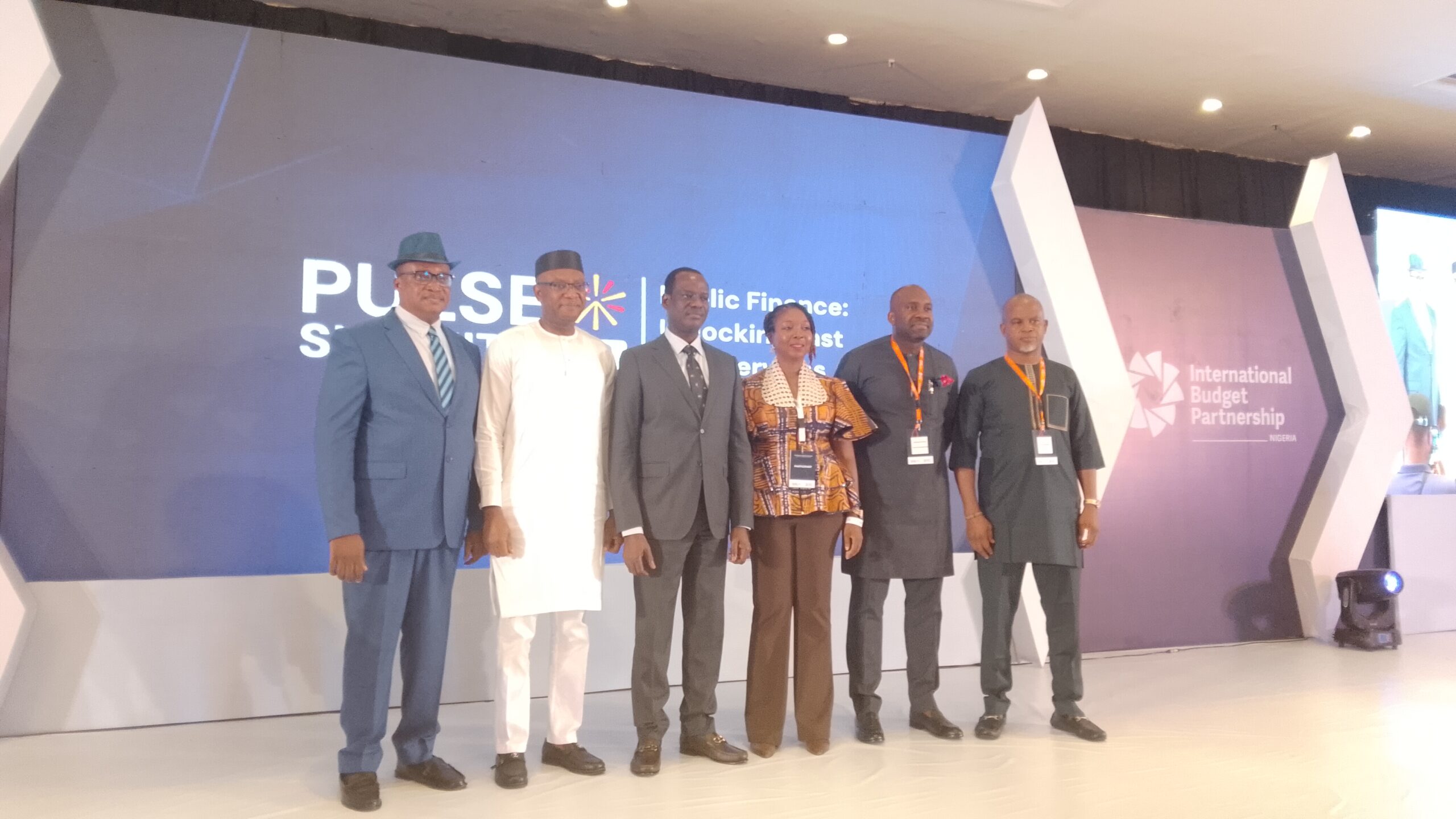
Abah made the call while delivering the keynote address at the PULSE Summit 2026, organised by the International Budget Partnership (IBP) Nigeria, at the Abuja Continental Hotel, Abuja.
The summit, themed “From Approved Budgets to the Last Mile: Examining Budget Implementation in Nigeria,” focuses on how public resources can be effectively converted into tangible services for citizens.
According to Abah, citizens do not experience government budgets as appropriation documents or procurement certificates, but through the quality of services delivered to them.
He said a mother who arrives at a primary healthcare centre without essential medicines would experience frustration with government, while a child learning in an overcrowded classroom would feel the consequences of poor public investment rather than understand the budgetary allocations behind it.
“A community whose water scheme has stopped working doesn’t experience it as a procurement certificate. They experience it as a threat to healthy living,” he said.
Abah stressed that budget approval was only the first step in the process of converting public resources into services, noting that approval does not automatically translate into release, cash availability, procurement, implementation or sustainable service delivery.
He said there should be a much closer relationship between budget approval and release in a properly functioning public finance system.
The DAI director also cautioned against attributing every failure in public service delivery to corruption, arguing that weak institutional capacity, poor preparation, inadequate planning and unrealistic projections were responsible for many of the challenges confronting government programmes.
“Many of the failures are simply weak capacity, weak preparation and weak planning issues,” he said, adding that poor planning could, however, create opportunities for corruption.
Abah also identified unrealistic revenue projections as a major challenge to effective budgeting, noting that government agencies often set ambitious revenue targets without sufficient consideration of available expertise, infrastructure, market conditions and other practical constraints.
He called for greater realism in budget preparation, saying projects should not enter the budget before they are properly designed, costed and subjected to adequate implementation planning.
Reflecting on his experience in government, Abah recalled that the Federal Ministry of Works did not execute a single capital project in 2017, attributing the situation to challenges surrounding project preparation and procurement.
He therefore emphasised the need for the government to move beyond developing “beautiful plans” to developing realistic implementation strategies that take into account financial and human resources, political realities and other factors that could derail projects.
According to him, “our problem is implementation,” stressing that effective planning must anticipate what could go wrong and establish mechanisms for responding to such challenges.
Abah further warned against designing public projects based on assumptions about what citizens need without consulting the communities affected.
He said good reform must begin with the correct identification and diagnosis of problems, stressing that even a well-designed solution would fail if it was targeted at the wrong problem.
He cited an example of a community where the government assumed the major challenge was the absence of a school, only to discover that the community’s more pressing need was a bridge.
The former Director-General of the Bureau of Public Service Reforms also rejected the notion that passing laws, issuing circulars or establishing new agencies alone could transform public service delivery.
He advocated institutional reforms focused on people, institutions, incentives, leadership, capability and political realities, arguing that formal rules and structures do not automatically change behaviour.
Abah jokingly suggested that before creating a new government agency, authorities should consider closing existing ones, saying, “By any new one we want to create, we should first close 10 that exist.”
He also called for greater use of citizen feedback in the design and delivery of public services, stressing that those directly affected by government programmes are often best positioned to identify the problems they face.
“The person that wears the shoes knows where the shoe is pinched,” he said, urging the government to create mechanisms through which citizens’ experiences can feed into policy design and implementation.
Abah said the government needed timely information on budget approvals, releases, procurement, fiscal implementation and service delivery results, while citizens also required information that was simple enough for them to understand and use.
He stressed that such information should be available early enough to enable corrective action while projects were still being implemented, rather than after failures had already occurred.
Abah said the design and timing of the 2026 PULSE Summit were particularly important given Nigeria’s current budget cycle.
He described the five PULSE working labs on Health; Education; Water, Sanitation and Hygiene (WASH); Social Protection; and Debt as more than conventional panel discussions.
According to him, the labs are designed to bring together fiscal evidence, institutional knowledge and citizens’ experiences to identify practical solutions to public finance and service delivery challenges.
He urged government officials to treat the sessions as a consultation that could contribute to the preparation of the 2027 budget, while cautioning participants against producing lengthy lists of recommendations without clear responsibility and implementation mechanisms.
He challenged participants to focus on key questions, including where implementation breaks down, what evidence supports the diagnosis, what practical changes can be initiated within the next 90 days, which institution is responsible for the next action, who must collaborate and how progress would be measured.
He said the objective was not merely to assign blame but to develop a shared and defensible understanding of problems and agree on credible solutions.
The keynote speaker also endorsed the PULSE Reform Tracker, designed to move discussions from recommendations to concrete commitments and follow-up actions.
He said while a tracker could not implement reforms on its own, it could make responsibilities clearer, monitor progress and ensure that commitments made at the summit were not abandoned after participants left the venue.
Abah concluded that the public finance chain should not end with accounting records or budget documents but with tangible improvements in citizens’ lives.
In her closing remarks,the Country Director of IBP Nigeria, Olayinka Babalola, highlighted the summit’s central proposition of moving “from evidence to action.”
The 2026 PULSE Summit therefore seeks to strengthen the connection between public finance decisions and the last-mile services citizens receive, using evidence, institutional knowledge, citizen experience and media engagement to promote practical reforms.


She said the ultimate measure of public finance should be a functioning clinic, a conducive classroom, a working water system, effective social protection, productive assets that justify public borrowing and citizens’ confidence that government can work.
“If today’s discussions produce a small number of credible commitments, with responsibilities clearly assigned, progress made visible and follow-through maintained after this room has emptied, then PULSE will have achieved something genuinely important in the development of our country,” She said.