
By| Goodluck E.Adubazi, Abuja
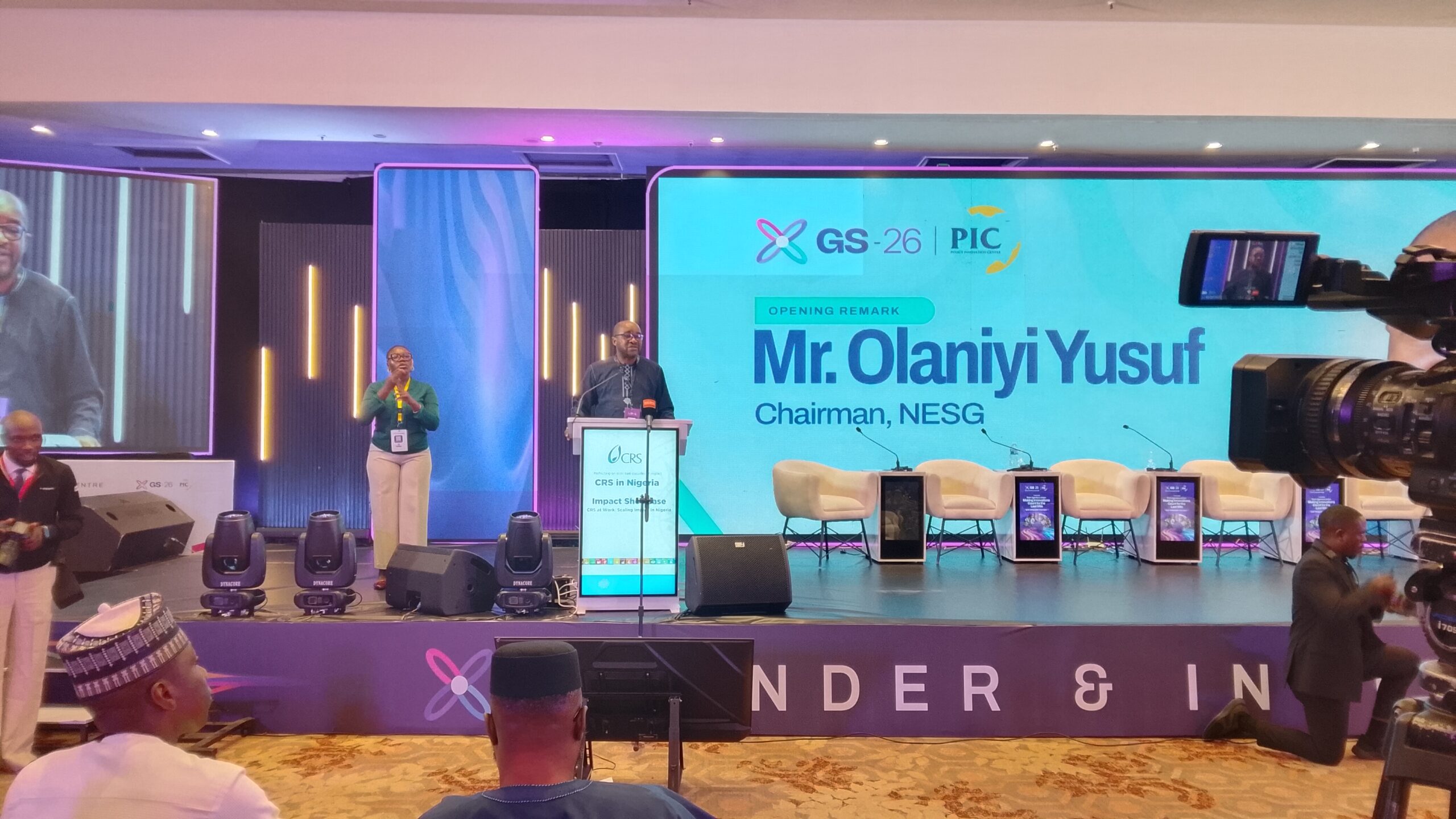
The Chairman of the Nigerian Economic Summit Group (NESG), Mr. Niyi Yusuf, has called on policymakers, innovators, development partners and other stakeholders to move beyond commitments and ensure that policies and innovations reach women, girls, young people and persons with disabilities in underserved communities.
Yusuf made the call in his opening remarks at the fifth edition of the Gender and Inclusion Summit 2026 (GS-26), convened by the Policy Innovation Centre (PIC) of the Nigerian Economic Summit Group in Abuja.
The three-day summit, held from September 7 to 9, was themed: “From Agenda to Action: Making Innovation Count for the Last Mile.”
The NESG Chairman said the theme was both urgent and timely, noting that while stakeholders had, over the years, identified barriers, generated evidence and secured commitments on gender and inclusion, the critical question remained whether such commitments were reaching those who needed them most.
He said the fifth edition of the summit was designed to confront the gap between policies formulated on paper and their actual impact on the lives of vulnerable people and communities.
“For too many women, girls, young people and persons with disabilities, especially those in our most underserved communities, the distance between a policy on paper and a changed life remains wide,” Yusuf said.
He stressed that innovation could only be considered successful when it reached the people at the point of need.
“An innovation only counts when it arrives,” he declared, adding that even the most carefully designed programme would have little impact until it reached the woman, family or community at the end of the development chain.%
Yusuf paid tribute to frontline actors who, despite limited infrastructure and resources, continue to deliver essential support in underserved communities.
He identified health workers operating in areas without adequate healthcare facilities, cooperative society leaders extending credit where banking services are unavailable, and mentors helping girls remain in school despite systemic challenges as critical actors holding the “last mile” together.
“These are the women who hold the last mile together, and it is to them that our commitments must finally travel,” he said.
The NESG Chairman also welcomed the President of the National Assembly of Côte d’Ivoire and former Prime Minister of the country, H.E. Patrick Achi, to the summit, commending him for lending his voice to the conversation through his keynote address.
According to Yusuf, Achi’s presence underscored the importance and seriousness of the discussions at the summit.
He said the Nigerian Economic Summit Group had, over the years, championed transformative initiatives aimed at shaping Nigeria’s socio-economic development through policy dialogue, evidence-based advocacy and inclusive development.
Yusuf explained that these efforts contributed to the establishment of the Policy Innovation Centre, which he described as a major platform for advancing evidence-based policy advocacy and sustainable development.
He recalled that in 2017, the Gates Foundation funded the establishment of an interim Policy Innovation Unit as a proof of concept to determine whether a behavioural insights unit could improve public-sector outcomes in Nigeria.
Following the success of the initiative, the Policy Innovation Centre was formally launched in October 2021 to deepen the impact of social interventions across the country.
According to him, the PIC is Africa’s first national institutionalised behavioural initiative, supporting governments and stakeholders to make behaviourally informed decisions and generate locally relevant evidence for high-impact interventions.
He said the Centre deploys behavioural insights and gender-transformative approaches as two key lenses for addressing development challenges.
The Chairman noted that the establishment of the Gender and Inclusion Summit in 2022 provided an annual platform for stakeholders to discuss challenges, exchange ideas and co-create contextually relevant solutions to gender and inclusion issues in Nigeria.
Yusuf said this year’s summit would build on evidence generated during its Day Zero academic conference, which brought together researchers from across Nigeria, as well as high-impact forums involving policymakers, innovators and practitioners.
“Our aim is singular: to move from agenda to action, and to ensure that innovation counts for the people furthest from opportunity,” he said.
“We do not gather merely to deliberate; we gather to design and to deliver.”
He urged participants to use the summit as an opportunity to develop bold ideas, strengthen partnerships and demonstrate greater commitment to communities and individuals who remain furthest from opportunities.
Yusuf expressed optimism that stronger collaboration among governments, development partners, researchers, innovators and communities would help build a more just, equitable and prosperous society.
“Together, let us forge a path towards a more just, equitable, and prosperous society where every individual can thrive and contribute to our shared prosperity,” he said..