
• Trust Is Currency of Leadership — Momoh
By | Goodluck E. Adubazi, Abuja
Chairman and Chief Executive Officer of Channels Television, Dr. Jimoh Momoh, has described trust as the currency of leadership, saying leaders and institutions may outsource publicity, but cannot outsource credibility.


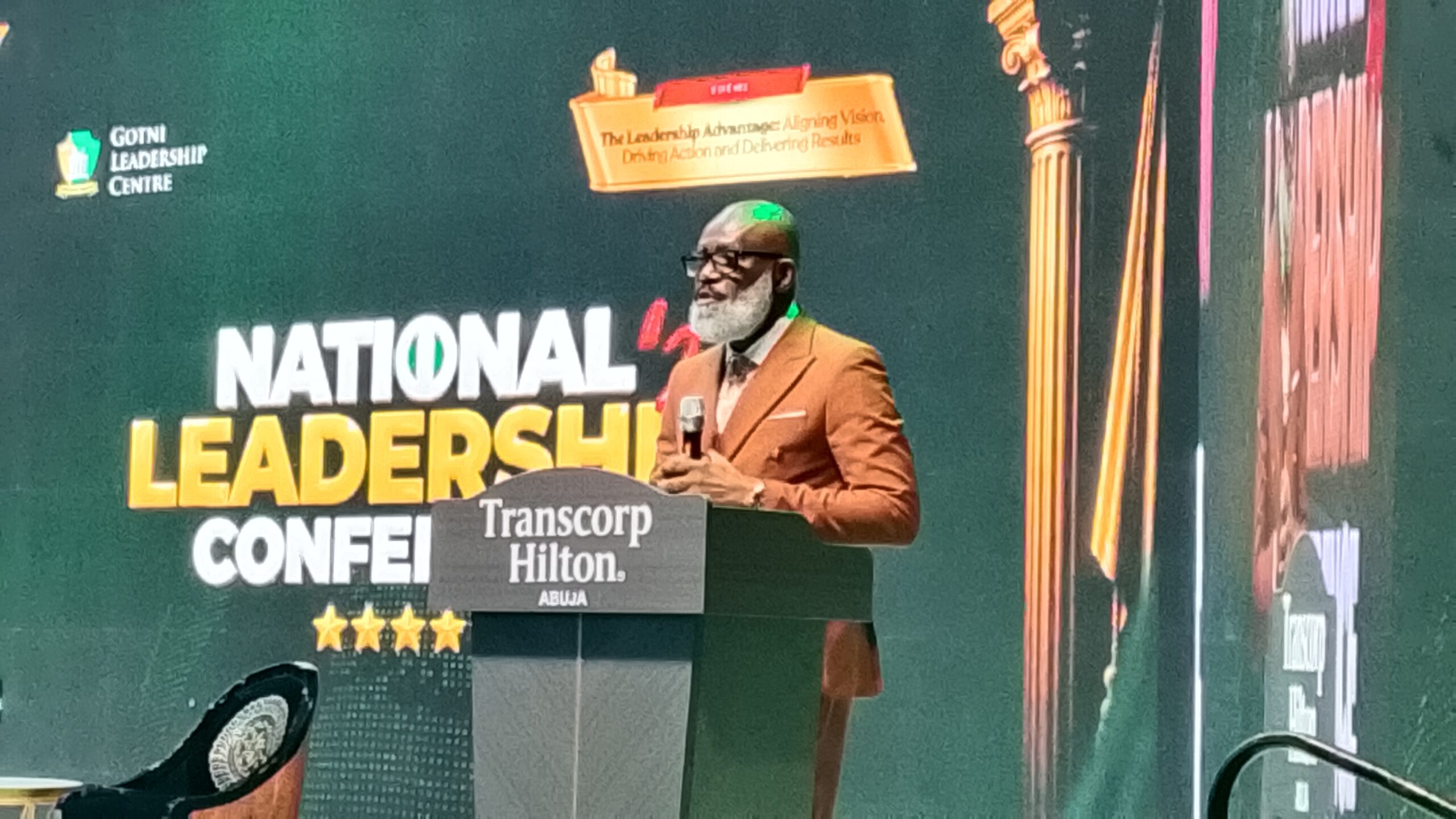
Momoh stated this while speaking on “Leading in the Age of Information: Trust, Communication and Institutional Credibility” on Saturday at the National Leadership Conference 2026, organised by the GOTNI Leadership Centre at the Transcorp Hilton Hotel, Abuja.
Represented by the General Manager of Channels Television, Kingsley, Momoh said the explosion of digital technology and social media had democratised communication, allowing virtually anyone with a smartphone to become a publisher, broadcaster and source of information.
He, however, noted that the abundance of information had also made it increasingly difficult for people to distinguish between verified information, opinion, propaganda and fabricated content.
“We have never had more information available to humanity. With a smartphone today, one can access more information in seconds than previous generations could access in months,” he said.
According to him, artificial intelligence has further complicated the information environment by making it possible to create convincing images, voices and videos of events that may not have occurred.
“This is an extraordinary democratisation of communication, but it also has a paradox. The more information we have, the harder it becomes to know what we need,” he said.
Momoh said leadership in the information age therefore required something deeper than communication skills, stressing that credibility and trust must be earned through consistent behaviour.
He said his more than four decades in broadcasting had reinforced one fundamental lesson:
“People may listen to you because you have a platform, but they believe you because you have earned their trust.”
He distinguished between authority, trust and credibility, saying: “Authority can make people listen. Trust makes people believe, and credibility makes them continue listening or watching.”
The Channels Television chairman said leaders could not simply communicate themselves into credibility or advertise their way into trust.
“You cannot issue a press release saying, for example, we are trustworthy. You cannot advertise your way into credibility. You cannot order people to believe you. Trust is built through behaviour,” he said.
According to him, every decision made by an institution either deposits into or withdraws from its “credibility account.”
He said telling the truth when it was inconvenient, admitting mistakes, keeping promises, treating people fairly, allowing difficult questions and placing principles above short-term advantage were all ways of building trust.
Conversely, he said concealing mistakes, making promises without the intention of keeping them, and applying different standards to powerful and less powerful people could erode institutional credibility.
Reflecting on the history of Channels Television, Momoh said the organisation, founded in 1992 and commencing full television operations in 1995, had grown from its early beginnings into a national news and media organisation.
He said the ambition was never merely to establish another television station but to build a professional news organisation capable of providing credible information, accommodating divergent views and giving people a voice.
He noted that the organisation’s commitment to accuracy, independence, balance, accountability and transparency had remained central to its operations across television and digital platforms.
However, Momoh stressed that values written on the walls of an organisation did not automatically create institutional culture.
“Values become culture when people practise them repeatedly. They become cultures when they guide decisions under pressure,” he said.
He urged institutions to build systems that could sustain standards beyond the personalities of their founders or individual leaders.
“The real challenge is to move from what the founder wants to what the institution stands for.
That transition is one of the most important journeys in leadership,” he said.
Momoh identified purpose, professionalism, independence, adaptability and continuous learning as key principles that could strengthen institutional leadership.
He said purpose provides direction when circumstances change, professionalism converts values into repeatable behaviour, while independence enables institutions to make decisions according to their principles rather than merely responding to whoever has the greatest power.
On adaptability, he warned institutions against confusing loyalty to their mission with loyalty to outdated methods.
“Your mission may remain constant. Your methods must evolve,” he said.
He also emphasised the importance of professional development, saying organisations could not remain excellent if their people stopped learning.
Turning to the responsibility of leaders in the information age, Momoh said every leader was a communicator because words, decisions and even silence conveyed messages.
He warned leaders against treating communication merely as a tool for making bad news appear good. “Communication should not be about hiding reality.
It should be about helping people to understand reality,” he said.
He advised leaders to be transparent about what they know, what they do not yet know, what went wrong, what was being done about it and when further updates would be provided.
According to him, such communication may not always make a leader look perfect, but it strengthens institutional credibility.
“Credibility is worth more than perfection,” he declared.
Momoh also urged young leaders not to become obsessed with fame, but to focus on usefulness, responsibility and the positive impact they have on others.
“Do not become obsessed with becoming famous. Become useful. Do not ask only how many people follow me. Ask how many people are better because of me,” he said.
He further warned young leaders against sacrificing credibility for short-term success, stressing that reputation was built through behaviour over time.
“Protect your name. Protect your word. Protect your institution, because reputation is not what you say about yourself. Reputation is what people remember about your behaviour,” he said.
Momoh concluded that the rapid growth of information, artificial intelligence and digital platforms had increased rather than diminished the premium placed on truth, verification, judgment, humanity and trust.



He said the central leadership challenge of the present age was not merely to communicate more, but to communicate responsibly, build credible institutions and earn the confidence of the people.
“Leadership without trust becomes authority without legitimacy. Communication without credibility becomes noise. Information without integrity becomes worthless,” Momoh said.
He added that in an era where everyone could speak, leadership would increasingly belong to those whose words people continued to believe.