By| Goodluck E.Adubazi, Abuja
Governor Abdullahi Sule of Nasarawa State has stressed that Africa’s economic future depends on stronger collaboration among governments, investors, communities and development partners, urging the continent to leverage its natural resources through value addition and sustainable development.
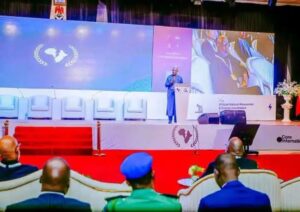
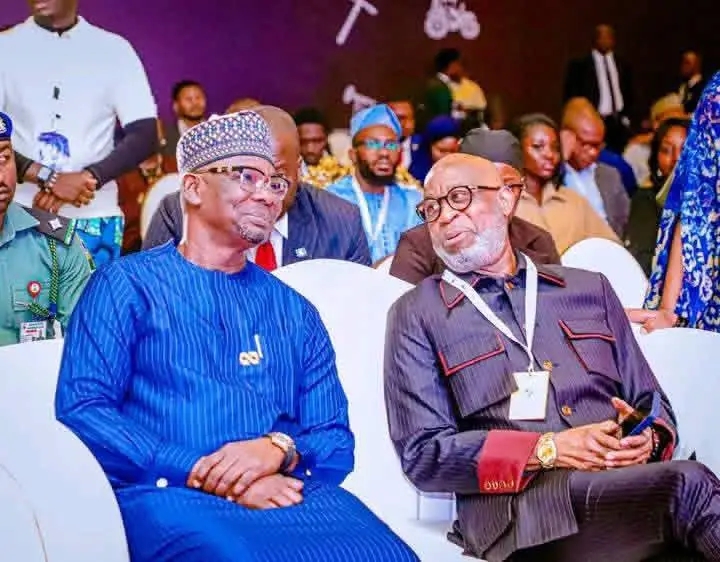
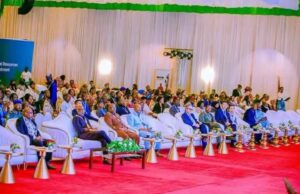
Governor Sule made the remarks on Thursday at the State House in Abuja during the closing ceremony of the 5th African Natural Resources and Energy Investment Summit (AFNIS) 2026.

Speaking at the summit, themed “One Africa, One Resource Vision,” the governor showcased Nasarawa State’s responsible mining framework, describing it as a tripartite arrangement designed to deliver benefits to investors, government and host communities alike.
He said the state remains committed to creating an enabling environment for mining investments through effective regulation, environmental protection and transparent revenue management.
According to Sule, responsible mining ensures fair returns for investors, safeguards government revenues and protects the interests of host communities, thereby promoting sustainable growth in the sector.
The governor disclosed that Nasarawa State has established a legally backed Infrastructure Fund, with five per cent of its Internally Generated Revenue (IGR) dedicated to supporting investments in strategic sectors, particularly mining and agriculture.
He explained that the fund is being deployed to provide critical infrastructure such as access roads, electricity, security and other facilities required to support business operations and attract investors.
Describing AFNIS as an important platform for fostering partnerships and advancing discussions on sustainable resource development across Africa, Sule urged investors, development finance institutions, technology providers and industrial partners to explore opportunities in Nigeria and Nasarawa State.
He cited the state’s abundant mineral resources, stable investment climate and investor-friendly policies as major attractions for potential investors.
“Africa’s economic future depends on stronger collaboration among governments, investors, communities and development partners,” Sule said, emphasizing the need for African countries to move beyond the export of raw materials and focus on local processing and value addition.
The summit attracted policymakers, investors, industry leaders and development partners from fifteen African countries to discuss strategies for harnessing the continent’s natural resources for sustainable economic growth and industrial transformation.
As AFNIS 2026 drew to a close, stakeholders unveiled major partnerships and renewed commitments aimed at accelerating Africa’s resource development agenda, promoting local value addition and advancing sustainable mining practices.
A major highlight of the event was the signing of a strategic Memorandum of Understanding (MoU) between the Africans for Africa (AFA) Initiative and Steron International Resources Limited to support the development of lithium and rare earth minerals in Nigeria.
The agreement, signed before key industry stakeholders at the summit, designates Steron’s Lithium and Rare Earth Elements (REE) Project in Wasa as a potential “Official AFA Mining Fund I Pipeline Project.”
Under the partnership, Steron is expected to receive capital support and technical assistance to strengthen project development, improve bankability and ensure compliance with international standards for sustainable mining.
A central feature of the collaboration is the adoption of AFA’s 51 Percent Total African Benefit (TAB) Model, which seeks to ensure that at least 51 per cent of the economic value generated by the project remains within Africa through local processing, domestic supply chains and investments in host communities.
Speaking during the signing ceremony, AFA Initiative Co-founder, Suleiman Zakari, said the partnership demonstrates the organisation’s commitment to transforming Africa’s mineral wealth into tangible economic benefits for the continent.
He noted that the institutionalisation of the AFA Mining Fund represents a significant step toward supporting critical mineral projects capable of driving industrialisation, job creation and sustainable development across Africa.
Also speaking, the Managing Director and Chief Executive Officer of Steron International Resources Limited, Abubakar Sadiq, described the agreement as proof that Nigerian mining projects can meet global environmental, social and governance (ESG) standards while delivering meaningful economic benefits to local communities.
Stakeholders at the summit expressed optimism that such partnerships would strengthen Africa’s mining sector, promote responsible resource management and unlock greater economic opportunities across the continent.
Similarly, Says Oildynamix CEO New Exploration Technology Could Unlock Africa’s Mineral Wealth in Months.
Oildynamix Ltd has unveiled a cutting-edge mineral exploration technology at the 5th Edition of the AFNIS 2026 that it says can transform Africa’s mining industry by delivering faster, more accurate, and more cost-effective resource discovery.
The company, which specializes in mineral exploration and development, technical advisory services, project support, oil and gas engineering, digital intelligence, and data analytics, showcased its capabilities during the 5th Edition of the AFNIS 2026 Summit held at the State House in Abuja.
Speaking at the Summit Dr. Vincent Amu said the company’s proprietary Thermovision Tomography (TVT) technology is capable of identifying mineral deposits with between 85 and 95 percent accuracy within months, compared to conventional methods that often take years.
“Technology Can Unlock Africa’s Vast Mineral Potential”He added.
According to Dr. Amu, one of the key takeaways from AFNIS 2026 is the growing recognition that advanced technology can rapidly unlock Africa’s enormous mineral resources.
“We now have a technology that can unlock the vast mineral potential of Africa and Nigeria within a few months, not years,” he said. “Our approach delivers highly accurate results at a fraction of the traditional cost, making exploration more accessible to investors and mining companies.”
He noted that while some exploration projects can cost up to $100,000 using conventional methods, Oildynamix is able to deliver similar services at significantly lower costs, helping to reduce one of the major barriers facing prospective miners.
Dr. Amu explained that Oildynamix’s technology combines satellite data from Landsat and MODIS systems with patented algorithms and artificial intelligence to identify mineral-rich zones.
Unlike traditional geophysical exploration techniques that rely on seismic waves, electrical signals, or extensive field operations, Thermovision Tomography analyzes heat signatures emitted by subsurface mineral deposits.
“Our technology can map vast territories within weeks or months. What may take other companies years to accomplish, we can complete in a significantly shorter timeframe while providing exact GPS coordinates and detailed resource information,” he stated.
The company has already conducted projects across several African countries and is currently expanding its operations within Nigeria and beyond.
Dr. Amu disclosed that several Nigerian states have shown interest in adopting the technology following successful pilot projects and presentations.
According to him, mining stakeholders in Kebbi State, Nasarawa State, Kaduna State, Katsina State and Benue State are exploring opportunities to deploy the system for mineral mapping and resource assessment.
He added that discussions are also underway to support exploration efforts in other African countries, including Botswana.
Addressing the challenges facing indigenous miners, Dr. Amu called on governments across Africa to introduce policies that would encourage local participation in the mining sector.
He recommended duty-free importation of mining equipment, reduced bureaucracy in obtaining exploration licenses, and temporary tax incentives for emerging mining companies.
“Import duties significantly increase the cost of mining operations. If governments can reduce these costs and simplify licensing processes, more indigenous companies will enter the sector and contribute to economic growth,” he said.
Dr. Amu stressed that inaccurate geological data remains one of the biggest challenges discouraging investment in mining.
He noted that investors have historically suffered losses after acting on unreliable exploration reports that failed to accurately predict mineral quantities and locations.
“Accurate information is critical. When miners have reliable data, recovery rates improve, operational risks decline, and investment confidence increases,” he said.
With its focus on advanced exploration technologies, resource valuation, geophysical surveys, exploration target generation, and specialist drilling applications, Oildynamix says it is positioning itself at the forefront of Africa’s next phase of resource development.
The company believes that innovations such as Thermovision Tomography could help accelerate mineral discoveries, attract investment, and unlock new opportunities across the continent’s mining and energy sectors.