
By| Goodluck E.Adubazi, Abuja
The Federal Government has warned that any attempt to restore a blanket petrol subsidy could cost the country more than ₦20 trillion annually, worsen fiscal pressures and ultimately push fuel prices higher.
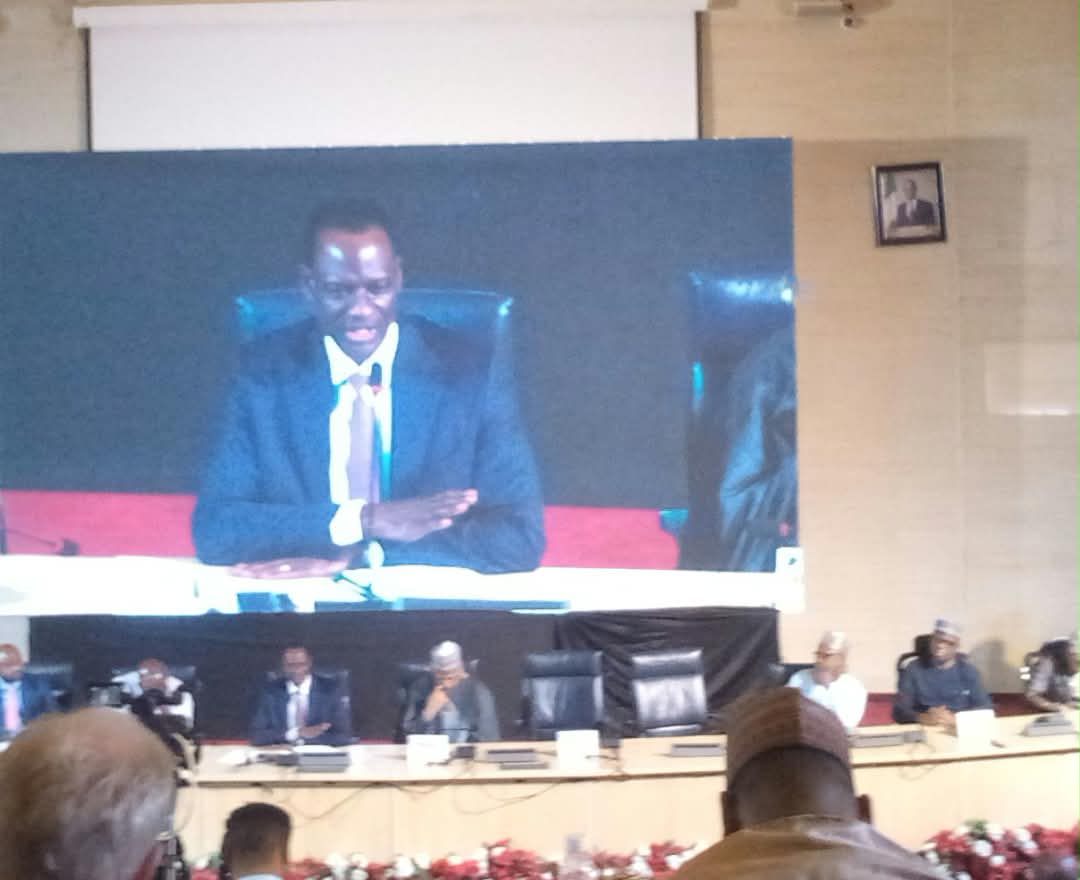
Minister of Finance and Coordinating Minister of the Economy, Prof. Taiwo Oyedele, gave the warning on Thursday while addressing journalists on the current rise in fuel prices and renewed calls for the return of subsidy.
Oyedele said the government understood the hardship being experienced by commuters, farmers, traders, businesses and households across the country, but argued that the current increase in pump prices was largely driven by a global energy shock rather than domestic policy alone.
According to him, the conflict in the Gulf has severely disrupted global energy and refined petroleum product supplies, with shipping through the Strait of Hormuz falling to about 13 per cent of its pre-war level by mid-September.
He said Brent crude had risen above $100 per barrel, almost 50 per cent higher than its pre-war price, while diesel exports from the Middle East and Russia had fallen by 75 per cent year-on-year.
Oyedele noted that Nigeria was not isolated from the global shock, saying petrol, which sold for about ₦830 per litre when crude traded around $70 per barrel before the conflict, now averages about ₦1,400 per litre.
He, however, stressed that Nigeria had maintained uninterrupted fuel availability across the country despite the global supply crisis.
“In a crisis of this kind, availability is the first form of affordability,” the minister said.
Oyedele rejected proposals to reintroduce fuel subsidy, including the idea of a “production subsidy” for domestic refiners.
He argued that such an arrangement would effectively amount to a consumption subsidy because the government would be discounting crude or other inputs to reduce the price paid at the pump.
According to him, the cost of crude, freight and refining inputs is largely dollar-denominated, meaning that keeping petrol prices artificially low would require the government to subsidise foreign exchange.
He warned that returning petrol to its pre-reform price could cost more than ₦20 trillion a year, based on estimated national consumption of about 50 million litres daily.
Even a pump price of ₦500 per litre, he said, would require more than ₦16 trillion annually in subsidy payments.
Oyedele said such an amount was comparable to almost the entire Federation Account allocation shared among the three tiers of government in 2025.
He warned that restoring subsidy would therefore have serious implications for government spending on salaries, pensions, education, healthcare and security.
The minister also cautioned that subsidised fuel could encourage smuggling and higher domestic consumption while making Nigerian taxpayers effectively subsidise fuel consumption in neighbouring countries.
Oyedele further warned that a return to subsidy could trigger a deterioration in government revenue, a sovereign credit downgrade, higher borrowing costs, capital flight and further pressure on the naira.
He projected that the exchange rate could approach ₦3,000 to the dollar within months if the country returned to a costly subsidy regime, with petrol potentially rising to at least ₦2,000 per litre despite the subsidy.
“Subsidy does not lower the cost of fuel. It only changes how it is paid, and when,” he said.
The minister said subsidy removal had released ₦15.8 trillion to the Federation Account between June 2023 and December 2025, with ₦10.4 trillion going to state and local governments.
He noted that while 27 states struggled to reliably pay salaries in May 2023, none was currently in that position.
Oyedele disclosed that the Federal Government was negotiating a ₦1,350 per litre ceiling on the ex-gantry or landing cost of petrol as part of measures to moderate price volatility.
Under the proposed arrangement, refiners and importers would absorb temporary increases above the ceiling and recover the difference later when crude prices or the exchange rate improve.
He stressed that the arrangement would not constitute a subsidy or fixed price control, but rather a mechanism to smooth price fluctuations.
The ceiling, he said, would be reviewed monthly, with relevant figures published to promote transparency.
The minister also announced a 30-day margin discount on petrol sold at NNPC Limited stations, with priority to public transport operators nationwide.
He disclosed plans for forward crude sales to domestic refineries to shield local petrol prices from volatility in the international market as domestic crude production improves.
The government, he said, was also establishing a National Strategic Fuel Reserve to release refined petroleum products during major global disruptions or periods of artificial scarcity.
According to him, the reserve would not be used to fix prices but would help secure supply, discourage hoarding and market manipulation, and reduce sudden price shocks
Oyedele said the government was accelerating the rollout of compressed natural gas (CNG) as a cheaper alternative to petrol.
He disclosed that more than 120,000 vehicles were already running on CNG, supported by more than 400 conversion centres, 96 refuelling stations and 18 liquefied-to-compressed natural gas stations.
More than 550 CNG buses have also been deployed, with fares reportedly falling by between 30 and 50 per cent where they operate.
The government, he added, was increasing funding for cash transfers to vulnerable households and subsidised credit for small businesses and consumers.
It is also considering an excess profit tax on operators found to be taking undue advantage of consumers along the energy value chain.
Oyedele said proceeds from such a tax would be dedicated to cushioning the impact of fuel prices through transport support or vouchers for vulnerable urban minimum-wage earners.
He added that the government would work with the National Assembly on enhanced tax relief for low-income earners under the 2027 Finance Bill.
The minister said the government had already introduced several measures to cushion the impact of subsidy removal, including tax and duty waivers on petroleum products.
According to him, the waivers currently save consumers between ₦400 and ₦600 per litre, representing more than ₦5 trillion in potential tax revenue.
He said Nigeria’s petrol was currently 20–30 per cent cheaper than prices in Benin, Togo and Cameroon, and 30–40 per cent cheaper than in Ghana, Kenya and South Africa.
Oyedele also disclosed that Nigeria’s foreign reserves had risen to about $55 billion, the highest level in 18 years, while the gap between official and parallel exchange rates had narrowed from more than 60 per cent to below five per cent.
He maintained that a stable exchange rate remained one of the most important factors influencing domestic fuel prices.
Oyedele said the administration remained open to credible alternatives but insisted that every subsidy proposal must clearly answer three questions: how much will it cost, how will it be sustainably funded, and what pump price will it deliver?
He said the Federal Government was also working on a comprehensive fiscal package aimed at bringing inflation down to single digits in the near term.
“The cost of fuel is real, and we do not dismiss it,” Oyedele said, adding that the government recognised the hardship Nigerians were facing.
“But the alternative has been tried. Nigeria has already lived through that cycle: scarcity, smuggling, a collapsing currency and a fiscal crisis. We cannot afford to live through it again.”
He said the government’s priority was to preserve the gains of economic reforms while ensuring that relief reached Nigerians “more quickly and in more tangible ways.”