
By || Goodluck E. Adubazi || Abuja.
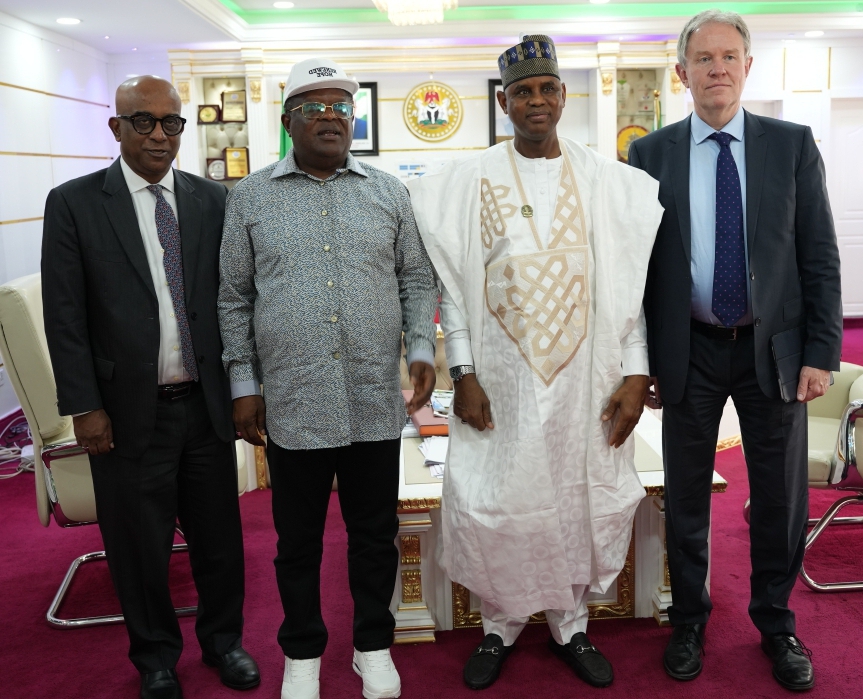
The Federal Government has intensified efforts to overhaul Nigeria’s road infrastructure as the Honourable Minister of Works, Sen. (Engr.) David Umahi, on Friday received a high-level World Bank delegation for talks centered on sustainable financing and delivery of critical road projects.
Welcoming the delegation, led by Mr. Matthew Verghis, Sen. Umahi underscored infrastructure as the backbone of Nigeria’s economic competitiveness, stressing that efficient road networks are essential for growth, trade, and social development. He commended the World Bank for its sustained interest in Nigeria’s infrastructure sector.
The Minister briefed the delegation on the Federal Government’s Development Management Initiative and the “Build, Update and Maintain” strategy, which assigns road construction to government while engaging the private sector for maintenance. According to him, the approach is designed to ensure durability, efficiency, and value for money.
Highlighting sectoral challenges, Sen. Umahi noted rising construction costs and funding constraints, adding that asphalt roads often fail within a decade. This, he said, informed the Ministry’s shift to reinforced concrete pavement as a longer-lasting alternative.
He identified priority projects currently under execution to include the multi-section East–West Road, the Enugu–Onitsha Road, the Kano–Jigawa–Maiduguri corridor, and the Lagos–Ibadan Expressway.
The Minister disclosed that upon assuming office, the Ministry inherited about 260 weak road links, 50 dilapidated bridges, and numerous failed sections nationwide. To tackle these, President Bola Ahmed Tinubu approved ₦20 billion for priority projects, many of which are already being commissioned across the country.
Given current economic realities, Sen. Umahi said the Ministry is prioritizing short-term completion of ongoing projects rather than initiating new ones, emphasizing that funding remains the biggest constraint.
He formally requested the World Bank to consider financing road infrastructure through the Federal Ministry of Works via the Presidency, proposing that funds be tied to strategic ongoing projects with tolling mechanisms introduced to ensure sustainability and repayment.
In response, Mr. Verghis described roads as Nigeria’s most critical infrastructure asset and said the Bank’s visit was aimed at identifying practical ways to improve the sector.
Another delegation member, Mr. Franz Drees-Gross, reiterated the World Bank’s focus on job creation and poverty reduction, noting that infrastructure plays a central role by stimulating economic activity. He outlined key areas of interest, including State Roads Funds, State Road Maintenance Agencies, improved drainage for flood control, and expanded private sector participation.
The World Bank team emphasized that any financing must comply with the Bank’s procurement standards, stressing transparency, accountability, and due process.
According to the statement by Clement Ezeora
Deputy Director, Press and Public Relations, the meeting ended on an optimistic note, with both sides pledging stronger collaboration toward sustainable, resilient, and inclusive infrastructure development in Nigeria. The Honourable Minister of State for Works, Barr. Bello Mohammed Goronyo, delivered the vote of thanks, reaffirming the Ministry’s readiness to work closely with the World Bank.