
By | Goodluck E. Adubazi, Abuja
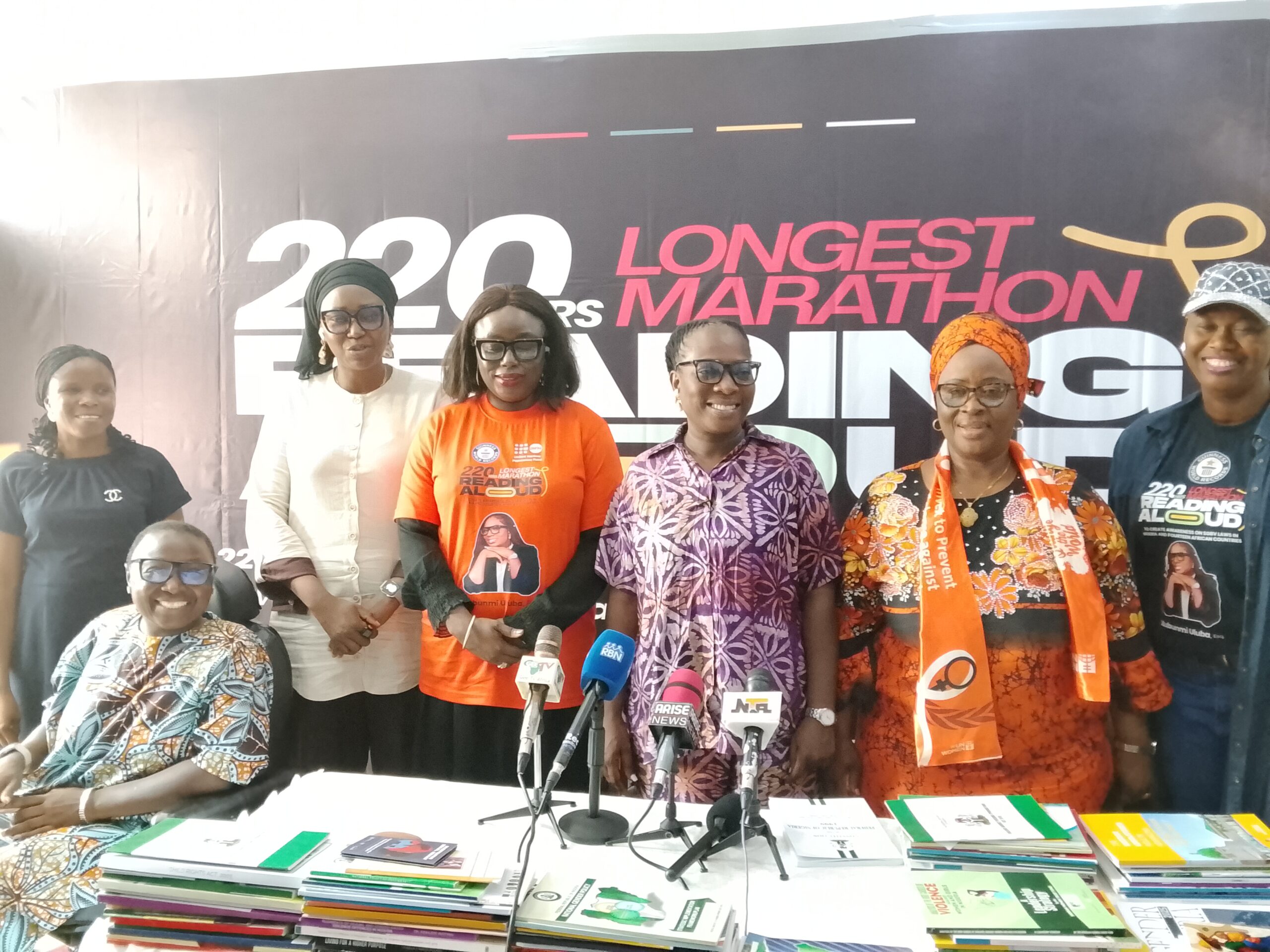
The United Nations (UN) Women, the Federal Ministry of Justice and the International Federation of Women Lawyers (FIDA) have called for renewed collective action to end sexual and gender-based violence (SGBV), as Nigerian legal practitioner, Barrister Olubunmi Uluba, commenced a 220-hour continuous reading marathon of SGBV laws from Nigeria and 14 other African countries.
The initiative, which is a Guinness World Records attempt aimed at raising awareness of sexual and gender-based violence, began on Monday in Abuja, with stakeholders highlighting the importance of legal literacy, effective enforcement of protective legislation and improved access to justice for survivors.
Speaking at the commencement ceremony, the UN Women Representative to Nigeria and ECOWAS on Gender Equality, Beatrice Eyong, described the initiative as an innovative approach to bringing legal protections closer to the people and strengthening public understanding of gender-based violence.
Eyong said SGBV should not be regarded exclusively as a women’s issue or the responsibility of gender advocates, warning that the menace was limiting development, deepening poverty and affecting families, communities and national economies.
She explained that gender-based violence went beyond physical assault between couples to include early and child marriages, which often deprive girls of education, skills acquisition and economic opportunities.
According to her, taking girls out of school and forcing them into early marriage perpetuates poverty and undermines their ability to contribute meaningfully to society.
The UN Women representative identified the gap between existing laws and public awareness of those protections as one of the major challenges in tackling SGBV.
She noted that both survivors and duty bearers sometimes lacked adequate knowledge of the laws designed to protect victims, stressing that people could hardly claim their rights when they were unaware of the legal provisions protecting them.
Eyong said Uluba’s 220-hour marathon would draw attention to legal frameworks, human rights instruments and protective legislation from 15 African countries, including Nigeria, thereby providing an opportunity for people across the continent to understand their rights and available remedies.
She identified the initiative’s contribution to the Sustainable Development Goals, particularly Goal 5 on gender equality, Goal 4 on quality education and Goal 16 on peace, justice and strong institutions.
She called on governments, traditional and religious leaders, civil society organisations, the media, families, men and boys to join efforts to challenge harmful practices, promote accountability and build communities where violence is neither tolerated nor normalised.
Eyong also called for the protection of vulnerable groups, including women living with disabilities and widows, who often lack adequate representation and access to justice.
While commending Uluba’s courage and determination, she said the greatest achievement of the exercise should not be limited to securing a Guinness World Records milestone but should be measured by the millions of people reached through public enlightenment.
She reaffirmed UN Women’s solidarity with the initiative, noting that the organisation had supported the idea from its early stages and would continue to stand with the organiser until its completion.
The UN Women representative also commended the Director-General of the Maryam Babangida National Centre for Women Development for providing the venue and the Minister of Women Affairs and Social Development for championing efforts against gender-based violence.
In a solidarity message, the Attorney-General of the Federation and Minister of Justice, Chief Lateef Olasunkanmi Fagbemi, SAN, represented by the Head of the Sexual and Gender-Based Violence Response Unit, Yewande Gbola, described the exercise as a remarkable undertaking requiring exceptional discipline, determination, physical endurance and mental strength.
Fagbemi said the significance of the initiative went beyond the ambition of achieving a Guinness World Records milestone, noting that its central objective was to raise awareness and promote understanding of laws addressing sexual and gender-based violence.
He said SGBV remained a serious threat to the dignity, safety, fundamental rights and well-being of individuals, families and communities.
According to him, eliminating the menace requires more than the enactment of laws, as it also demands sustained public education, effective institutional responses, access to justice, accountability and collective determination to challenge the attitudes and practices that enable violence.
He reaffirmed the Federal Ministry of Justice’s commitment, through its SGBV Response Unit, to strengthening access to justice for survivors, improving institutional responses, promoting coordination among stakeholders, building capacity within the justice sector and advocating effective implementation of relevant laws and policies.
The Attorney-General urged stakeholders to work towards a society where violence is neither normalised nor excused, survivors are supported rather than stigmatised, and existing laws are effectively enforced.
Similarly, the Publicity Secretary of the International Federation of Women Lawyers (FIDA), Abuja Branch, Barrister Chimdindu Onyedim-Etuwewe, expressed the organisation’s solidarity with Uluba, describing the marathon as an important platform for promoting awareness of laws protecting women and children.
Representing the FIDA Abuja Branch Chairperson and members, Etuwewe said the organisation was particularly pleased that the initiative placed at the forefront legal provisions designed to protect women and children, who constitute a significant proportion of victims of sexual and gender-based violence.
She said the exercise would help introduce existing legal protections to people unfamiliar with them while deepening public knowledge of their rights.
Etuwewe further noted that bringing the laws into public consciousness and placing them on a global platform would provide an opportunity to examine their adequacy, effectiveness and relevance, particularly those requiring reforms to address emerging realities.
She stressed that legal awareness must translate into effective protection, accountability, access to justice and meaningful law reform.
Reaffirming FIDA’s commitment to the promotion and protection of women’s and children’s rights, she called for sustained legal advocacy, effective implementation of protective legislation and justice for survivors.
She described the initiative as a collective victory for civil society organisations, government institutions, advocates and other stakeholders working to end sexual and gender-based violence.
Earlier, the Lead of the Organising Committee, Gladys Emmanuel, called for greater solidarity and support for the initiative.
Emmanuel said the 220-hour reading marathon was designed to advance legal literacy, strengthen accountability and build collective action against sexual and gender-based violence across Africa.
She urged individuals and organisations to support the exercise, stressing the importance of making relevant laws and legal protections accessible to the public.
In commencing the marathon, Uluba began reading provisions of the 1999 Constitution of the Federal Republic of Nigeria, starting with Chapter IV on fundamental rights.
The opening reading featured Section 33, which guarantees the right to life; Section 34, which provides for the dignity of the human person and prohibits torture, inhuman or degrading treatment, slavery and forced labour; and Section 35, which guarantees the right to personal liberty.
The marathon will feature the reading of relevant SGBV laws and protective legal instruments from Nigeria and 14 other African countries over the 220-hour period.
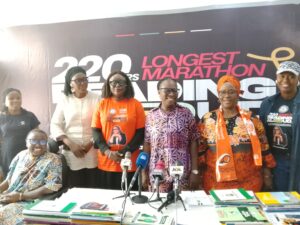
Stakeholders at the event maintained that the exercise should serve as a catalyst for sustained public enlightenment, stronger institutional accountability, effective enforcement of existing laws and a society where women and girls can live in safety, dignity and freedom from violence.