
By| Goodluck E.Adubazi, Abuja
The Federal Government has reaffirmed its commitment to ending period poverty, breaking menstrual stigma, and ensuring that no Nigerian girl is denied education or opportunities because of menstruation.
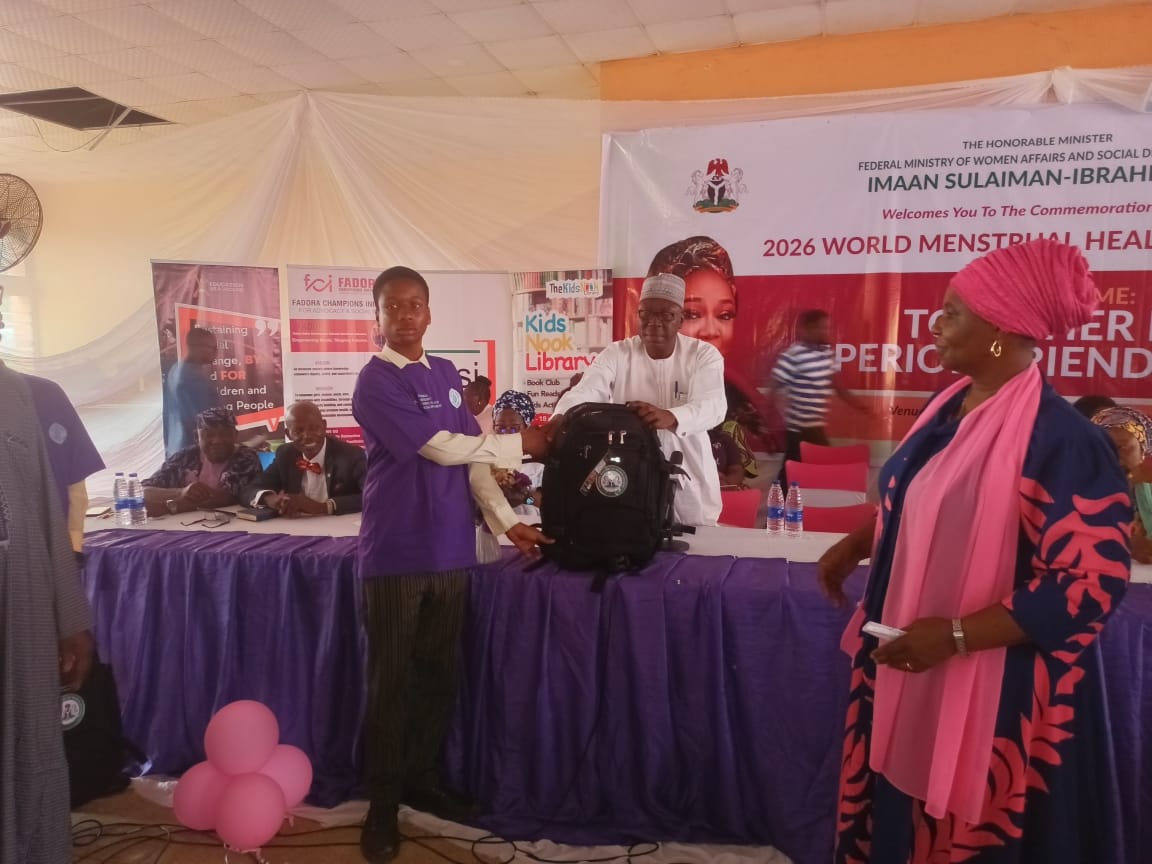
This commitment was highlighted during the 2026 World Menstrual Health and Hygiene Day commemoration held at Federal Government Girls College, Bwari, where government officials, development partners, educators, students, and civil society organizations gathered under the global theme, “Together for a #PeriodFriendlyWorld.”
Representing the Honourable Minister of Women Affairs and Social Development, Ali Andrew Madugu delivered the Minister’s keynote address, emphasizing that menstrual health is a matter of dignity, education, public health, and human rights.
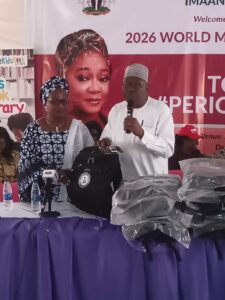
He noted that the annual observance, marked globally on May 28, symbolizes the average 28-day menstrual cycle and the average five-day duration of menstruation, reinforcing the message that menstruation is a natural biological process that should never be associated with shame or exclusion.
According to the Minister, an estimated 1.8 billion girls and women menstruate worldwide, while more than 20 million Nigerian girls under the age of 18 are affected by challenges including inadequate access to sanitary products, poor sanitation facilities, stigma, and school absenteeism.
The Minister highlighted the Federal Government’s launch of Nigeria’s first National Policy and Implementation Strategy on Menstrual Health and Hygiene Management as a landmark step toward addressing these challenges through coordinated action on education, infrastructure, access to hygiene products, and stigma reduction.
She further disclosed that under President Bola Ahmed Tinubu’s Renewed Hope Agenda, the government is implementing the Renewed Hope Social Impact Intervention (RHSII-774), a nationwide social protection initiative covering all 774 local government areas.
A key component of the programme, she explained, is the establishment of Pad Banks in schools across the country to ensure that girls have uninterrupted access to sanitary products and are not forced to miss classes because of menstruation.
“This is not merely an intervention; it is dignity infrastructure,” the Minister stated, stressing that every girl deserves equal access to education regardless of her menstrual cycle.
Delivering the welcome address on behalf of the Permanent Secretary of the Federal Ministry of Women Affairs and Social Development, Saeed Maimunat described menstrual health as a societal issue requiring collective responsibility.
She said the Ministry remains committed to advancing girls’ rights and empowerment through partnerships with government agencies, development organizations, schools, and the private sector.
“It is unacceptable that many girls still miss school due to lack of access to sanitary products, inadequate WASH facilities, or fear of stigma associated with menstruation,” she said.
She urged students to actively participate in awareness programmes and become ambassadors of menstrual health education within their communities.
Speaking on behalf of the Federal Ministry of Education, Abel Olumuyiwa Enitan emphasized that menstrual hygiene management is both an educational and social development issue.
He observed that inadequate information, poor sanitation facilities, and misconceptions surrounding menstruation continue to affect school attendance and academic performance among girls.
The Ministry, he said, remains committed to creating safe and inclusive learning environments through school health programmes, policy initiatives, and strategic partnerships aimed at integrating menstrual hygiene education into Nigeria’s education system.
Welcoming guests to the event, Principal Ibrahim Gladys Assibi described menstrual health education as a national development issue rather than a girls-only concern.
She expressed pride that the college was selected to host the national event and noted the institution’s longstanding commitment to empowering girls through education.
“Menstrual health education is not a girls’ programme. It is a nation-building programme,” she declared.
Development partner Population Services International Nigeria commended the Federal Government and stakeholders for strengthening menstrual health interventions across the country.
Speaking on behalf of the organization, Winifred Kwaknat revealed that PSI’s menstrual health initiatives have reached communities across seven states and 24 local government areas.
She highlighted innovative approaches including menstrual health-themed storytelling, local-language awareness campaigns, and audiovisual education tools that have helped reduce stigma and improve confidence among adolescent girls.
The event brought together representatives of government ministries, development agencies, civil society organizations, educators, parents, health professionals, and students, all united in the call to end period poverty and ensure menstrual dignity for every Nigerian girl.
In a vote of thanks delivered on behalf of the Director of Child Development, Deputy Director Shuaibu Mariam F. praised stakeholders for their commitment to advancing menstrual health and hygiene management in Nigeria.
She particularly acknowledged the contributions of organizations including United Nations Population Fund, Plan International, Population Services International Nigeria, UNESCO, and numerous civil society groups working to eliminate stigma and improve access to menstrual health services.
As the event concluded, participants renewed their commitment to ensuring that every girl and woman in Nigeria has access to safe menstrual products, accurate information, clean water and sanitation facilities, and a society that treats menstruation with dignity and respect.
The celebration ended with a strong message from stakeholders: menstrual health is not just a health issue—it is a human rights, education, and national development priority.