
By| Goodluck E.Adubazi | Abuja
The World Bank has raised fresh concerns over Nigeria’s poverty crisis, revealing that about 40 percent of children in Nigeria are stunted due to persistent economic hardship.
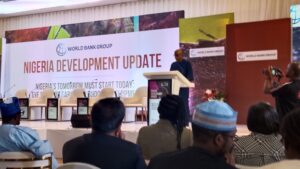
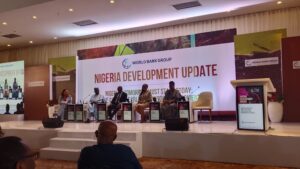
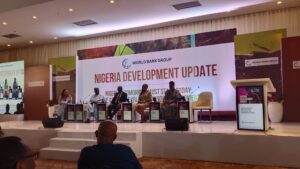
Speaking at the Nigeria Development Update held at the Abuja Continental Hotel, the World Bank Country Director for Nigeria, Mathew Verghis, said poverty levels remain alarmingly high despite signs of economic resilience.
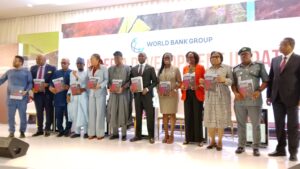
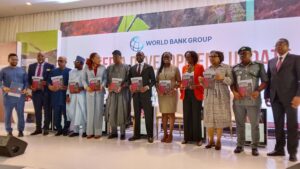
Presenting the report titled “Nigeria’s Tomorrow Must Start Today: The Case for Early Childhood Development,” Verghis emphasized that while the economy is showing strength, faster and more inclusive poverty reduction is urgently needed.
According to him, Nigeria’s recent economic reforms have stabilized key indicators, with growth continuing at a moderate pace. Real GDP expanded by 4.0 percent in 2025, following a 4.1 percent growth in 2024, driven largely by the services sector, including ICT, financial services, and real estate.


However, he warned that economic growth alone is insufficient to address deep-rooted poverty and inequality.
“Macroeconomic stability is necessary, but not sufficient,” Verghis said, stressing the need for investments in human capital, particularly early childhood development, to secure long-term national progress.
The report highlighted that inflation, though declining, remains a major concern.
Year-on-year inflation dropped to 15.1 percent in February 2026 from 26.3 percent a year earlier, with food inflation easing significantly.
Despite this improvement, rising global pressures, including the Middle East conflict, continue to pose risks.
On fiscal policy, the World Bank advised Nigeria to maintain discipline by saving excess oil revenues and adopting counter-cyclical measures.
It also recommended targeted social protection for vulnerable groups instead of broad subsidies, which it said are inefficient and distortive.
Verghis further called for sustained monetary tightening until inflation is significantly reduced, alongside reforms to improve market competition, reduce tariffs, and ease import restrictions to lower production costs and prices.
Despite global uncertainties, Nigeria’s external position has strengthened, with increased reserves and a more unified exchange rate system.
The country’s fiscal deficit rose slightly to 3.1 percent of GDP in 2025, driven by higher government spending, including debt servicing and wage adjustments.
Looking ahead, the World Bank projects that Nigeria’s economy will remain resilient between 2026 and 2028.
However, it cautioned that without accelerated reforms and stronger social investments, millions of Nigerians—especially children—will remain trapped in poverty.
The report concludes that prioritizing early childhood development, improving service delivery, and strengthening institutions are critical steps toward breaking the cycle of poverty and ensuring inclusive growth.