
By| Goodluck E.Adubazi, Abuja
The African Development Bank (AfDB), the Federal Ministry of Women Affairs, and UN Women have called for urgent action to close Nigeria’s gender gap, warning that persistent inequalities are undermining economic growth, political inclusion, and national development.

Speaking at the official launch of the Nigeria Gender Profile and Roadmap to Equality 2030 in Abuja, AfDB officials revealed that Nigeria ranks 124th globally on the World Economic Forum’s Gender Gap Index and 30th in Sub-Saharan Africa, highlighting significant disparities in education, finance, employment, technology access, and political representation.

Chief Gender Officer of the AfDB, Dr. Maria Jose Moreno Ruiz, said gender inequality remains one of the greatest barriers to sustainable development, noting that limited access to opportunities for women and girls continues to suppress productivity, innovation, and economic growth.
According to her, women-owned businesses often remain smaller due to inadequate access to finance and technology, while low female representation in leadership positions weakens inclusive decision-making and resource allocation.
Dr. Ruiz disclosed that closing Nigeria’s gender gap could add an estimated $229 billion to the nation’s Gross Domestic Product (GDP) by 2030, stressing that gender equality should be viewed as an economic investment rather than a social cost.
She cited alarming statistics showing that women occupy only 4.8 per cent of seats in the National Assembly, while female labour force participation remains significantly lower than that of men.
She also expressed concern that about 43 per cent of Nigerian girls are married before the age of 18, limiting their educational opportunities, bodily autonomy, and future economic prospects.
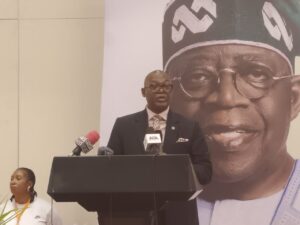
The AfDB official further highlighted the digital divide between men and women, warning that unequal access to computers and technology could worsen economic exclusion in an increasingly digital world.
In her remarks, UN Women Country Representative to Nigeria and ECOWAS, Ms. Beatrice Eyong, described the Roadmap as a critical tool for advancing inclusive development and achieving the Sustainable Development Goals (SDGs).
She noted that despite women’s significant contribution to economic activities, many remain concentrated in low-income and informal sectors, while millions continue to face multidimensional poverty, climate-related vulnerabilities, unpaid care burdens, and discriminatory social norms.
Eyong emphasized that gender equality is not merely a women’s issue but a foundation for economic transformation, democratic governance, climate resilience, peace, and sustainable development.
She urged all levels of government, development partners, the private sector, and civil society organizations to embrace the Roadmap as a national development framework capable of accelerating inclusive growth and strengthening accountability.
Also speaking, Acting Vice President of the AfDB Group, Dr. Abdul B. Kamara, described the Nigeria Gender Profile and Roadmap to Equality 2030 as a strategic national asset that provides evidence-based solutions for addressing gender disparities and promoting sustainable development.
Kamara said Nigeria’s development ambitions cannot be achieved if half of its population continues to face barriers in accessing education, finance, land, technology, markets, and leadership opportunities.
He identified human capital development, women’s economic participation, and social stability as key areas where gender equality could drive transformational growth, noting that narrowing gender gaps could unlock between 2 and 3 per cent of GDP annually.
The AfDB executive highlighted several Bank-supported initiatives aimed at empowering women, including a $200 million facility approved for the Bank of Industry and a $61 million financing package for the Development Bank of Nigeria, both targeted at supporting women-led enterprises and small businesses.
Kamara said the Roadmap’s success would depend on stronger institutions, expanded economic opportunities for women, transformed social norms, and increased female participation in decision-making processes.
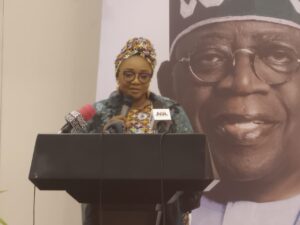
Minister of Women Affairs, Imaan Sulaiman-Ibrahim, called for collective action to ensure that the Roadmap translates into measurable results, stressing that its success would be determined not by speeches but by concrete policies, investments, and institutional reforms.

She urged stakeholders to integrate gender priorities into planning, budgeting, and development programmes, insisting that empowering women is essential to unlocking Nigeria’s full economic and social potential.
The Nigeria Gender Profile and Roadmap to Equality 2030 is expected to serve as a blueprint for advancing gender equality and driving inclusive prosperity across the country over the next decade.