
By| Goodluck E.Adubazi | Abuja
Cassava has been identified as a critical lifeline for more than 800 million people across the globe, as agricultural experts call for urgent adoption of climate-smart practices to unlock the crop’s full potential in Africa.

Speaking at a regional training course on climate-smart agriculture for cassava production, Prof. Victor Okechukwu Chude revealed that Sub-Saharan Africa accounts for over 60 percent of global cassava production, with Nigeria alone contributing more than 20 percent.

He credited sustained research efforts by the National Root Crops Research Institute (NRCRI) for positioning Nigeria among the world’s leading producers, with an annual output of about 63 million metric tonnes.


Despite its importance, Chude warned that cassava productivity remains significantly below capacity. While yields can reach between 50 and 80 tonnes per hectare under optimal conditions, the continental average remains below 10 tonnes per hectare—highlighting a nearly six-fold gap.
Agricultural stakeholders at the event stressed that Africa’s farming systems are under increasing pressure from climate change, soil degradation, and rising food demand.
They emphasized that climate-smart agriculture offers a viable pathway to boost productivity, strengthen resilience, and reduce greenhouse gas emissions.
President of the All Farmers Association of Nigeria, Dr. Farouk Rabiu Mudi, described agriculture as the backbone of African economies, noting that cassava plays a vital role in food security, rural livelihoods, and economic development.
Also speaking, Executive Secretary of the National Agricultural Development Fund (NADF), Mohammed Abu Ibrahim, said cassava remains a priority commodity due to its wide-ranging benefits, including income generation and industrial applications.
He highlighted its potential in ethanol production, which could support clean energy initiatives and reduce reliance on fossil fuels.
Officials from the Federal Ministry of Agriculture and Food Security underscored the need for innovative and resilient farming practices.
They noted that integrating advanced techniques, including nuclear and isotopic technologies, could improve soil fertility, reduce dependence on chemical fertilizers, and enhance productivity.
In his opening remarks, Acting Chairman of the Nigeria Atomic Energy Commission, Engr. Dr. Anthony I. G. Ekedegwa, described cassava as “more than just a crop,” calling it a vital resource for millions across Africa.
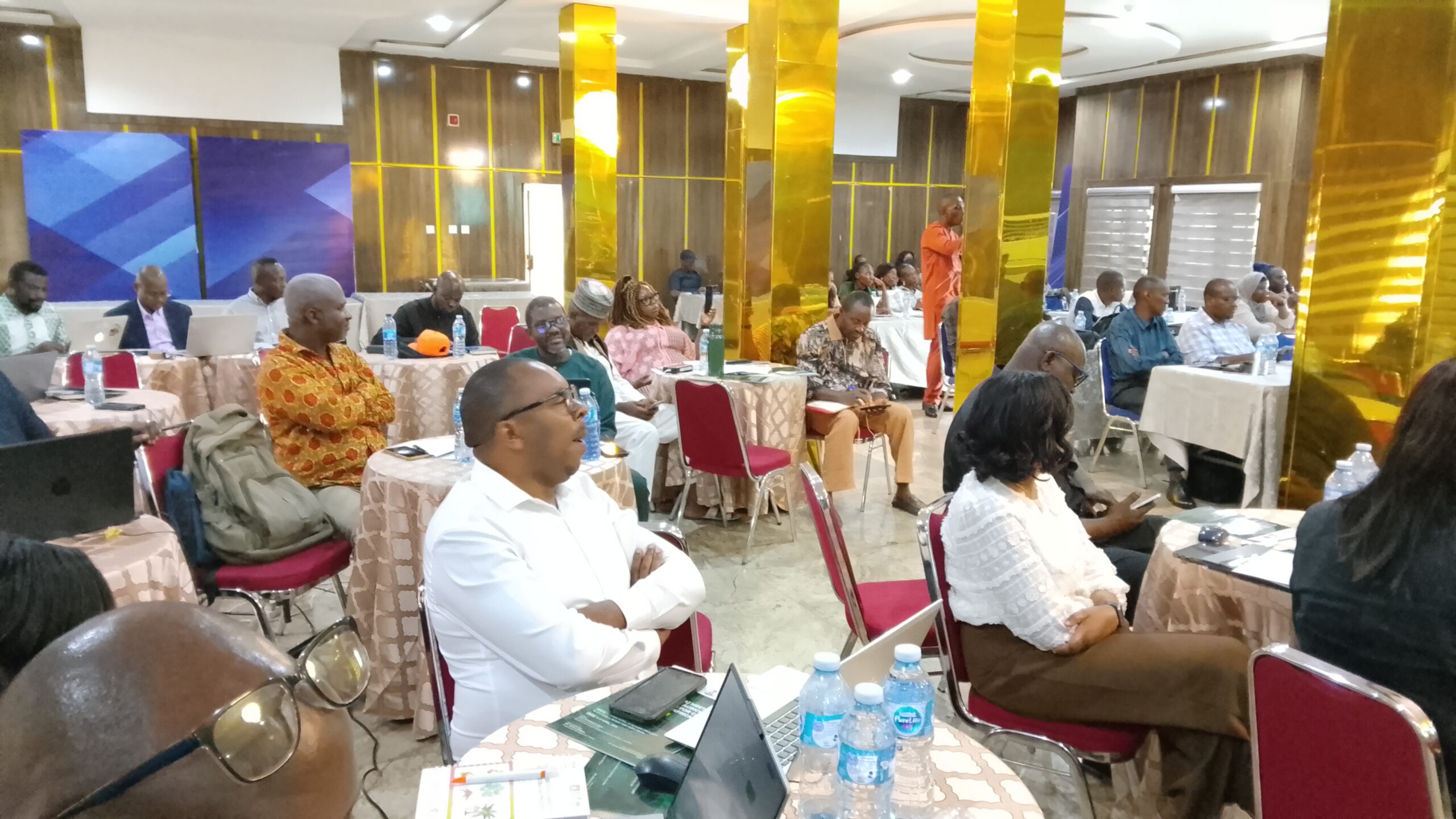
The event, organized by the International Atomic Energy Agency (IAEA) in collaboration with NRCRI, is being held in Abuja from April 13 to 17, 2026, bringing together participants from countries including Rwanda, Mozambique, and Kenya.
NRCRI Executive Director, Prof. Chiedozie N. Egesi, said the meeting comes at a crucial time, noting that global conflicts and economic disruptions have intensified food insecurity across Africa.
He emphasized cassava’s strategic role not only as a staple food but also as an industrial raw material capable of transforming national economies.
Experts at the forum agreed that closing the cassava yield gap will require collective effort, innovation, and widespread adoption of improved varieties and climate-smart practices.