
By| Goodluck E.Adubazi | Abuja
A major ending of a long-standing harmful cultural practice has been recorded in Cross River State, as stakeholders announce a landmark agreement to secure the freedom of survivors of the controversial “Money Woman” tradition in Obanliku Local Government Area.
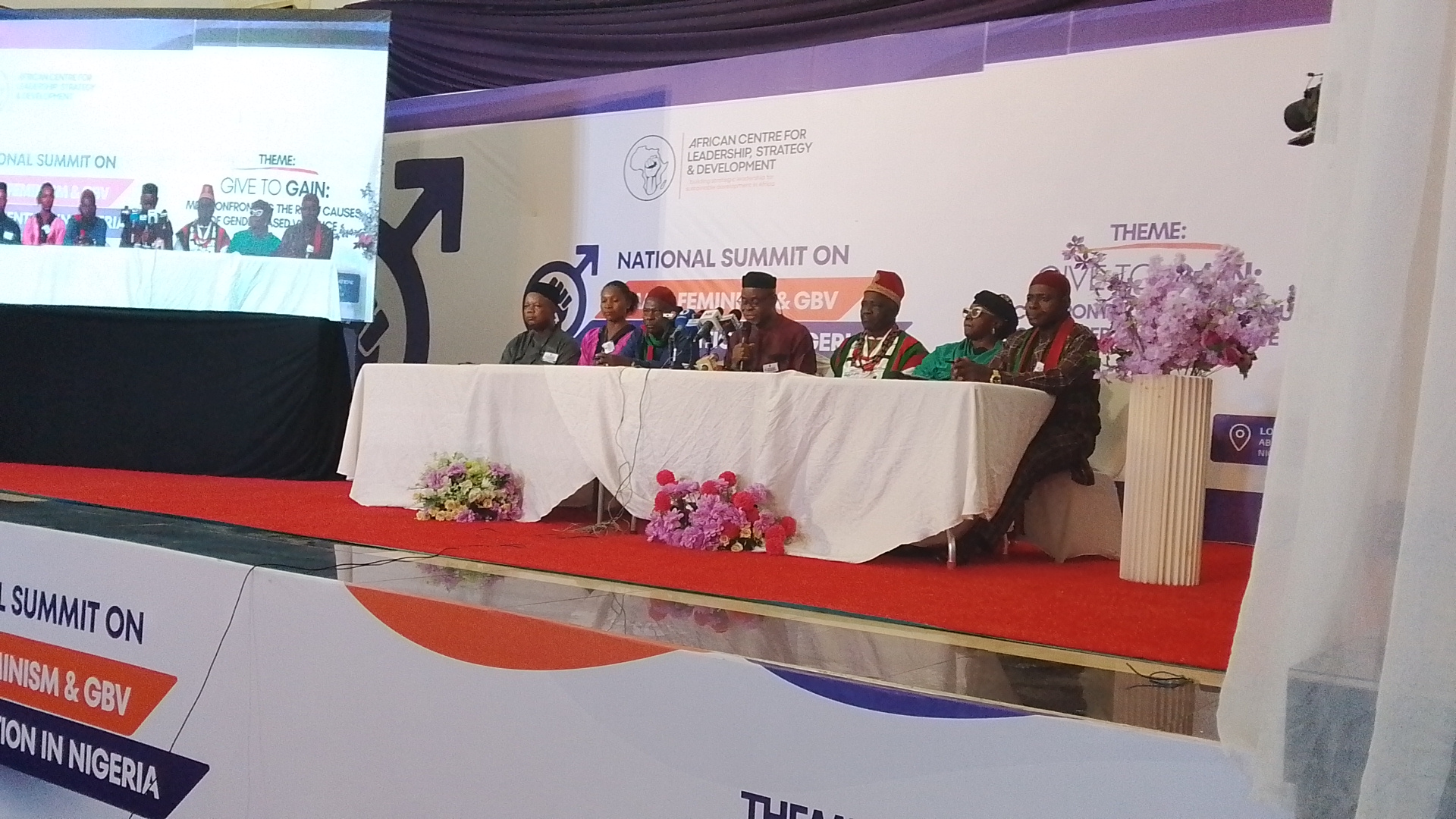
The announcement was made at a national press conference in Abuja, where the Male Feminists Network (MFN) and its partners revealed that communities in Becheve have adopted a standardized maximum payment of ₦100,000 to facilitate the release of affected women and girls.
The “Money Woman” practice, historically prevalent among the Becheve people, involves giving young girls out in marriage to settle family debts—often without their consent and at the cost of their education, freedom, and personal development.
Speaking at the briefing, stakeholders described the development as both “solemn and hopeful,” acknowledging the deep-rooted pain caused by the practice while emphasizing the possibility of meaningful change through collective action.
Although the practice was officially abolished in 2020 through a local by-law enacted with support from the UN Women-funded Spotlight Initiative, many victims remained trapped in pre-existing arrangements. Families seeking their release were often confronted with excessive financial demands, making freedom unattainable.
This gap between policy and reality prompted renewed engagement with traditional rulers, community leaders, and affected families.
After months of dialogue, a decisive agreement was reached on March 12, 2026, during a stakeholder meeting in Becheve. The adoption of a ₦100,000 cap is expected to eliminate exploitative demands and provide a clear pathway to freedom for survivors.
Observers say the agreement represents more than a financial benchmark—it signals a fundamental shift in how the community views the practice.
“What was once seen as a cultural obligation is now being recognized as an injustice that must be corrected,” one participant noted.
The resolution also introduces a dual strategy: emancipation and empowerment. Beyond securing release, efforts will focus on providing survivors with economic support, skills training, and opportunities to rebuild their lives.
Traditional authorities, including the Paramount Ruler and clan heads, played a pivotal role in facilitating the dialogue and ensuring community-wide consensus. Their involvement has been widely praised as evidence that cultural institutions can drive progressive change from within.
The development comes alongside the launch of a two-day National Summit on Male Feminism and Gender-Based Violence Prevention in Nigeria, bringing together stakeholders from across the country.
The MFN, introduced earlier this year, has already trained over 3,000 Nigerians and built a network of male advocates working to combat gender-based violence.
Organizers say the breakthrough in Obanliku demonstrates how national advocacy can translate into tangible community-level impact.
Attention now turns to implementation. Plans are underway to identify and support survivors, establish monitoring mechanisms, and mobilize resources for long-term empowerment initiatives.
Advocates also intend to document the model for possible replication in other communities facing similar challenges.
Stakeholders have called on the media, policymakers, and development partners to support the next phase of the initiative and amplify the voices of survivors.
“This is not just a resolution,” the statement concluded. “It is a restoration of dignity, a pathway to justice, and proof that change is possible.”
The statement was signed by Otive Igbuzor, Founding Executive of the Africa Centre for Leadership, Strategy and Development.