
By| Goodluck E.Adubazi | Abuja
ActionAid Nigeria has strongly condemned recent incidents of violence and bullying involving students at Igbinedion Education Centre, describing them as a grave violation of children’s rights and evidence of deep-rooted failures in Nigeria’s education system.
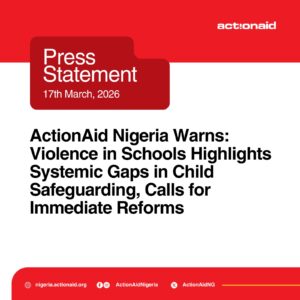
In a statement issued in Abuja, the organisation said the incidents highlight not only individual acts of abuse but also a broader breakdown in child protection, monitoring, and accountability structures across schools.
Speaking on Tuesday March 17, 2026, ActionAid Nigeria, Country Director Andrew Mamedu stressed that every child has the right to safety, dignity, and protection from violence, as guaranteed under the Child Rights Act and international standards.
“When abuse persists undetected or unaddressed, it signals deep cracks in the structures responsible for safeguarding children,” Mamedu said, noting that effective school supervision systems should be able to detect early warning signs and intervene before harm escalates.
He warned that the situation extends far beyond a single institution, pointing to a nationwide pattern of underreported bullying, abuse, and school-related gender-based violence. According to him, fear, stigma, weak reporting systems, and lack of trusted protection channels continue to silence victims.
ActionAid Nigeria also raised concerns about the circulation of videos and images of affected students on social media, describing it as evidence of failing reporting mechanisms within schools. The organisation noted that students resorting to sharing such content online reflects a lack of safe, confidential avenues to seek help.
The group emphasised that safeguarding children is a shared responsibility involving schools, government institutions, law enforcement, and the justice system. It criticised what it described as a “reactive culture,” where action is only taken after incidents gain public attention rather than through proactive monitoring and accountability.
ActionAid Nigeria called for coordinated reforms across multiple sectors, urging key institutions—including the Federal Ministry of Education, Universal Basic Education Commission, Federal Ministry of Women Affairs, and National Human Rights Commission—to strengthen implementation of child protection frameworks.
The organisation recommended the introduction of real-time reporting systems, regular monitoring, and transparent investigation processes to ensure early detection and resolution of abuse cases in schools nationwide.
It further urged schools to establish confidential reporting channels, enforce strict disciplinary measures, and provide continuous training for teachers and administrators on child protection, trauma-informed care, and conflict management.
Institutions with repeated cases of abuse, it said, should face sanctions, including possible closure.
Civil society groups were encouraged to support government efforts through community monitoring, training, and awareness campaigns, while law enforcement agencies such as the Nigeria Police Force were called upon to ensure thorough investigation and prompt prosecution of offenders.
Parents and guardians were also advised to play a more active role by promoting values of empathy and non-violence, monitoring school environments, and supporting children to report abuse without fear.
ActionAid Nigeria concluded by urging the creation of safe and accessible reporting systems that empower children to speak out, warning that silence and inaction will continue to allow abuse to thrive.