
By|| Goodluck E.Adubazi || Abuja
In a renewed push for democratic good governance across Africa, the Association of Foreign Relations Professionals of Nigeria (AFRPN) has announced plans to host its 8th Annual Lecture and Conference, aimed at interrogating pressing governance challenges on the continent through the lens of seasoned diplomacy and international relations practice.
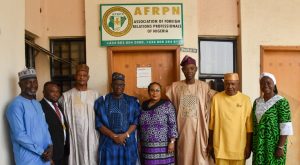
The conference, themed “The Challenge of Democratic Governance in Africa: Mega Trends and Leveraging Opportunities for Consolidation,” will bring together retired and serving Nigerian diplomats, policy experts, and key stakeholders in international affairs.
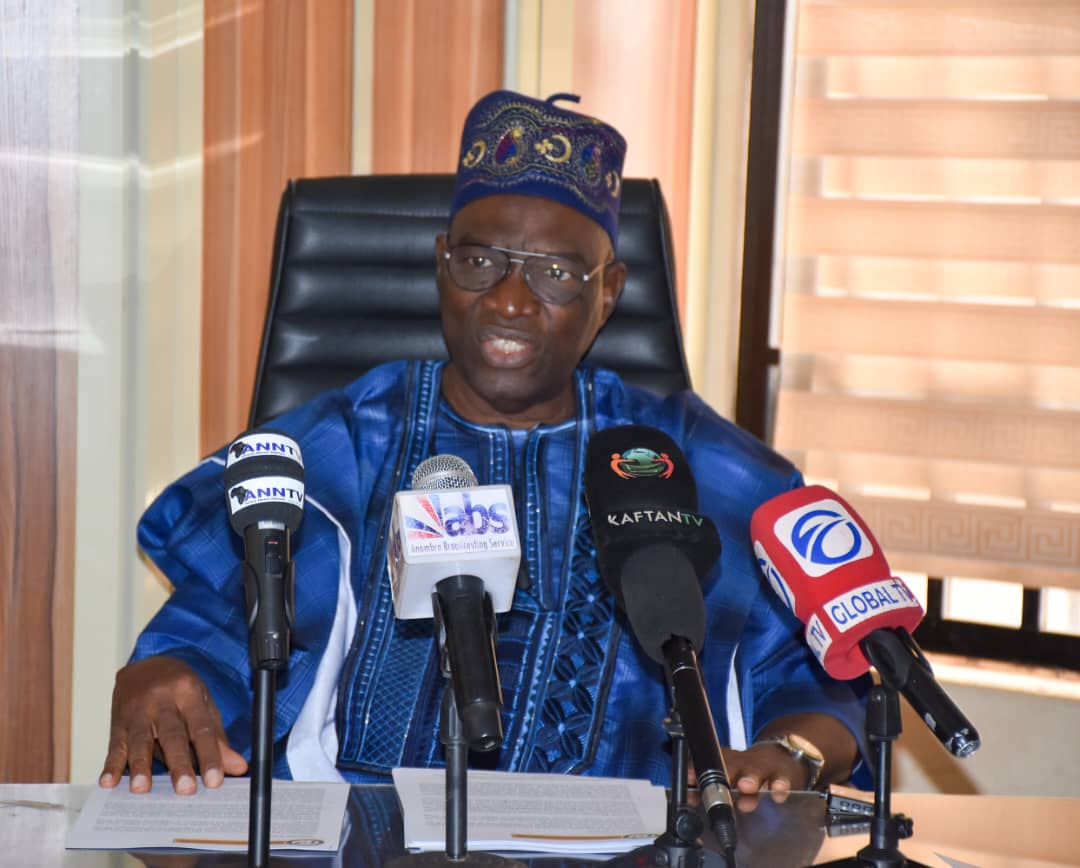
Speaking at a pre-event press briefing on Friday at the association’s office in Abuja, AFRPN President, Ambassador Gani Lawal, PhD, FFRP, said the annual lecture series reflects the association’s commitment to shaping Nigeria’s foreign policy options through best practices, intellectual engagement, and strategic dialogue.
According to him, AFRPN has continued to influence policy through lectures, workshops, publications, and mentorship of young diplomats, while providing a platform for critical reflection on topical global and continental issues.
Ambassador Lawal noted that the 2026 edition of the lecture was carefully chosen, like the previous seven, to enable participants to benefit from the insights of international relations professionals with hands-on experience in democratic governance across Africa.
He described the theme as timely, especially against the backdrop of the resurgence of military coups in parts of Africa, particularly the Sahel region, as well as growing public dissatisfaction with governance outcomes in several countries.
“We have witnessed the fragility of democratic governance in the face of terrorism, economic hardship, and declining public trust in state institutions,” Lawal said. “This is further accentuated by the enthusiasm with which some populations have welcomed coup regimes and renewed demands for fairer political and economic relationships with the rest of the world, especially former colonial powers.”
He stressed that these developments demand serious conversation and clinical evaluation by practitioners at the forefront of international relations and diplomacy.
The guest lecturer for the conference will be Ambassador Bankole Adeboye, African Union Commissioner for Political Affairs, Peace and Security, and a former Nigerian Ambassador to Ethiopia. Ambassador Adeboye, who is serving his second term at the AU, has held diplomatic postings in several countries.
Ambassador Lawal assured that the lecture would focus on practical issues surrounding democratic governance, peace, and security in Africa, while exploring pathways for improving outcomes for the continent’s people.
The event is scheduled for 3:00 p.m. on Thursday, February 5, 2026, at the Rotunda Hall, Ministry of Foreign Affairs, Tafawa Balewa House, Abuja. The chairman of the occasion will be Professor Ibrahim Agboola Gambari, former Minister of Foreign Affairs and immediate past Chief of Staff to late President Muhammadu Buhari.
Reflecting on the pedigree of past speakers, Lawal recalled that previous editions featured renowned personalities such as Professor Bolaji Akinyemi, Professor Eghosa Osaghae, Dr. Kingsley Moghalu, Ambassador Amina Mohammed (UN Deputy Secretary-General), and former South African President Thabo Mbeki, among other distinguished scholars and practitioners.
Expected dignitaries at the event include Ambassador Dalhatu Tafida, former Nigerian High Commissioner to the United Kingdom; the Minister of Foreign Affairs, Ambassador Yusuf Tuggar; and the Minister of State for Foreign Affairs, Ambassador Bianca Odumegwu-Ojukwu, who will serve as hosts.
The Vice President of the Federal Republic of Nigeria, Senator Kashim Shettima, GCON, will attend as Special Guest of Honour, while the Sarkin Kano, His Highness Khalifa Muhammadu Sanusi II, CON, PhD, will be the Royal Father of the Day.
Also expected are heads of key security and strategic agencies, including the Chief of Defence Staff, the Director-General of the National Intelligence Agency, the Chairman of the Nigerians in Diaspora Commission, Comptrollers-General of Customs and Immigration, Commandants of defence institutions, heads of diplomatic missions, and chief executives of ministries, departments, and agencies.
Ambassador Lawal further emphasized that for Nigeria to sustain its leadership role in Africa, it must strengthen its military-industrial capacity, deepen economic prosperity at home, and remain willing to support neighbouring and emerging democracies.
He added that Nigeria must continue to invest in the African Union’s agenda of regional integration, cooperation, conflict resolution through dialogue, and the silencing of guns across the continent.
He expressed optimism that President Bola Tinubu’s 4-D foreign policy mantra would reinforce Nigeria’s long-standing “brother’s keeper” foreign policy and consolidate its leadership role in Africa.