
By | Goodluck E. Adubazi, Abuja
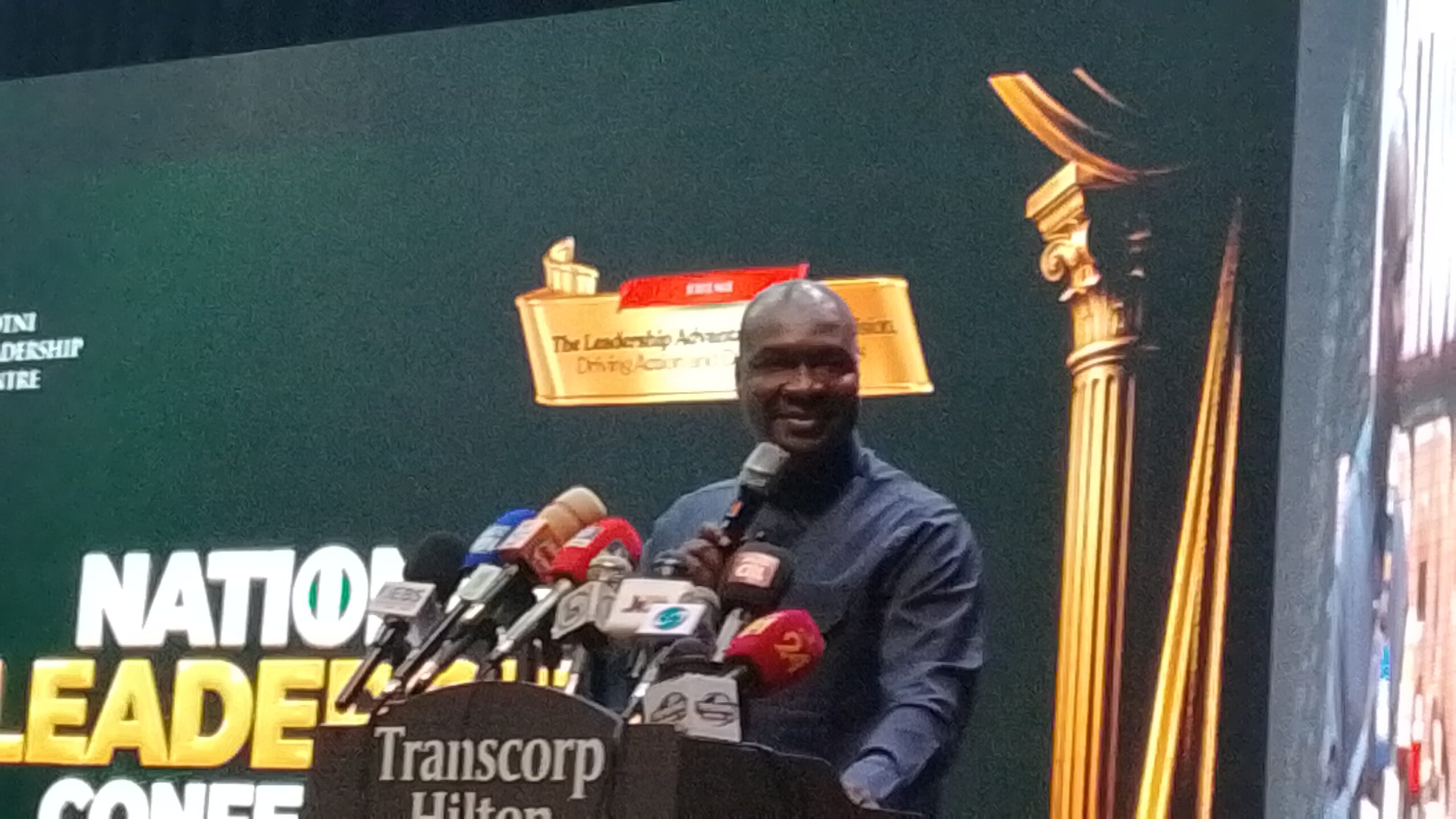
Founder of Eternity Network International, Apostle Joshua Selman, has challenged political leaders across Africa to clearly define the destination to which they are taking their people, warning that vague promises of a “great destiny” and “better tomorrow” are inadequate for transformational leadership.

Selman made the call on Friday, September 18, 2026, while speaking on “The Leader as a Catalyst: Aligning Purpose, Building Capacity and Creating Lasting Impact” at the National Leadership Conference organised by GOTNI at the Transcorp Hilton, Abuja.
The cleric argued that leadership in Africa has been weakened by excessive focus on titles, positions and the presence of followers, rather than purpose, integrity, self-leadership and the ability to provide solutions.
According to him, leadership should not be defined merely by occupying an office or having people to follow a leader.
He described leadership as “the ability to harness and coordinate human and material resources so as to meet a common goal,” while also drawing from the teachings of his late mentor, Dr. Myles Munroe, to define leadership as the ability to discover, refine and deploy one’s potential in service to others with excellence and impact.
Selman said the second definition changed his understanding of leadership because it places emphasis on personal development and service rather than position.
He said: “Leadership is influence, nothing more and nothing less. But within our context, I like to add one more layer: leadership is the professional and spiritual commitment to providing solutions.”
He warned that leaders who merely analyse problems without providing solutions had failed in the fundamental responsibility of leadership.
“If your presence does not solve a problem, then your leadership is merely a hollow computation of space,” he said, adding that leaders should be “merchants of hope” and references that communicate possibilities to people facing difficulties.
Selman maintained that nations, families and organisations do not run themselves, arguing that systems often reflect the vision, character and intelligence of those who lead them.
He said Africa’s challenges should not always be attributed to the economy, politics, policies or systems, stressing that leadership remains a critical factor in determining whether systems function effectively.
According to him, “the most needed dimension of leadership, particularly within the African space, is transformational leadership,” adding that it is not restricted to people occupying political or corporate positions.
He described transformational leadership as the ability to influence within one’s sphere and provide solutions irrespective of title or office.
Leader Must Be A Catalyst
Using the concept of a catalyst in chemistry, Selman said a transformational leader should accelerate positive change, reduce barriers and create an environment where people can succeed.
He said a catalyst speeds up a chemical reaction and lowers the activation energy required to begin a process without being consumed by the reaction.
“In the African context, you are that catalyst, and you have the mandate to sponsor, engineer and fast-track solutions, development and hope,” he said.
He identified bureaucracy that stifles innovation, corruption that drains energy and cynicism that kills dreams as barriers that prevent people from reaching their potential.
According to him, a catalytic leader must lower friction, provide clarity, remove confusion and make it easier for people to succeed.
He, however, warned that leaders seeking to transform a system must remain within the system without becoming consumed by its negative tendencies.
“A leader who is consumed by the very system they are trying to change is not a catalyst,” Selman said.
He added: “You must be within that system and yet not affected by the negative sides of the system. That’s what makes a leader a catalyst.”
‘Leadership Begins With Purpose’
Selman identified alignment of purpose as one of the major pillars of transformational leadership, insisting that leaders must clearly define the destination and make it understandable to those they lead.
He said people may listen to a compelling speaker, but they follow leaders who provide a clear direction.
“People don’t follow preachers; they follow leaders. They listen to you if you are articulate… but they only follow you when you truly become a leader,” he said.
He warned against what he described as the “destination disease” — the belief that acquiring a title means one has arrived.
According to him, the obsession with political and organisational titles has distorted the understanding of leadership in Africa.
Selman said winning an election or securing an appointment should not primarily be celebrated as personal achievement, but understood as a call to serious responsibility and service.
He said a title is fragile and cannot substitute for purpose and vision.
“If you take the throne away from a king and he has no purpose, then he was just a man sitting on a fancy chair. Beyond the throne, it is purpose and vision that defines a king,” he said.
‘Ask Them Where They Are Taking Us’
Selman urged Africans to demand clarity from their leaders, particularly political leaders, on their vision and the measurable outcomes they intend to achieve.
“Without due respect, political leaders across the African landscape, ask them where they are taking us,” he said.
He criticised the frequent use of vague expressions such as “a great destiny” and “a better tomorrow,” arguing that such phrases may sound encouraging but do not provide measurable direction.
According to him, leaders must clearly state what their desired future looks like and provide measurable indicators for determining whether progress is being made.
“There has to be a definition with clear indices. How do I know this is the great tomorrow? What are the indices to measure it?” he asked.
He further warned that many African leaders have developed public visions without corresponding private values, creating what he described as a gap in leadership.
Selman said true leadership is also about stewardship, stressing that leaders do not own the people, organisations or nations entrusted to them.
“You are a steward of their destiny. You are not the owner of the organisation or the nation or the platform where you lead. You are only a guardian of its mission,” he said.
He cautioned leaders against prioritising personal loyalty and protecting their egos over advancing the vision of the organisations and societies they lead.
According to him, leaders must be more concerned with taking their people towards a clearly defined destination than with surrounding themselves with loyalists.
Selman said transformational leadership ultimately requires leaders to subordinate personal interests to the responsibility of building people, creating solutions and moving society towards a clearly defined future.