
By | Goodluck E. Adubazi, Abuja
The United Nations Secretary-General, António Guterres, has warned that the global shortage of teachers, projected to reach 50 million by 2030, is putting the right to quality education at risk.
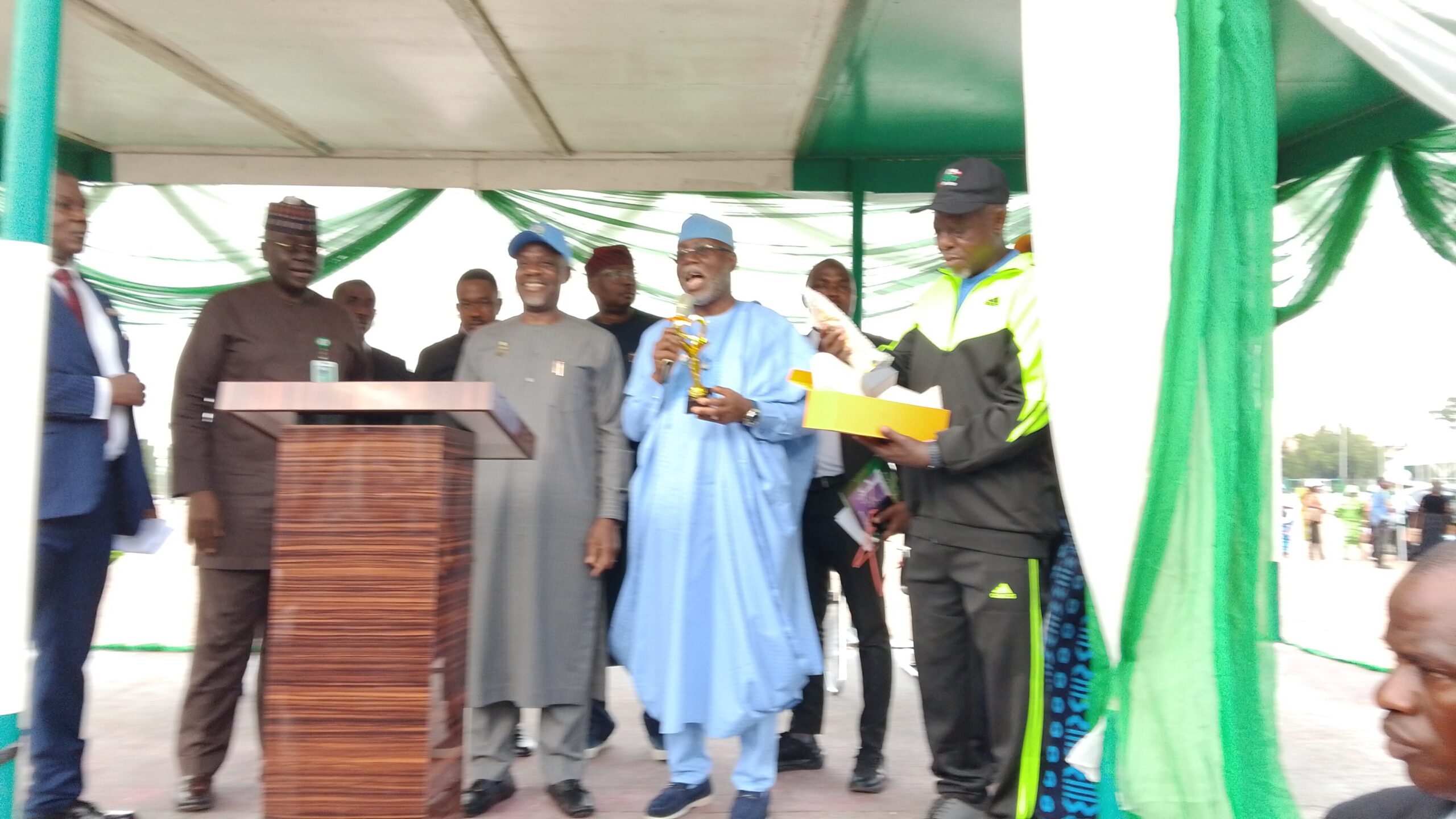
Guterres gave the warning in his message commemorating the 2026 World Teachers’ Day, celebrated in Abuja on Monday at Eagle Square, with the theme: “Protecting and Advancing the Status of the Teaching Profession in a Rapidly Changing World.”
He said the global teacher shortage must be tackled head-on by making the teaching profession more attractive, particularly to younger generations.
According to him, teachers remain central to achieving quality education and ensuring that children and young people acquire the knowledge and skills needed to thrive in a rapidly changing world.
The UN chief called for stronger support for teachers, better working conditions and greater recognition of their contribution to society.

Speaking at the event, the Minister of Education, Dr. Tunji Alausa, said President Bola Ahmed Tinubu understood that Nigerian children could not receive quality education without a strong teaching profession.

Alausa described teachers as “the most important people and the most important profession in any society,” saying the Federal Government was committed to improving their welfare, professional development and working environment.
He said: “President Bola Ahmed Tinubu understands that the Nigerian child cannot receive quality education without a strong teaching profession.”
The minister said the administration’s education reforms were aimed at providing better learning environments, strengthening institutions, developing skills for a changing economy, improving education data and enhancing teacher welfare and continuous professional development.
He said the government had rehabilitated and furnished hundreds of thousands of classrooms across the country and provided millions of instructional materials to basic and post-basic schools.
Alausa also highlighted developments in tertiary education, saying the number of Nigerian universities ranked among the world’s top 1,000 institutions had increased from 21 before the Tinubu administration to 29, with 21 of the 29 being public universities.
He attributed the development to increased investment in the education sector.
The minister also cited the Nigerian Education Loan Fund (NELFUND), saying access to tertiary education was increasingly being separated from students’ geographical location and financial circumstances.
He said the administration had also placed technical and vocational education, science, technology, engineering, mathematics and medical sciences at the centre of its education agenda.
According to him, the Federal Government has invested heavily in rehabilitating medical schools, establishing laboratories and research centres, and equipping federal universities of technology and engineering faculties with modern equipment.
Alausa further disclosed that the government had spent about ₦600 billion on constructing and rehabilitating student hostels across federal tertiary institutions within the last three years.
He said the government was also tackling the challenge of out-of-school children, noting that more than one million children had been brought back into the school system in the last two years.
On education data, the minister said the government had developed a digitalised Nigeria Education Management Information System with almost 40 million children already captured on the database.
He described the development as a major transformation in education planning, saying Nigeria now had one of the largest education databases in Africa.
Alausa said the government was equally strengthening quality assurance and teacher professional development through digital platforms designed to enable teachers continuously upgrade their skills.
He stressed that technology and artificial intelligence were changing the way knowledge was delivered and assessed, but insisted that technology could not replace the human connection and professional judgment of teachers.
He said teachers must therefore be equipped to use emerging technologies responsibly while maintaining the standards and values of the profession.
The minister also said the government’s President Teachers and School Excellence Awards were designed to recognise outstanding teachers, school administrators and schools for professionalism, innovation and leadership.
He congratulated the award recipients, saying their contributions went beyond the classroom because every doctor, engineer, scientist, entrepreneur and public servant had benefited from the work of teachers.
Alausa said the Federal Government would continue to place teachers and learners at the centre of its education reforms.
He called for sustained investment in the teaching profession, stressing that teachers deserved professional respect, appropriate resources, fair recognition, good working conditions and opportunities for career development.
He said: “For us to have a highly qualitative and durable education system, we have to care for and respect the people that matter the most, and those people are the teachers.”
He urged Nigerians to use the World Teachers’ Day commemoration to renew their commitment to protecting the dignity and professional status of teachers while ensuring that they are adequately equipped to meet the demands of a rapidly changing world.