
By| Goodluck E.Adubazi | Abuja
The Gombe State Government has announced the successful reintegration of over 350,000 out-of-school children into classrooms, marking a major milestone in its education reform efforts.
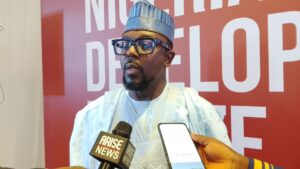
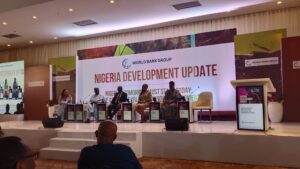
Speaking at the World Bank Nigeria Development Update held in Abuja on Tuesday, Governor Muhammadu Inuwa Yahaya—represented by the State Commissioner for Finance, Muhammad Gambo Magaji—said the initiative forms part of a broader strategy focused on early childhood development.
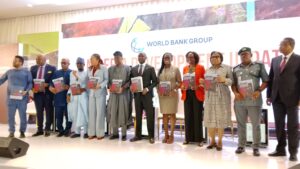
The event, themed “Nigeria’s Tomorrow Must Start Today: The Case for Early Childhood Development,” brought together key policymakers and development partners to address the country’s education challenges.
Magaji stated that the state government has prioritized foundational learning by establishing nursery and kindergarten schools across local government areas.
He explained that the intervention aligns with programs supported by the World Bank aimed at improving early childhood education outcomes.
“For us in Gombe, over 350,000 children have been taken off the streets and brought back into classrooms,” he said.
“We are actively investing in early childhood development through the creation of nursery and kindergarten schools at the grassroots level.”
Magaji made the remarks during a panel session alongside Nigeria’s Minister of Finance and Coordinating Minister of the Economy, Wale Edun, and representatives from the Central Bank of Nigeria, among others.
He further disclosed that officials from the World Bank recently visited Gombe State during the Sallah period to inspect early childhood development centers established across various local government areas.
Describing the out-of-school children crisis as a national emergency, Magaji called for collective action from all stakeholders.
“This is not just a social issue but a national crisis,” he said. “We must all come together to improve early childhood development so that the long-term benefits can positively impact the country.”
The Gombe State Government says it will continue to expand access to basic education as part of its commitment to human capital development and sustainable growth.