

By | Goodluck E. Adubazi, Abuja
Trust, institutional credibility, character, inclusive leadership and the need to build sustainable institutions dominated discussions at the 2026 National Leadership Conference organised by GOTNI Leadership Centre at the Transcorp Hilton Hotel, Abuja.
The three-day conference brought together policymakers, politicians, government officials, entrepreneurs and other leaders from Nigeria, Africa and beyond to discuss leadership, institutional development and emerging challenges.


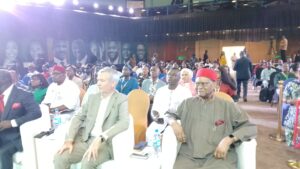
Among (VVIP) Delegates was Hon. Aisha Ibrahim Adoke, PhD, popularly known as AIA, former Managing Director/CEO of Kogi State Investment and Property Limited, Founder/Chairman of AIA Foundation and AIA Decor Style Limited, and a major contender for the African Democratic Congress (ADC) Okehi/Adavi House of Representatives seat.

Chairman and Chief Executive Officer of Channels Television, Dr. Jimoh Momoh, represented by the General Manager of Channels Television, Kingsley, said trust remains fundamental to effective leadership in the age of information.
Speaking on “Leading in the Age of Information: Trust, Communication and Institutional Credibility,” Momoh said the explosion of social media and artificial intelligence had democratised communication but also made it harder to distinguish truth from misinformation, propaganda and manipulated content.
He said, “Authority can make people listen. Trust makes people believe, and credibility makes them continue listening.”
Momoh stressed that credibility is built through consistent behaviour, transparency, accountability, keeping promises, admitting mistakes and treating people fairly.
He warned leaders against using public relations to disguise poor decisions, declaring: “You can outsource publicity. You cannot outsource credibility.”
He urged young leaders to focus on usefulness rather than fame, saying leadership should be measured by responsibility and the positive difference made in people’s lives.
Former Commonwealth Secretary-General and Chairman of the Governing Board of GOTNI Leadership University, Chief Emeka Anyaoku, GCON, stressed the importance of character, hard work and service in leadership.
Speaking during a fireside chat, Anyaoku said examination malpractice and certificate forgery were virtually unknown when he was a young student.
“When I was a young student, a young man in this country, we never heard the words examination malpractice. All the forgeries of certificates were unheard of,” he said.
Anyaoku described GOTNI Leadership University as “an idea whose time has come,” saying Nigeria needs institutions dedicated to developing effective leaders.
Reflecting on his diplomatic career, he recalled his involvement in democratic transitions in countries including Zambia, Malawi, Seychelles and Kenya, as well as his role in engagements surrounding South Africa’s transition from apartheid.
He said the experiences demonstrated the importance of dialogue, diplomacy, leadership and institution-building in addressing complex national challenges.
The United Nations Women Country Representative to Nigeria, Mrs. Beatrice Eyong, advocated inclusive leadership capable of strengthening institutions and delivering sustainable results.
Speaking on “The Inclusive Leader,” Eyong urged leaders to balance organisational objectives with the aspirations, wellbeing and development of team members.
She stressed the importance of giving people opportunities to contribute, participate in decision-making and develop their abilities.
According to her, sustainable institutional success requires leadership that recognises diverse perspectives and creates an environment where people feel valued, heard and empowered.
The conference provided a platform for discussions on trust, communication, institutional credibility, character, integrity, inclusive leadership, professional development, adaptability and sustainable institution-building.
The speakers collectively emphasised that effective leadership requires more than position or authority, stressing the importance of integrity, accountability, competence, people development and the ability to build institutions that can endure beyond individual personalities.