By| Goodluck E.Adubazi, Abuja
The Nigerian Meteorological Agency (NiMet) has signed a Memorandum of Understanding (MoU) with AKADEMIYA2063 to deepen collaboration in artificial intelligence (AI), climate information services, weather data analytics and evidence-based research aimed at strengthening climate resilience, agricultural productivity and food security in Nigeria.
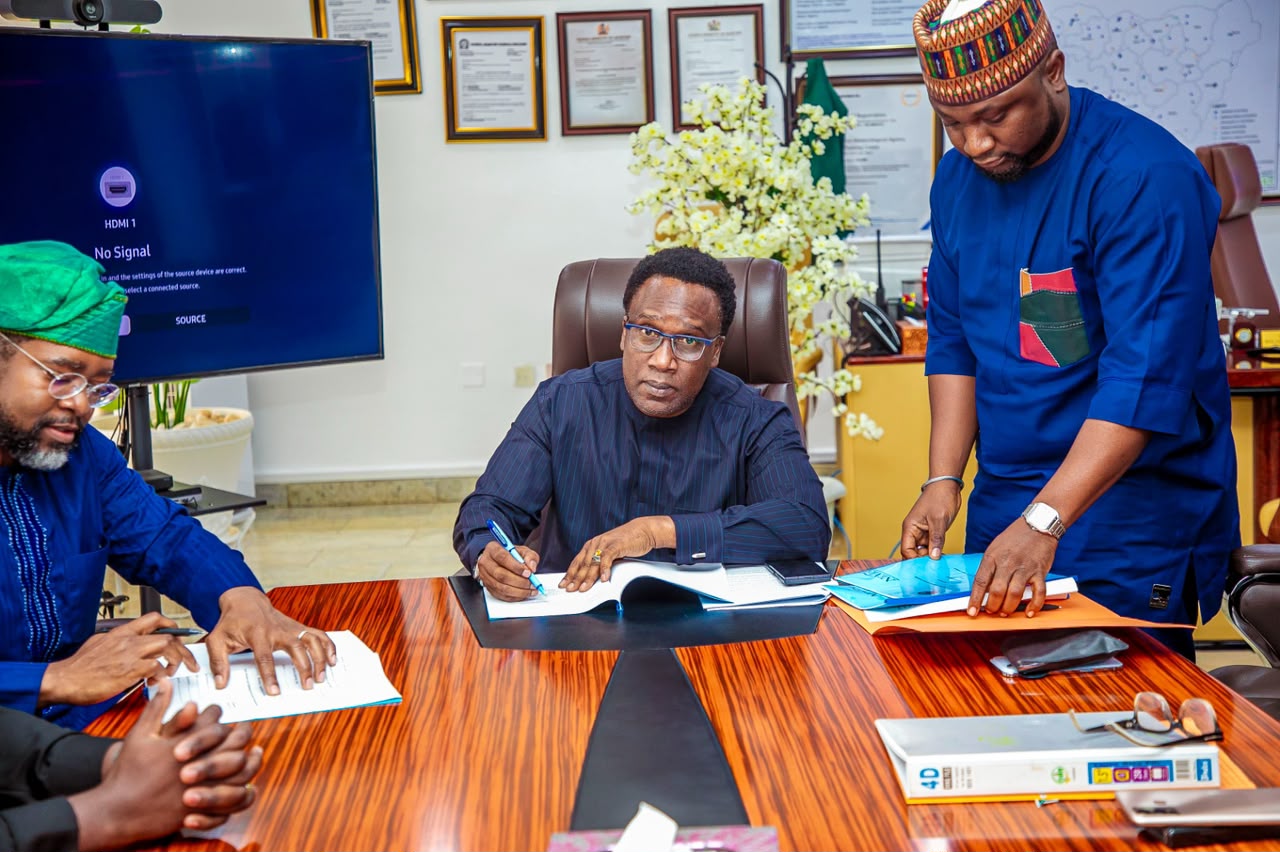
The agreement, signed on Tuesday in Abuja, is expected to accelerate the deployment of AI-driven solutions for weather forecasting, climate monitoring, early warning systems and agricultural planning, while enhancing Nigeria’s capacity to respond to the growing impacts of climate change.
The MoU was signed on behalf of NiMet by its Director-General and Chief Executive Officer, Prof. Charles Anosike, who is also Nigeria’s Permanent Representative to the World Meteorological Organization (WMO). Dr. Debisi Araba, Managing Director of AKADEMIYA2063, and Dr. Racine Ly, Director of Data Intelligence and Governance and National Representative for Senegal, signed on behalf of the organisation.
Speaking during the ceremony, Prof. Anosike said the partnership reflects NiMet’s commitment to embracing emerging technologies to improve weather and climate services.
He disclosed that the agency has already established an AI Research Team to explore the use of artificial intelligence and machine learning in weather forecasting, climate services and operational efficiency, adding that the collaboration with AKADEMIYA2063 would strengthen those efforts and position NiMet at the forefront of digital innovation.
Dr. Araba described the agreement as a major step toward enhancing Africa’s capacity in data analytics and evidence-based policymaking.
According to him, combining AKADEMIYA2063’s expertise in data intelligence with NiMet’s meteorological capabilities will deliver practical solutions that improve climate resilience, support food security and promote sustainable development across Nigeria.
Under the agreement, both organisations will collaborate on applying artificial intelligence to climate monitoring, seasonal forecasting, early warning systems and data-driven decision-making to strengthen AI-enabled climate services and agricultural planning.
To ensure effective implementation, the partners will establish a Joint Technical Committee that will work closely with NiMet’s AI Research Team to identify priority areas, coordinate activities and develop joint initiatives focused on advancing climate services, AI research, innovation and sustainable development.