…FG to Award ₦2.2bn to Five Student Venture Capital as SEC Targets Kano as Non-Interest Finance Hub
By| Goodluck E.Adubazi, Abuja
The Central Bank of Nigeria (CBN) has disclosed that Nigeria’s non-interest money market instrument and Sharia-compliant equity fund have grown significantly, recording a combined net asset value of approximately ₦475.9 billion as of July 31, 2026.
The figure comprises ₦446.14 billion in the active fund and ₦29.76 billion in the retiree fund, underscoring what the apex bank described as growing acceptance of ethical and non-interest financial products within Nigeria’s pension system.
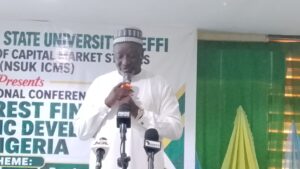
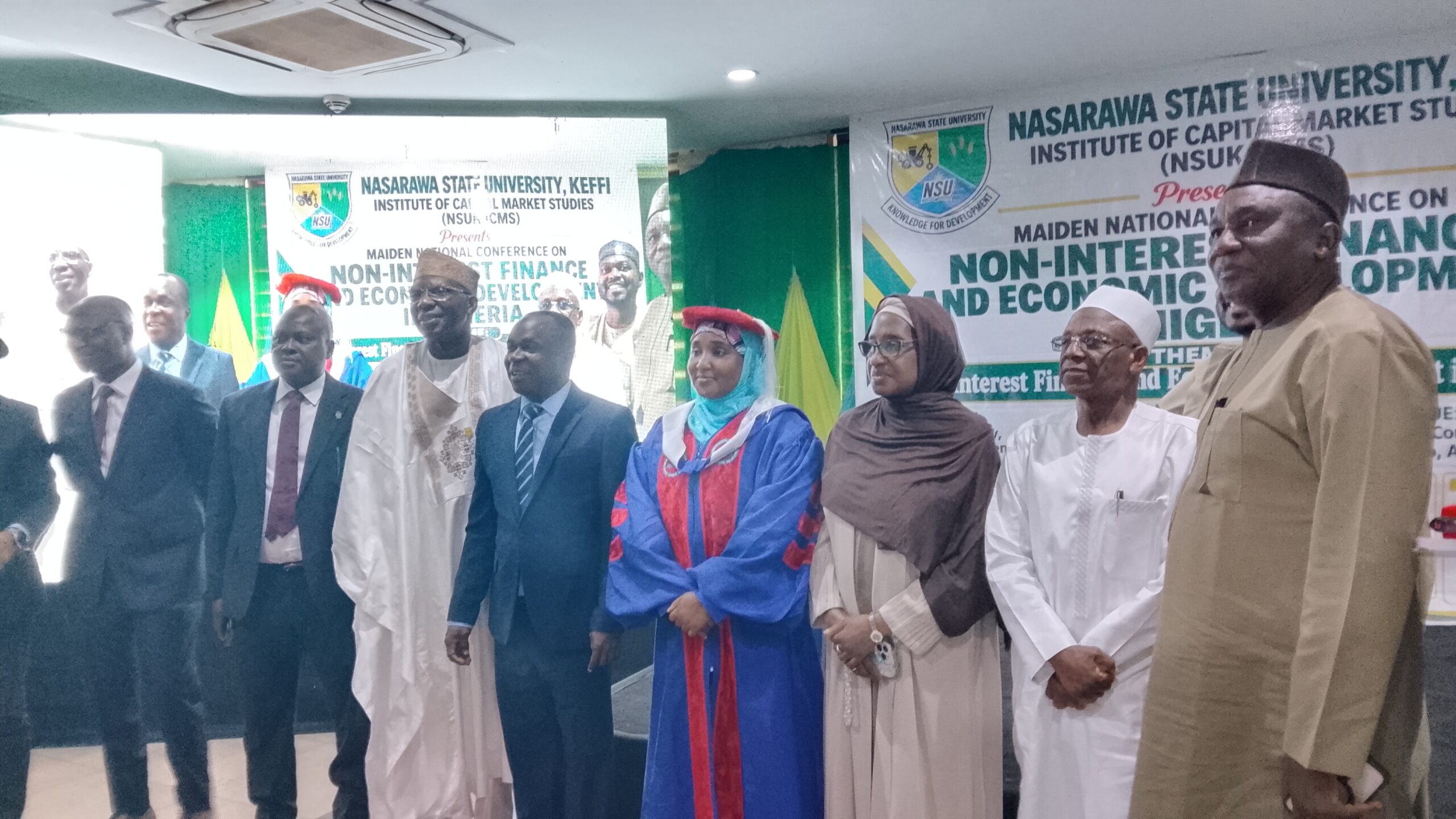
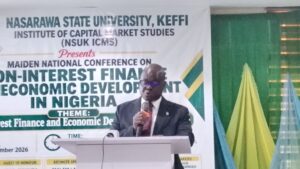
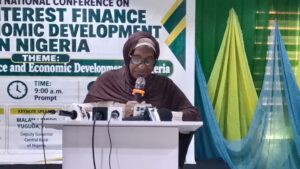
The CBN Deputy Governor, Malam Lamido Yuguda, disclosed this in his keynote address at the maiden national conference on “Non-Interest Finance and Economic Development in Nigeria”, organised by the Nasarawa State University, Keffi (NSUK) Institute of Capital Market Studies (ICMS) on Monday, September 14, 2026, at the NAF Conference Centre, Abuja.
Yuguda said the development had expanded opportunities for Nigerians who prefer non-interest financial products on ethical or religious grounds to participate in the pension system without compromising their values.
According to him, the fund has also become an important source of long-term capital for the non-interest capital market, helping to deepen the investor base for Sharia-compliant securities and strengthen the connection between pension savings and infrastructure financing and broader economic development.
He, however, stressed the need for robust regulatory oversight as the industry expands.
He said the Financial Services Regulation Coordinating Committee (FSRCC) must continue to promote regulatory harmonisation and mitigate systemic risks across the financial sector, while innovation must operate within a framework that protects consumers, promotes market integrity and preserves financial stability.
The CBN deputy governor also highlighted efforts to integrate the standards of the Accounting and Auditing Organization for Islamic Financial Institutions (AAOIFI) into the financial reporting practices of non-interest financial institutions.
He said aligning Nigeria’s regulatory oversight with internationally recognised Islamic finance standards would strengthen accountability, improve comparability of financial information and promote confidence in the sector.
Yuguda said the CBN remained committed to building a diversified, inclusive and resilient financial system, including strengthening regulatory frameworks for non-interest banking and other alternative finance institutions while expanding access to affordable financial services.
He called for strong governance, effective risk management, technology-driven service delivery, customer-centred innovation, greater public awareness and continuous professional development among operators in the sector.
He also urged regulators, academia, financial institutions, capital market operators and development partners to collaborate in developing the sector.
According to him, emerging opportunities include the integration of financial technology into non-interest banking and Takaful services, mobilisation of capital for renewable energy and climate-resilient projects, financing entrepreneurship and job creation, expanding access to finance across the agricultural value chain and attracting regional and international investors seeking ethical and asset-backed investment opportunities.
Yuguda said non-interest banking, Sukuk and Takaful should be regarded as strategic instruments capable of mobilising capital, enhancing economic resilience and financing productive investment and infrastructure development.
He urged academic institutions to deepen research and provide evidence-based policy recommendations, while financial institutions should develop innovative products that meet the needs of households and businesses.
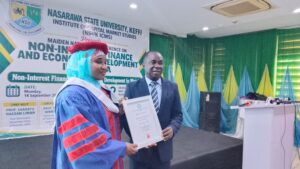
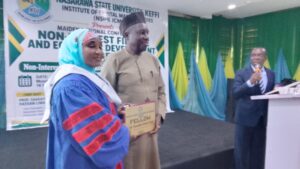
In her inaugural speech at the conference, the Minister of State for Education, Prof. Suwaiba Ahmad Sa’id, said the Federal Government was set to award ₦2.2 billion to five student ventures under the Student Venture Capital Grants Programme.
She said each qualifying student research venture with potential for scaling could receive up to ₦50 million to support the commercialisation and expansion of the research.
The minister said the initiative reflected the government’s commitment to investing in human capital, stressing that Nigeria must invest in the minds of its citizens before it could fully benefit from their ideas and innovations.
She said education builds knowledge, skills, productivity and judgment, enabling citizens to contribute meaningfully to their families, communities and the national economy.
Ahmad Sa’id cited the UNICEF Nigeria Education Factsheet 2023, which reported that only 37 per cent of children aged seven to 14 possessed foundational reading skills, while only 25 per cent demonstrated foundational numeracy skills.
She noted that reading proficiency stood at 66 per cent among children from the richest households compared with four per cent among those from the poorest households, stressing that the figures reflected unequal opportunities rather than differences in intelligence.
The minister also cited the World Bank’s February 2026 Human Capital Index findings, which indicate that raising Nigeria’s effective years of schooling to 12 could increase labour earnings by about 20 per cent.
She stressed that the emphasis must be on effective learning, rather than merely increasing the number of years children spend in school.
According to her, teachers remain central to converting investments in laboratories, technology and curriculum into meaningful human capital.
She said the National Teacher Professional Development Framework and accelerated teacher professionalisation pathway were designed to ensure that Nigerian teachers possess not only paper qualifications but also the competence required for effective curriculum delivery.
The minister also highlighted government interventions targeting out-of-school children, girls’ education, digital literacy and technical and vocational education.
She said through the Adolescent Girls Initiative for Learning and Empowerment (AGILE), 466,876 vulnerable girls had received scholarships while 225,000 students had gained digital literacy skills.
She added that the Lumina 2030 initiative had a target of educating and economically empowering one million underserved girls by 2030.
The minister said the government was also strengthening education quality assurance and teacher development through digital platforms, while technical and vocational education and training was being expanded, with more than 73,000 learners enrolled and over 1,700 accredited centres.
She described the ₦2.2 billion Student Venture Capital Grants Programme as an important bridge between education, research, innovation and economic productivity.
According to her, research must go beyond discovery to technical validation, safety, intellectual property protection, licensing, approvals, production and distribution before it can deliver tangible benefits to society.
She proposed a national investment compact centred on learning, with government, educational institutions, industries and investors assigned complementary responsibilities in strengthening education, research commercialisation, infrastructure and innovation.

In his remarks, the Director-General of the Securities and Exchange Commission (SEC), Dr. Timi Agama, described non-interest finance as more than an accommodation for a segment of the population, saying it should be treated as a major development instrument.
Agama said its defining features — asset backing, risk sharing, prohibition of excessive uncertainty and linkage of finance to real economic activity — could help address structural weaknesses in the Nigerian economy.
He noted that Nigeria had already tested the model through sovereign Sukuk issuances, beginning in 2017, with substantial funds raised for road infrastructure across the six geopolitical zones and the Federal Capital Territory.
According to him, the repeated oversubscription of the offerings demonstrated that there was significant demand for investment instruments structured in line with the ethical and religious convictions of capital owners.
He said the SEC had developed rules governing Sukuk issuance, Islamic fund management and other non-interest capital market programmes, supported by appropriate Sharia governance mechanisms.
Agama said the commission was also working with the CBN, National Pension Commission (PenCom), National Insurance Commission (NAICOM) and the Debt Management Office (DMO) to strengthen the ecosystem.
He called for more Nigerian research, human capital development, standardisation of Sharia interpretations and the expansion of non-interest financial products.
He identified opportunities in green and sustainability-linked Sukuk, non-interest collective investment schemes, ethical real estate investment vehicles and financial technology.
In a major policy announcement, Agama said the SEC would work towards making Kano a centre of excellence and hub for non-interest finance in Nigeria, particularly in the area of regulation.
He said the commission would rework its Kano zonal office to serve as a focal point for the development, provision and regulation of non-interest financial products and instruments.
Agama said Kano could serve as the centre of a wider regional ecosystem linking Kano, Kaduna, Sokoto and Maiduguri in the development of Nigeria’s non-interest finance market.

Speaking on Dangote Refinery IPO, Agama commended the Dangote Refinery IPO, describing it as a significant development in Nigeria’s capital market and an opportunity for Nigerians to participate in the ownership of one of the country’s major industrial assets.
He said the offer had demonstrated the depth and appetite of the Nigerian capital market, stressing that the market remained an important instrument for wealth creation and economic development.
Agama said the IPO was approved within five days, describing the speed of the approval process as unprecedented in the history of Nigeria’s capital market.
He said the listing would contribute to the democratisation of wealth by giving Nigerians an opportunity to own shares in the refinery.
The SEC boss also said Nigeria’s reclassification as an emerging market reflected growing international confidence in the country’s capital market.
He noted that the transition to T+1 settlement would ensure that investors receive their funds within one trading day after settlement, while the recapitalisation of market operators was progressing.
Agama, however, cautioned investors against treating the capital market as a gambling platform.
He urged Nigerians to study offer documents, understand the fundamentals of investments and seek professional advice before committing their funds.“Invest safely,” he advised.
Also Speaking, the Vice-Chancellor of Nasarawa State University, Keffi, Prof. Sa’adatu Hassan-Liman, who was the chief host, said non-interest finance had moved beyond being a peripheral segment of the financial system and had become an important global financial model.
She said the sector could contribute to financial inclusion, responsible investment, infrastructure financing, risk sharing and sustainable economic development.
Hassan-Liman said Nigeria’s challenges of inadequate long-term capital, infrastructure deficits, financial exclusion, entrepreneurship and productive investment made the conference particularly timely.
She said the establishment of the Institute of Capital Market Studies reflected NSUK’s commitment to generating knowledge and evidence-based solutions for Nigeria’s economic challenges.
The VC, a professor of Islamic jurisprudence, said the university was pleased to host experts from the CBN, SEC, financial institutions and academia to deliberate on the role of non-interest finance in national development.

Earlier, The conference chairman, Prof. M.A. Mainoma, FCMA, said the conference was designed to examine how non-interest finance could contribute to economic development through risk sharing, asset-based transactions, ethical investment, wealth creation, SME development, infrastructure financing and economic diversification.
He identified challenges confronting the sector to include misconceptions and low public awareness, limited access to suitable investment products, shortage of skilled professionals, inadequate institutions and regulatory and operational challenges.
Also speaking, Dr. Akeem Oyewale, First Vice-President of the Chartered Institute, identified Sukuk as a potential catalyst for infrastructure financing and broader economic development.

The Director of NSUK-ICMS, Prof. Uche Uwaleke, FCMA, also emphasised the importance of infrastructure bonds and innovative capital market instruments in financing Nigeria’s development.
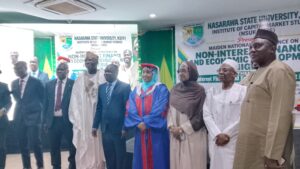
The maiden national conference brought together regulators, academics, financial institutions, capital market operators and other stakeholders to examine how non-interest finance could be deployed as a tool for investment, infrastructure development, financial inclusion and sustainable economic growth.