
.. Ogunsanya says reforms must deliver jobs, improve living standards; DBN disburses ₦1.4trn to MSMEs, creates 1.6m jobs
By | Goodluck E. Adubazi, Abuja
The Nigerian Sovereign Investment Authority (NSIA) and the Development Bank of Nigeria (DBN) have called for stronger collaboration among government, financial institutions and private-sector operators to translate Nigeria’s economic reforms into productive enterprises, sustainable jobs and improved living standards.

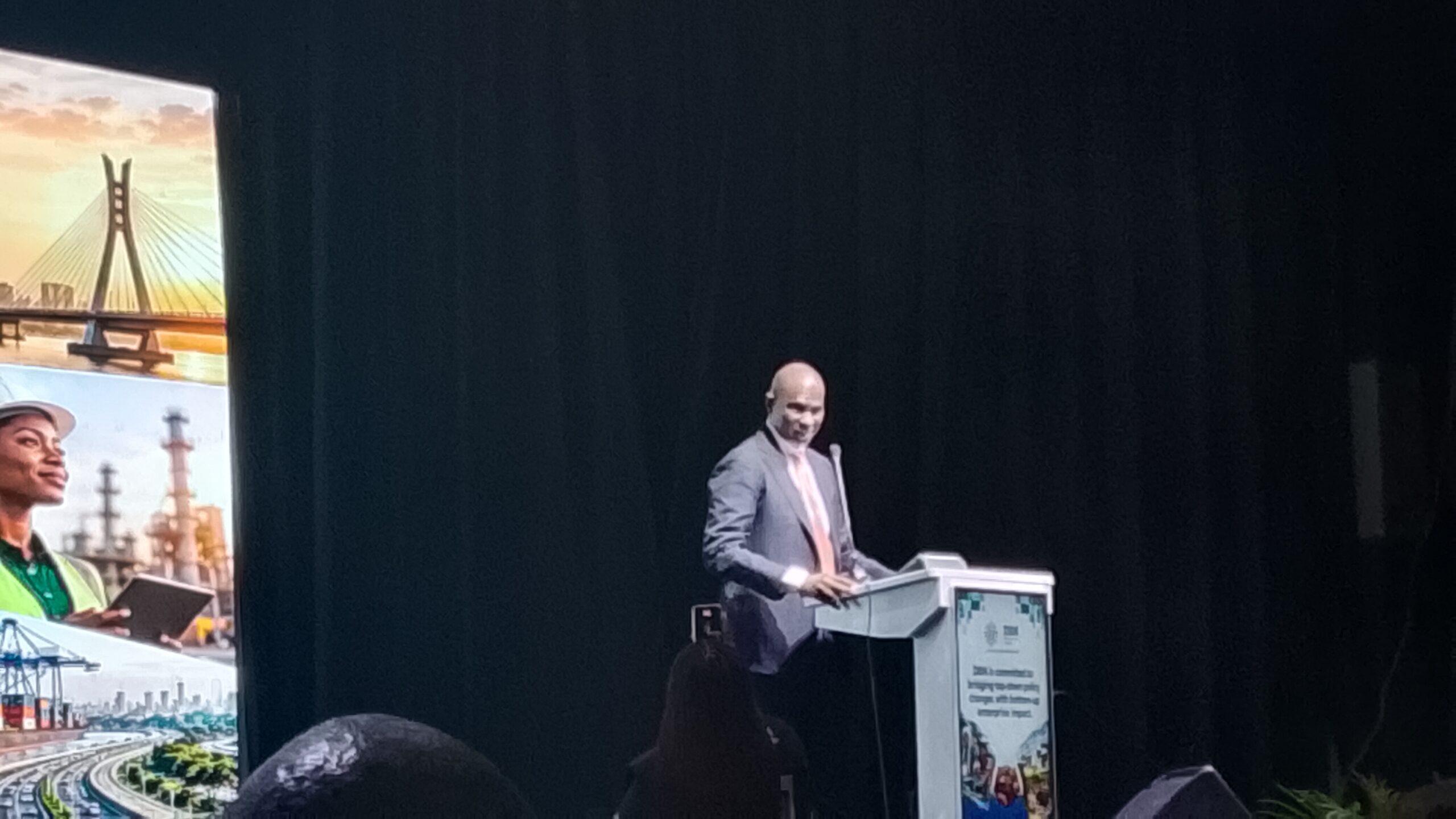
The Chairman of NSIA, Segun Ogunsanya, and the Managing Director/Chief Executive Officer of DBN, Tony Okpanachi, made the call on Wednesday in Abuja at the sixth edition of the DBN Annual Lecture 2026, themed “From Policy to Prosperity: Translating Economic Reforms into MSME Growth.”
The speakers stressed that although economic reforms are necessary to correct market distortions and strengthen the economy, their ultimate success must be measured by their impact on businesses, employment, household incomes and the standard of living of Nigerians.


Ogunsanya said the central challenge was ensuring that economic reforms translated into productive enterprises, sustainable employment, stronger domestic industries and shared prosperity rather than benefits concentrated among a few people.
He explained that the relationship between economic policy, infrastructure, investment, productivity and national prosperity must be strengthened to achieve inclusive economic growth.
According to him, economic reforms create the conditions for prosperity, infrastructure makes productivity possible, while appropriate financing enables enterprises to turn opportunities into business expansion and employment.
“My main theme today is straightforward: economic reforms create the conditions for prosperity. Infrastructure makes productivity possible, and a fit-for-purpose financing model enables enterprises to turn opportunity into growth—not just growth, but jobs,” he said.
He added that Nigeria needed growth that generated employment, warning against an economic model that expanded output without creating sufficient jobs for the country’s growing population.
The NSIA chairman described micro, small and medium-sized enterprises (MSMEs) as indispensable to Nigeria’s economic transformation, particularly given the country’s large youth population.
He noted that approximately 170 million Nigerians were below the age of 30, describing the demographic structure as both a significant economic opportunity and a major employment challenge.
According to him, MSMEs contribute approximately 50 per cent of Nigeria’s gross domestic product, generate about 90 per cent of employment and account for the overwhelming majority of businesses operating in the country.
He argued that expanding the capacity of these enterprises to employ workers, develop skills and generate income was essential to harnessing the country’s demographic advantage.
“Our expanding workforce is an enormous opportunity, but it is only going to be realised if productive enterprises can absorb labour, develop skills and generate rising income,” he said.
Ogunsanya maintained that the country’s ambition should go beyond increasing the number of businesses established to ensuring that more enterprises survive, expand and become competitive.
“Our ambition should not simply be to increase the number of enterprises established. It should be to increase the number that survive. That’s the metric—not how many we establish, but how many are surviving,” he said.
To demonstrate how businesses could take advantage of policy interventions, Ogunsanya highlighted the experiences of Nigerian enterprises that had grown by investing in local production, improving quality and responding strategically to changes in the economic environment.
He cited the growth of Nigerian Bottling Company, explaining how its establishment of local manufacturing facilities and expansion into juice production demonstrated the opportunities available to businesses willing to respond to policy changes.
He also highlighted Coleman Technical Industries, which he said had grown from a relatively modest operation into a major manufacturer of fibre-optic cables.
According to him, Coleman began operations in 2001 with approximately ₦20 million in plant and machinery but had expanded its assets to more than ₦500 billion by 2025.
He said the company’s development demonstrated how local manufacturers could benefit from policies that encourage domestic production and reduce dependence on imported products.
Ogunsanya also referenced other successful Nigerian businesses, including food and manufacturing enterprises, to illustrate the importance of quality, innovation, effective management and appropriate financing.
He urged entrepreneurs to maintain proper financial records, invest in their workforce, adopt technology, protect cash flow and seek financing suitable for their stage of development.
“Think big, build quality, create systems, keep your books, invest in your people, use technology, protect your cash, reinvest, innovate and get the right capital for the right phase of your journey,” he advised.
He cautioned business owners against blaming government policies for every difficulty, urging them instead to identify opportunities within changing market conditions.
Addressing the challenges facing MSMEs, the NSIA chairman said access to finance remained a significant obstacle, particularly for businesses operating in agriculture, manufacturing, logistics and technology.
He explained that the problem was not always an absolute shortage of capital but often the difficulty of connecting available funds with viable investment opportunities at acceptable levels of risk.
According to him, directing banks to increase lending would not be sufficient without better information, stronger credit infrastructure, appropriate financial products and effective risk-sharing arrangements.
He called for a shift from conventional collateral-based lending towards credit assessment models that recognise businesses’ actual financial performance and commercial potential.
He said lenders should increasingly consider verified cash flows, purchase orders, receivables, inventories, supplier relationships and digital payment records when assessing borrowers.
Ogunsanya also emphasised the importance of matching loan repayment periods with the cash-flow cycles of businesses, particularly those investing in machinery, processing equipment and production expansion.
He warned that forcing viable businesses to repay long-term investments through short-term credit facilities could create financial distress before the investments began generating sufficient revenue.
Beyond financing, he said MSMEs needed support in financial record-keeping, digital systems, quality standards, corporate governance, market access and business planning.
The objective, he maintained, should be to build enterprises capable of attracting commercial capital sustainably as they grow.
Ogunsanya explained that the NSIA’s investment philosophy recognised that infrastructure development, industrialisation and enterprise financing could not be pursued in isolation.
He said the Nigeria Infrastructure Fund, one of the authority’s investment funds, was mandated to invest in domestic infrastructure that supports economic growth, diversification, job creation and additional investment.
He noted that the authority’s strategy included direct investment, co-investment with development finance institutions and the development of institutions that facilitate infrastructure delivery.
Ogunsanya cited an ammonia and phosphate industrial project being developed by the NSIA in Ikot Abasi, Akwa Ibom State, as an example of how industrial investments could strengthen domestic value addition.
He said the project could create opportunities for local businesses in equipment maintenance, industrial services, logistics, packaging, construction supply chains and professional services.
He added that stronger domestic agricultural-input production could support farmers, agro-processors, transport operators and distributors.
The NSIA chairman also highlighted a $300 million distributed renewable energy fund backed by the authority, which he said was designed to expand access to off-grid electricity.
He described reliable electricity as a productive asset for small manufacturers, food processors, cold-chain operators, healthcare facilities and digital businesses.
According to him, local enterprises could benefit from renewable-energy investments through installation, generation, equipment supply and related services, provided financing arrangements matched their business needs.
He stressed that energy developers required project finance, while smaller businesses acquiring productive equipment needed suitable asset financing or working capital.
Ogunsanya acknowledged that Nigeria had undertaken significant reforms to correct long-standing economic distortions, improve market efficiency and strengthen public finances.
He referenced changes to fuel subsidies and foreign-exchange arrangements, noting that the measures had imposed substantial adjustment costs on households and businesses.
However, he maintained that sustained economic growth could not be built on persistent market distortions and inefficient public expenditure.
Citing the World Bank’s October 2026 report, he said Nigeria recorded GDP growth of 4.2 per cent in the first half of 2026, compared with 3.9 per cent in 2025 and 3.5 per cent in 2024.
He argued, however, that improved macroeconomic indicators must translate into tangible benefits for businesses and ordinary Nigerians.
“Macroeconomic stability is necessary, but it is not sufficient,” he said.
He identified four priorities for translating economic stability into prosperity: reducing the structural cost of doing business, expanding access to markets, improving the flow of savings into productive investment and directing public resources towards investments that enhance productivity.
He called for stronger collaboration among the Federal Ministries responsible for industry and finance and the Central Bank of Nigeria, stressing that coordinated policy implementation was necessary to maximise the benefits of reforms.

Earlier, DBN Managing Director and Chief Executive Officer, Tony Okpanachi, said the bank had disbursed a cumulative ₦1.4 trillion to MSMEs through 84 participating financial institutions as of December 2025.
He added that the bank’s interventions had contributed to the creation of more than 1.6 million jobs across the country.
Okpanachi said the figures represented the practical impact of development finance on businesses, workers and communities.
He explained that the DBN was established to address financing constraints confronting small businesses through a wholesale financing model that works primarily through participating commercial banks, merchant banks and microfinance institutions.
According to him, the bank strengthens MSME financing through longer-term funding, partial credit guarantees and capacity-building programmes for lenders and entrepreneurs.
He said the guarantees, provided through the bank’s subsidiary, Impact Guarantee Limited, help participating financial institutions lend to viable businesses they might otherwise consider too risky.
“A reform becomes prosperity only when an entrepreneur can act on it,” Okpanachi said.
He explained that reforms could benefit business owners when they could access suitable loans, acquire equipment, develop the skills needed to expand and secure financing from lenders willing to assess their commercial potential.
The DBN chief said the bank’s new five-year strategy aimed to reach more than two million MSMEs, with deliberate attention to women-led businesses, youth-led enterprises and underserved states.
He stressed that expanding access to finance remained important but must be accompanied by the institutional and business support required for enterprises to grow sustainably.
DBN launches MSME data resource, impact report
Okpanachi announced that the 2026 lecture would feature the presentation of the DBN MSME Data resource, an open-data initiative intended to help policymakers, lenders and researchers make evidence-based decisions.
He said the bank would also launch its Impact Report, detailing the results of its financing interventions and identifying areas requiring further improvement.
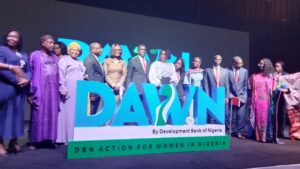
Another initiative unveiled at the event was DBN Action for Women in Nigeria (DAWN), designed to expand financing and growth opportunities for women-led businesses.
According to him, the initiative would combine financing, credit guarantees, technical assistance, targeted grants linked to defined outcomes and market connections.
He explained that the programme would work through banks, microfinance institutions, fintech companies, aggregators and cooperatives, alongside direct channels where appropriate.
The initiative would prioritise agriculture and exports, healthcare, the arts and creative industries, technology and green businesses.
“DAWN is about moving gender-focused lending beyond intention and turning access into opportunity,” he said.
Okpanachi noted that women-led businesses needed more than access to loans to scale, adding that they also required technical support, market access and financing structures that reflected their circumstances.
The DBN chief executive said the lecture was designed to move discussions about economic reforms beyond policy statements to the practical experiences of entrepreneurs.
He cited the examples of traders, manufacturers, farmers and technology entrepreneurs, arguing that the success of economic reforms depended on whether businesses could translate improved economic conditions into increased production and employment.
He urged participating financial institutions to expand lending to sectors and states where access to finance remained limited.
He also called on policymakers and regulators to listen to businesses and assess reforms by the changes they produced at the end of the economic chain.
Addressing MSMEs, he encouraged entrepreneurs to formalise their operations, maintain proper records and take advantage of available support programmes.
“Translating policy into prosperity is not a job for one institution,” he said, calling for stronger collaboration among government, financial institutions and the private sector.
Both Ogunsanya and Okpanachi maintained that sustainable economic transformation would require a coordinated approach that connects economic reforms with infrastructure investment, appropriate financing, stronger domestic industries and the capacity of MSMEs to generate employment.
They said the ultimate objective should be an economy in which microenterprises could grow into small businesses, small businesses could become medium-sized enterprises, and successful medium-sized companies could emerge as major Nigerian and African corporations.
Such a transition, they stressed, would be critical to job creation, industrialisation, domestic value addition and improved living standards for Nigeria’s growing population.