

By| Goodluck E.Adubazi, Abuja
The Managing Director/Chief Executive of the Nigeria Social Insurance Trust Fund (NSITF), Oluwaseun Faleye, has said retirement security must be built during a worker’s active years and not left until retirement.

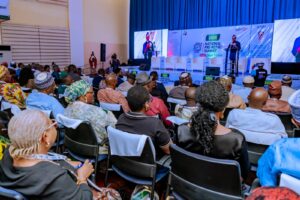
Faleye made the declaration on Thursday at the 2026 National Pre-Retirement Summit held at the Shehu Musa Yar’Adua Centre, Abuja, where he represented NSITF at a policy dialogue session themed “Between Duty and Delivery.”
The summit, with the theme “Own Your Retirement: From Planning to Action,” brought together key stakeholders to examine how workers can better prepare for life after active employment.
Faleye said retirement planning goes beyond pensions and personal savings, stressing that workers’ security is also shaped by occupational safety, healthcare, protection of earning capacity and compensation for workplace-related injuries or death.
“When we speak about retirement, we must begin much earlier than the point at which work ends. Retirement security is shaped during working life — by occupational risks, health, protection of earning capacity, compensation when harm occurs, and what happens to families when a breadwinner is lost,” he said.
According to him, the Employees’ Compensation Scheme (ECS), administered by NSITF, forms an important part of the country’s social protection system by providing protection against employment-related injuries, occupational diseases, disability and death.
He said the scheme also provides compensation, survivor benefits, medical care, rehabilitation and return-to-work support for affected workers.
Providing an update on the Fund’s coverage, Faleye disclosed that more than 7.6 million workers were enrolled under the Employees’ Compensation Scheme as of July 2026, with the figure now exceeding 7.8 million.
He said NSITF was shifting from isolated registration exercises to sustained participation and compliance through partnerships with Federal Government institutions, State Governments, regulators, employers and organisations operating within the informal economy.
Faleye described the onboarding of Treasury-funded Federal Ministries, Departments and Agencies (MDAs) as a major development, saying claims payments had commenced less than four months after the integration process began.
He disclosed that the first batch of five beneficiaries from Treasury-funded MDAs received their payments on August 4, 2026.
“This is turning Federal Civil Service protection into a lived reality,” he said.
The NSITF boss, however, stressed that registration alone does not constitute protection, noting that effective social protection must connect registration and assessment to contributions, accurate workers’ information, claims processing and timely payment of benefits.
Faleye further disclosed that NSITF had reduced its average claims turnaround time from 14 days to 10 days, describing the improvement as part of efforts to make social protection more responsive to workers and their families.
He said the Fund would continue to deepen coverage, strengthen compliance and improve institutional coordination.
He also emphasised the need to place families at the centre of social protection, particularly where a worker dies from an employment-related incident.
“The system must be visible at the point of vulnerability. Claims administration, documentation, communication and inter-agency referrals should be designed around the beneficiary’s experience, with compassion, clarity and timely resolution,” Faleye said.
On occupational safety, he said NSITF’s workplace inspection, accident investigation and safety advocacy programmes were aimed at preventing workplace accidents, while healthcare and rehabilitation services were designed to preserve workers’ dignity and earning capacity.
Faleye said workers must take responsibility for planning their retirement and understanding their entitlements, but noted that individuals could not independently insure against employer non-compliance or establish claims systems.
He therefore called for shared responsibility among government, institutions, employers and workers.
“The State builds and regulates the architecture; institutions deliver within their mandates; employers comply and maintain safe workplaces; and workers understand, use and participate actively in the protections available to them,” he stated.
The NSITF chief executive identified five key principles underpinning the Fund’s position: retirement security begins during working life; coverage must translate into effective protection rather than mere registration; prevention and compensation must work together; families and dependants must remain part of protection design; and individual ownership must complement, not replace, public and employer responsibilities.
Faleye said the credibility of the social protection system would ultimately be measured by how it responds when workers suffer injuries, families lose breadwinners, rehabilitation is required or workers approach retirement.
“Between duty and delivery is where trust is won. For the Nigerian worker, social protection must be more than a statutory promise on paper. It must be felt when a worker is injured, when a family loses a breadwinner, when rehabilitation is needed, and when a worker approaches retirement.”
He concluded that effective retirement planning required a credible social protection system that workers could rely on.
“A worker can plan for retirement only when the system is credible enough to plan with.” He stressed.
The summit was attended by the Minister of Labour and Employment, Chairman of the National Pension Commission (PenCom), President of the Nigeria Labour Congress (NLC), Director-General of the Bureau of Public Service Reforms and Director-General of the National Senior Citizens Centre, among other stakeholders.