
• Agency strengthens system operations, preventive maintenance to boost grid stability
By| Goodluck E.Adubazi, Abuja
The Transmission Company of Nigeria (TCN) has disclosed that its transmission infrastructure has a total capacity of 54,995 megawatts (MW), comprising 333 transmission lines spread across the country.
The company also said its transmission network extends to about 17,636 kilometres, underscoring the strategic importance of its operations to Nigeria’s electricity supply chain.
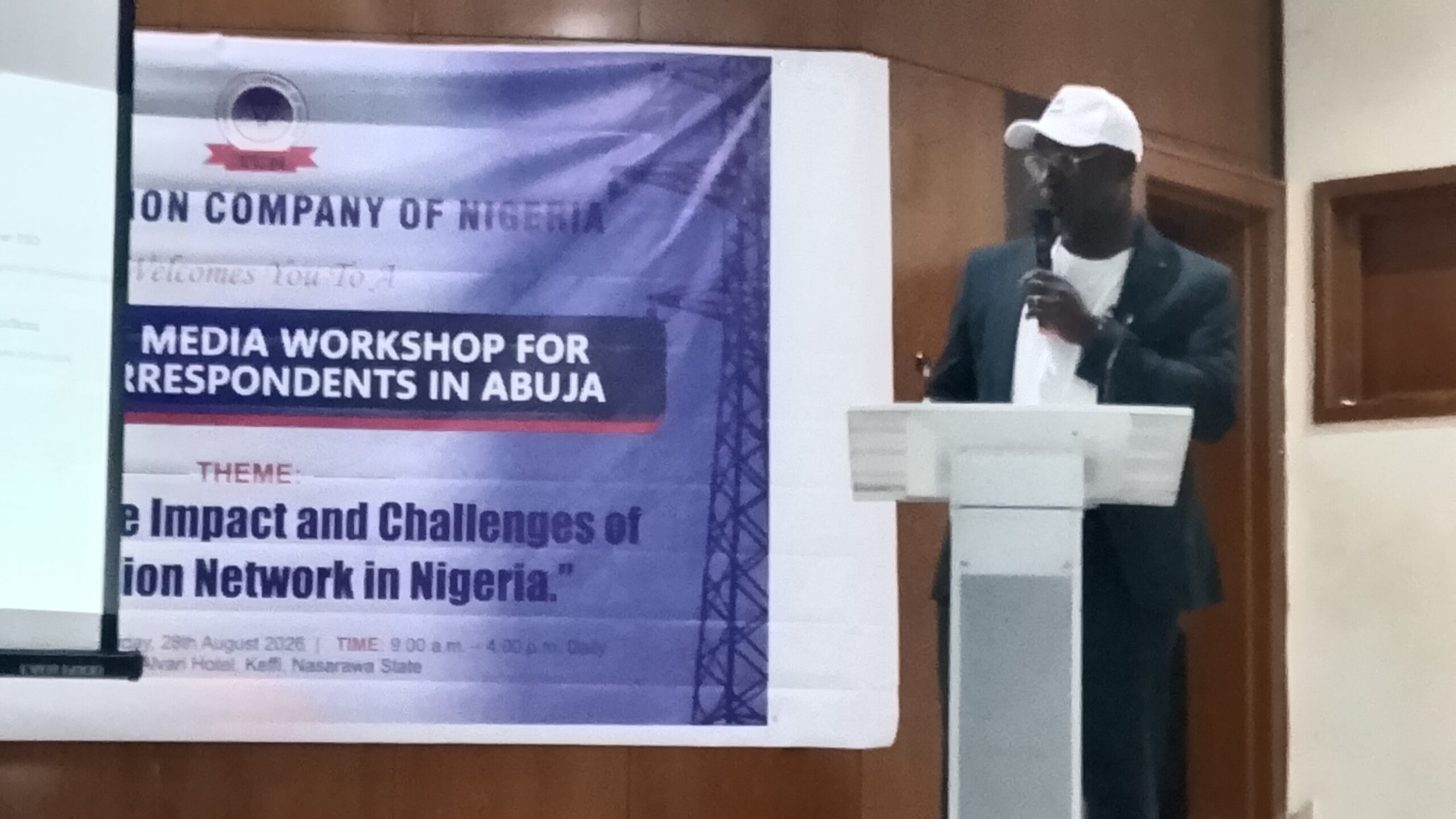
The General Manager, Operations, TCN, Engr. Godwin Aguiyi, disclosed this in Keffi on Friday while speaking on the strategic role of transmission system operations during the third and final day of a three-day media workshop for energy correspondents.
The workshop, held from August 26 to 28, 2026, at Alvari Hotel, Keffi, Nasarawa State, focused on deepening journalists’ understanding of transmission operations and the challenges confronting the nation’s power sector.
Aguiyi explained that the establishment of an independent system operation within the electricity market made it necessary for TCN to maintain its own operational structure for managing and protecting its transmission assets.
According to him, the independent system operator functions as a neutral regulator and grid controller across the generation, transmission and distribution segments, while TCN, like generation and distribution companies, requires dedicated operators responsible for its own assets.
He said TCN’s extensive infrastructure could not be effectively managed without specialised personnel working in synergy with the national system operator.
“TCN, just as the generation companies have their operations, should also have its own operations,” Aguiyi said, stressing that the company must take ownership and responsibility for the assets under its control.
He disclosed that TCN’s operational structure currently comprises 10 regions, 31 sub-regions and 10 work centres, supported by about 960 staff across the country.
According to him, the company’s responsibilities include switching operations, network monitoring, equipment monitoring, system control, outage management, maintenance coordination and the issuance of permits for planned outages and related activities.
Aguiyi described TCN as the “front line” of Nigeria’s electricity transmission system because its personnel are responsible for monitoring and managing the network continuously.
He emphasised that transmission remains the backbone of the electricity value chain, noting that electricity generation would have little impact if the power generated could not be transmitted to distribution networks and ultimately delivered to consumers.
“The backbone of the electricity network is the precondition for every other function. You can generate all the power you can generate, but if it doesn’t get to the last mile, it has no impact,” he said.
The TCN official noted that the strategic nature of the transmission network meant that any major fault affecting its infrastructure could have widespread consequences, potentially disrupting electricity supply across large geographical areas.
He therefore stressed the need for heightened responsibility, improved system management and continuous investment in the transmission network.
Aguiyi also highlighted the regional significance of Nigeria’s transmission network, noting that TCN’s infrastructure plays an important role beyond the national electricity market, particularly within the West African power system.


Also speaking at the workshop, the General Manager, Monitoring and Evaluation, TCN, Okemini Jane Nneka, highlighted the importance of preventive maintenance in sustaining transmission operations and improving the reliability of the national grid.
She stressed the need for systematic monitoring and timely maintenance of transmission assets to prevent avoidable equipment failures and minimise disruptions to electricity supply.
The workshop provided energy correspondents with insights into the technical, operational and institutional responsibilities of TCN, as well as the challenges involved in managing the country’s extensive transmission infrastructure.

In his closing remarks, the Chairman of the Energy Correspondents Association of Nigeria, Mr. Obas Esiedesa, commended the management of TCN for organising the three-day workshop.
Esiedesa, in his vote of thanks on behalf of the participating journalists, expressed appreciation to the company’s management and all those who supported the programme.
He said the workshop had provided journalists with valuable knowledge that would enhance their understanding and reporting of Nigeria’s electricity transmission sector.
The chairman also called for continued engagement between TCN and energy correspondents, stressing that sustained interaction would help improve public understanding of developments in the power sector.
He further appreciated TCN’s Public Affairs Department and other officials involved in facilitating the workshop, and expressed optimism that similar capacity-building programmes would continue in the future.