By Austin Aigbe
On October 3, 2026, Premium Times raised a question that should ordinarily have been answered long before Anthony Kila became a familiar face on television screens and, eventually, Pro-Chancellor and Chairman of the Governing Council of Michael and Cecilia Ibru University (MCIU), Agbarha-Otor, Delta State:
Professor of where?
The question followed an investigation by Premium Times into Kila’s academic title and credentials.
For years, Kila had been introduced on television and in the media as “Professor.” Arise TV and Channels Television used the title in their programmes, while newspaper reports variously described him as a Professor of Political Science and as a Jean Monnet Professor of Strategy and Development.
In August 2025, he was appointed Pro-Chancellor and Chairman of the Governing Council of MCIU—a position at the highest level of university governance, with responsibility for providing oversight over the institution’s policies, finances, assets and administration.
But Premium Times’ investigation raised questions about the basis of the professorial title.
According to the report, the newspaper found no evidence that a recognised university in Nigeria or abroad had promoted Kila to the rank of professor.
Kila reportedly maintained that the European Centre for Advanced and Professional Studies (ECAPS), Cambridge, United Kingdom, awarded him a professorship in 2016.
Premium Times said it searched the UK Companies House, Nigeria’s Corporate Affairs Commission and the internet for evidence of the institution, including a verifiable website, physical presence or alumni network, but found none.
The newspaper also reported that the European Education and Culture Executive Agency (EACEA), which administers the European Union’s Jean Monnet Actions, confirmed that Kila had not been listed as a Jean Monnet coordinator since 2015.
MCIU, meanwhile, did not immediately provide a substantive response to the newspaper’s questions. A person who identified himself as a spokesperson for the university, but declined to give his name, reportedly said: “We don’t debate issues; we will respond when we see the article.”
That response, rather than ending the matter, raises another question: Who is responsible for verifying the credentials of individuals entrusted with senior positions in Nigerian universities?
THE CURRENCY OF TITLES
The Kila controversy is bigger than one academic title.
It exposes a deeper problem in Nigerian society: the extraordinary value attached to titles, prefixes and status symbols.
For many Nigerians, the title “Professor” carries instant authority. It can open doors in government, the media, academia and the private sector. It can transform an ordinary commentator into an apparently unquestionable expert.
That makes academic titles powerful currency.
The problem arises when titles are accepted without verification.
Nigeria has experienced several controversies involving questionable academic credentials. In 2024, a purported list alleging that 100 professors in Nigerian universities were fake circulated widely on social media. The National Universities Commission subsequently distanced itself from the list.
In December 2023, investigative journalist Umar Audu reported that he obtained a Bachelor of Science degree in Mass Communication from a university in Cotonou after just six weeks, without attending classes or sitting examinations. He subsequently used the qualification to enrol in Nigeria’s National Youth Service Corps scheme.
These incidents point to a wider vulnerability in the country’s education and professional credential system.
A genuine professorial career is normally built over years of teaching, research, publication, academic assessment and institutional promotion. It is not simply a title attached to a certificate.
That is why allegations surrounding academic credentials should never be treated as a mere personal dispute. They concern the credibility of the institutions that recognise, publish and rely on those credentials.
THE FAILURE OF THE GATEKEEPERS
Nigeria’s institutional problems are often discussed in terms of elections, corruption and governance. But there is another dimension: the failure of gatekeeping.
Institutions are supposed to verify before they endorse.
Universities are expected to verify the credentials of people appointed to senior positions. Media organisations are expected to verify the credentials of experts presented to the public. Regulatory agencies are expected to maintain reliable records.
When these gatekeepers fail, questionable claims can acquire legitimacy simply through repetition.
A person is introduced as “Professor” on television. Another newspaper repeats it. A university website publishes it. Another institution cites the university’s publication as evidence.
Eventually, repetition begins to look like verification.
That is the danger.
The question therefore should not only be whether Kila is entitled to the title “Professor.” The more important question is how the title became sufficiently accepted to survive across the media and institutional ecosystem and ultimately coexist with a senior position within a university.
WHERE WAS THE DUE DILIGENCE?
If the allegations raised by Premium Times are accurate, the matter demands more than competing statements.
There should be a clear explanation of the due-diligence process undertaken before Kila’s appointment as Pro-Chancellor of MCIU.
What credentials were submitted?
Who verified them?
Which institutions were contacted?
What academic records were examined?
What did the university’s governing authorities rely upon in making the appointment?
These are legitimate questions because a university’s governing council is not an ordinary corporate board. It plays a central role in the governance and strategic direction of the institution.
The controversy therefore provides an opportunity for Nigerian universities and regulators to examine how credentials are verified before appointments are made.
MCIU should be able to explain its process publicly, while the relevant regulatory authorities should establish the facts independently.
WHAT SHOULD HAPPEN?
First, Kila should provide a comprehensive and verifiable account of his academic career, including the institutions that awarded his degrees, his professorial appointment, relevant academic publications and the basis of the titles attributed to him.
Second, MCIU should make public the due-diligence process undertaken before his appointment as Pro-Chancellor and Chairman of the Governing Council.
Third, the National Universities Commission should consider developing a publicly accessible database containing verified information on professors and other senior academic appointments in Nigerian universities.
Such a database would help journalists, employers, institutions and members of the public independently verify academic claims.
Fourth, media organisations should strengthen their own verification procedures. Television stations and newspapers should not rely solely on the biographies supplied by guests or their representatives before displaying academic titles.
A simple verification process could prevent years of misinformation.
BEYOND THE KILA CONTROVERSY
The larger lesson from the Kila affair is about the value Nigeria places on substance.
A society that rewards titles without verifying the achievements behind them creates an incentive for people to pursue appearances rather than excellence.
It also sends the wrong message to young academics who spend years conducting research, publishing papers, undergoing peer review and climbing the academic ladder.
The issue is therefore not merely whether one man should be called “Professor.”
It is whether Nigeria’s institutions have developed adequate systems to distinguish genuine expertise from unverified claims of expertise.
That question extends beyond universities.
It touches the media, government, professional bodies, corporations and public institutions.
In an era when public officials, political actors and institutions increasingly rely on experts to explain complex economic, social and political issues, the credibility of those experts matters.
The lesson is straightforward: a title should never substitute for evidence.
The Kila controversy should therefore become an opportunity for Nigeria to strengthen its culture of verification—not only of academic titles, but of the credentials of everyone entrusted with positions of public responsibility.
For a country preparing for another general election in 2027, the principle is especially important.
Democracy depends not only on credible votes but also on credible institutions, credible information and credible people occupying positions of responsibility.
In the final analysis, substance must matter more than title.
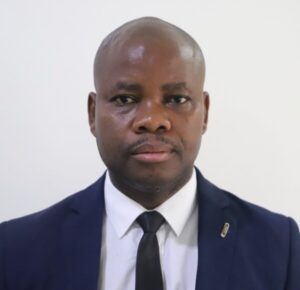
Austin Aigbe is Advocacy Officer, West Africa Democracy Solidarity Network and an election observer. He writes from Abuja.