By| Goodluck E.Adubazi | Abuja
The International Budget Partnership (IBP) has raised concerns over significant gaps in Nigeria’s public debt management system, citing weaknesses in transparency, oversight, and citizen engagement.
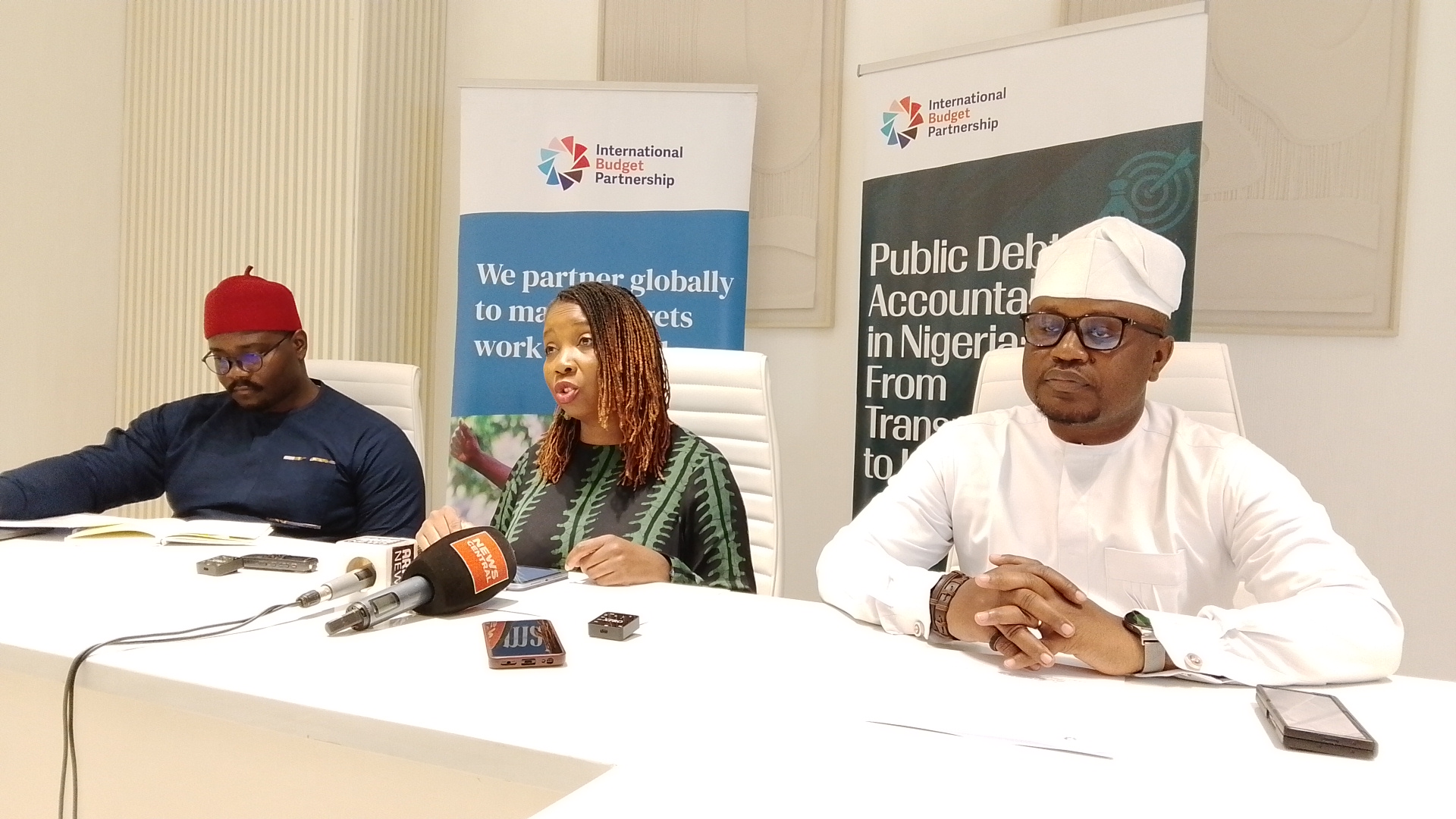
At a press briefing in Abuja on Tuesday, the organization unveiled findings from its Open Budget Survey (OBS) 2025 – Debt Accountability Module, a pilot assessment examining how effectively Nigeria manages and accounts for its public debt.
Presenting the report, IBP Nigeria Country Director, Olayinka Babalola, said the findings highlights critical shortcomings despite existing frameworks.
“Nigeria has important building blocks for managing public debt, but the system still makes it difficult to clearly see what is being borrowed, how those decisions are scrutinized, and how they translate into real outcomes,” Babalola stated.
The assessment, based on publicly available data up to December 31, 2024, found that while Nigeria maintains a legal framework for borrowing and publishes some debt data, information remains scattered across multiple documents.
This fragmentation makes it difficult to track borrowing plans, debt strategies, and their alignment with government priorities.
The report further noted that although the National Assembly has statutory authority to approve loans, oversight is often limited to approvals rather than in-depth scrutiny of debt strategies, risks, and implementation.
A major concern raised in the report is the lack of structured opportunities for citizens, civil society, and the media to participate in decisions related to borrowing and fiscal policy.
According to IBP, there is little evidence of public engagement during budget formulation and only minimal participation at the approval stage, limiting citizens’ ability to influence decisions that shape Nigeria’s fiscal future.
The findings also highlight a weak link between government borrowing and tangible outcomes for citizens. This lack of clarity, the report says, makes it difficult to assess whether debt-funded projects are delivering results in critical sectors such as infrastructure, healthcare, and education.
The IBP outlined three key priority areas for reform:
Improved transparency through consolidated and detailed debt reporting,
Stronger legislative and audit oversight beyond routine approvals,
Expanded public participation in debt-related decision-making.
IBP emphasized that the assessment is intended to support reforms and strengthen accountability systems rather than assign blame.
Speaking at the Press briefing, Onyekachi Chukwu , IBP Senior Programs, coordinator, strategy and Policy, stressed the need for lawmakers to deepen engagement with constituents.
He noted that representatives must go beyond public hearings and return to their communities to address concerns that should shape legislative decisions.
Also contributing, Iniobong Usen , Senior Program coordinator, International Budget Partnership, underscored the importance of citizen participation in a democratic system.
“Government exists because of the people and must act in their interest,” he said, adding that the rising cost of borrowing remains a major issue, with domestic loans—such as those from the Central Bank—often carrying higher interest rates.
The IBP is the world’s only independent, comparative measure of budget transparency, participation, and oversight, covering more than 100 countries biennially. IBP works globally with governments, civil society, and policy experts to promote accountable and equitable public financial management.
The report was further discussed during an IBP-hosted webinar titled “Public Debt Accountability in Nigeria: From Transparency to Impact,” which brought together stakeholders from government, the legislature, and civil society to explore practical reform pathways.